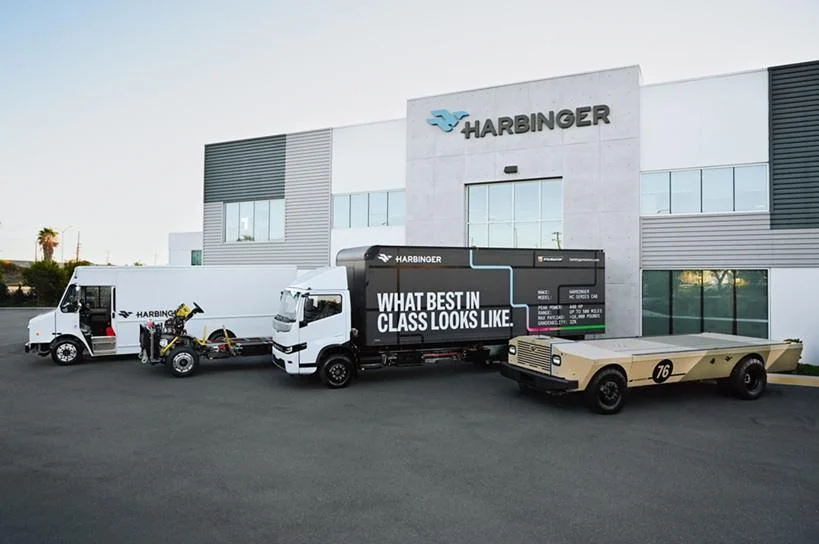
California-based electric vehicle (EV) innovator Harbinger has successfully closed a $240 million Series D funding round, marking a significant milestone in the company’s evolution from a specialized medium-duty truck manufacturer to a broader industrial electrification powerhouse. The capital infusion is earmarked for the aggressive scaling of its proprietary electrification platform, with strategic pivots into the high-growth sectors of energy storage, power generation, and defense technology.
The financing, announced on November 6, 2026, represents a major validation of Harbinger’s "first principles" engineering philosophy. By moving away from the industry standard of modifying existing internal combustion engine architectures, the company has instead built its commercial vehicle platforms from the ground up. This approach has allowed Harbinger to optimize for performance, safety, and cost-efficiency—a strategy that investors are now betting will have utility well beyond the commercial trucking industry.
The Evolution of Harbinger: A Brief Chronology
Founded in 2021, Harbinger emerged during a period of intense scrutiny within the EV startup space, characterized by high capital expenditures and complex supply chain hurdles. Unlike many of its peers who focused on consumer passenger vehicles, Harbinger targeted the medium-duty commercial sector—an area often neglected by major legacy OEMs.
- 2021: Harbinger is founded with a mission to decarbonize commercial fleets through purpose-built electric chassis.
- 2023: The company begins prototype testing, demonstrating its ability to deliver modular EV platforms that can support various body types, including delivery vans and utility vehicles.
- 2025: Harbinger secures a major $300 million order from global logistics giant FedEx, signaling industry confidence in its manufacturing scalability and product reliability.
- November 2026: The company closes a $240 million Series D round, shifting its strategic focus to integrate its electrification technology into energy storage, defense, and autonomous software sectors.
Strategic Capital Allocation and Diversification
The $240 million raised will facilitate three primary pillars of growth. First, the company plans to increase its manufacturing capacity for its medium-duty platform to meet the growing order book, most notably the significant commitment from FedEx. Second, it intends to deploy its engineering expertise into the defense sector, where ruggedized, high-torque electric powertrains are becoming essential for modern tactical logistics and silent-operation vehicles.
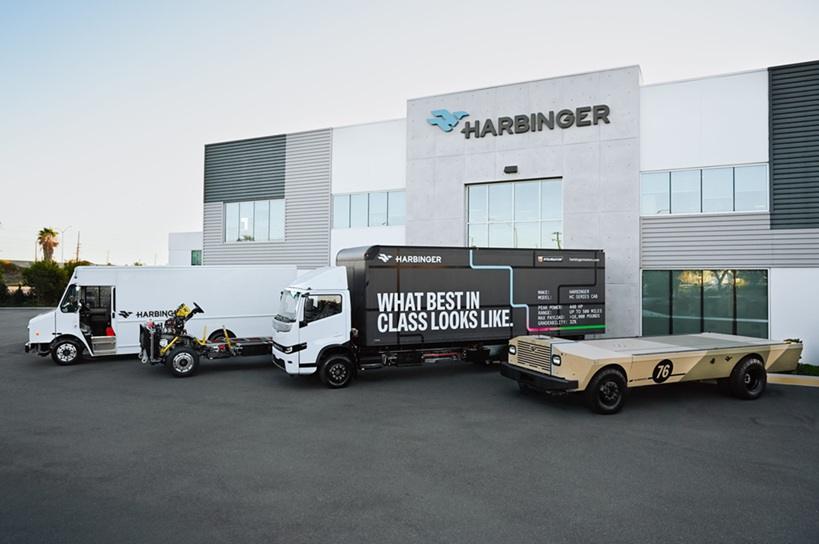
Third, and perhaps most intriguingly, is the company’s expansion into stationary energy storage and power generation. The intersection of EV manufacturing and energy storage is a natural synergy; the battery management systems (BMS) and power electronics developed for electric trucks are highly transferable to grid-scale storage solutions. As the global energy transition accelerates, the ability to repurpose or adapt modular battery systems for stationary storage provides Harbinger with a hedge against the cyclical nature of automotive manufacturing.
Investor Sentiment and Strategic Backing
The Series D round was co-led by a consortium of heavyweight investors, including Tiger Global, Capricorn’s Technology Impact Fund, and Ridgeline. The breadth of the investor base—ranging from institutional giants like Fidelity Management & Research Company to strategic industrial players—underscores the diverse potential of Harbinger’s technology.
Griffin Schroeder, a Partner at Tiger Global, highlighted the urgency of the moment, noting that Harbinger’s expertise in electrification addresses one of the most critical bottlenecks of the current era: energy and power efficiency in the face of rapidly expanding AI data centers and industrial automation.
“Harbinger excels at electrification, and electrification has become one of the most pressing bottlenecks of the AI era,” Schroeder stated. “We led this financing because we see tremendous value in bringing Harbinger’s technical expertise and manufacturing capabilities to new markets.”
The inclusion of strategic investors such as FedEx and THOR Industries—the latter a leader in the recreational vehicle space—demonstrates that the company is deeply embedded within the mobility value chain. Furthermore, the participation of BuildGroup, which focuses on data center infrastructure, points toward the company’s potential role in providing backup power or energy management solutions for energy-intensive computing environments.

First Principles Engineering: A Competitive Advantage
Harbinger’s core value proposition lies in its rejection of "retrofitted" electric vehicles. Most commercial EVs currently on the road are modifications of chassis originally designed for diesel engines. This often results in suboptimal weight distribution, compromised cabin ergonomics, and limited space for battery packs.
By designing from first principles, Harbinger’s engineers have created a "skateboard" platform that integrates the battery, motor, and control systems into a cohesive, low-profile architecture. This allows for:
- Improved Payload Capacity: By optimizing the chassis weight, the vehicles can carry heavier loads, critical for commercial operations.
- Simplified Maintenance: A modular design reduces the complexity of repairs, lowering the Total Cost of Ownership (TCO) for fleet operators.
- Safety Enhancements: The bespoke design allows for better crash-structure integration, a major concern for heavy-duty commercial vehicle standards.
Implications for the Energy Transition and Defense
The move into defense and stationary storage marks a shift in how investors view "pure-play" EV companies. As the market matures, the ability to diversify revenue streams has become a key indicator of long-term viability.
In the defense sector, the transition to electric power is not merely about environmental impact but about tactical advantage. Electric powertrains offer lower thermal signatures, higher torque at zero RPM, and the ability to operate in environments where fuel supply chains are vulnerable. Harbinger’s ability to provide a platform that is as reliable in a suburban delivery route as it is in a ruggedized defense application could disrupt existing defense procurement models.
Furthermore, the integration with stationary energy storage is timely. As utilities struggle to balance the grid amid the influx of intermittent renewable energy, decentralized storage units—which can be powered by high-density EV battery modules—are in high demand. Harbinger’s move into this space positions it to be a player in the broader "electrification of everything" movement.

Market Context and Future Outlook
The $240 million investment occurs at a time when the broader EV industry is undergoing a "survival of the fittest" consolidation. While some startups have struggled with mass-market adoption, the commercial vehicle sector has remained a bright spot due to the predictability of fleet routes and the clear economic incentives for decarbonization.
With FedEx’s $300 million order and the appointment of Paul Melander, FedEx’s Senior Vice President of Safety and Transportation, to the Harbinger Board of Directors, the company has secured a long-term "anchor tenant" for its products. This relationship not only provides consistent revenue but also serves as a real-world laboratory for Harbinger to refine its technology at scale.
Looking ahead, the next 24 months will be decisive. The challenge for Harbinger will be to maintain its "first principles" agility while scaling up its manufacturing capabilities to satisfy both its commercial fleet obligations and its new ventures in defense and energy. If the company can successfully leverage its modular platform across these disparate industries, it may well set a new blueprint for how deep-tech hardware startups can build sustainable, diversified businesses in the 21st century.
As the company transitions from a development-focused startup to a multi-vertical industrial manufacturer, the market will be closely watching its ability to manage the operational complexities of serving three distinct, highly demanding sectors simultaneously. For now, however, the successful Series D round provides Harbinger with the necessary "runway" to execute its vision on a global scale.