The broader cryptocurrency market experienced a complex web of conflicting signals as Ethereum (ETH) faced significant volatility. On October 24, the world’s second-largest cryptocurrency by market capitalization found itself caught between a massive supply crunch on centralized exchanges and persistent downward pressure from the derivatives sector. While on-chain metrics captured one of the largest single-day exchange outflows in over four months—historically a bullish indicator pointing toward decreased immediate liquid supply—other vital market gauges revealed a darker narrative. Whale accounts holding leveraged long positions faced mounting liquidation risks, analytical metrics pointed toward dominant futures selling, and vintage investors from Ethereum’s initial coin offering (ICO) eras seized the opportunity to realize life-changing profits.
This macroeconomic and structural tug-of-war has left short-term traders and institutional analysts alike scrambling to decode Ethereum’s near-term trajectory. As ETH hovered near the $2,376 threshold after breaking below crucial technical support, the market was forced to weigh the removal of coins from trading venues against the stark realities of heavy margin exposure and historical profit-taking.

The Anatomy of October 24: Unprecedented Outflows Meet Historical Parallels
The day’s most prominent bullish development emerged from on-chain analytics provider Santiment, which reported that a staggering 169,770 ETH departed from centralized exchange wallets within a single 24-hour window. This outflow marked the largest daily reduction of exchange-held supply in more than four months, instantly drawing comparisons to a similar event recorded on June 5. During the June episode, approximately 223,800 ETH left trading platforms in a net exodus as prices carved out a solid local bottom, ultimately preceding a notable market recovery.
However, experienced market analysts are quick to issue cautionary notes regarding the direct extrapolation of historical data. While substantial net outflows theoretically reduce the immediate supply of coins available for aggressive spot market dumping, they do not universally equate to fresh buying pressure. Moving assets from public exchanges to private cold storage, institutional custody, or decentralized finance (DeFi) protocols reduces exchange-bound liquidity, yet it remains agnostic to the underlying intent of the mover.
Furthermore, the outflow data must be decoupled from the simultaneous actions of early-stage market participants. Blockchain intelligence firm Lookonchain highlighted that veteran stakeholders from Ethereum’s genesis era were actively liquidating portions of their holdings. In one notable transaction, an early investor who acquired ETH nine years ago at a paltry $18.83 per token offloaded 3,000 ETH for roughly $7.23 million, capturing an eye-watering 128-fold return on investment. Another participant from the original ICO era liquidated an additional 1,000 ETH, having originally obtained their stack at approximately $0.31 per coin.
Although these combined sales of 4,000 ETH represent only a microscopic fraction of Ethereum’s total circulating supply, they carry immense psychological weight. The realization of multi-million-dollar profits by foundational holders acts as a direct counterweight to the optimistic narrative spun by the exchange outflow metrics. It demonstrates that long-term believers are willing to capitalize on remaining liquidity to secure gains, thereby blunting the immediate bullish impact of exchange supply contraction.
Derivatives Pressure, Whale Leverage, and Liquidation Cascades
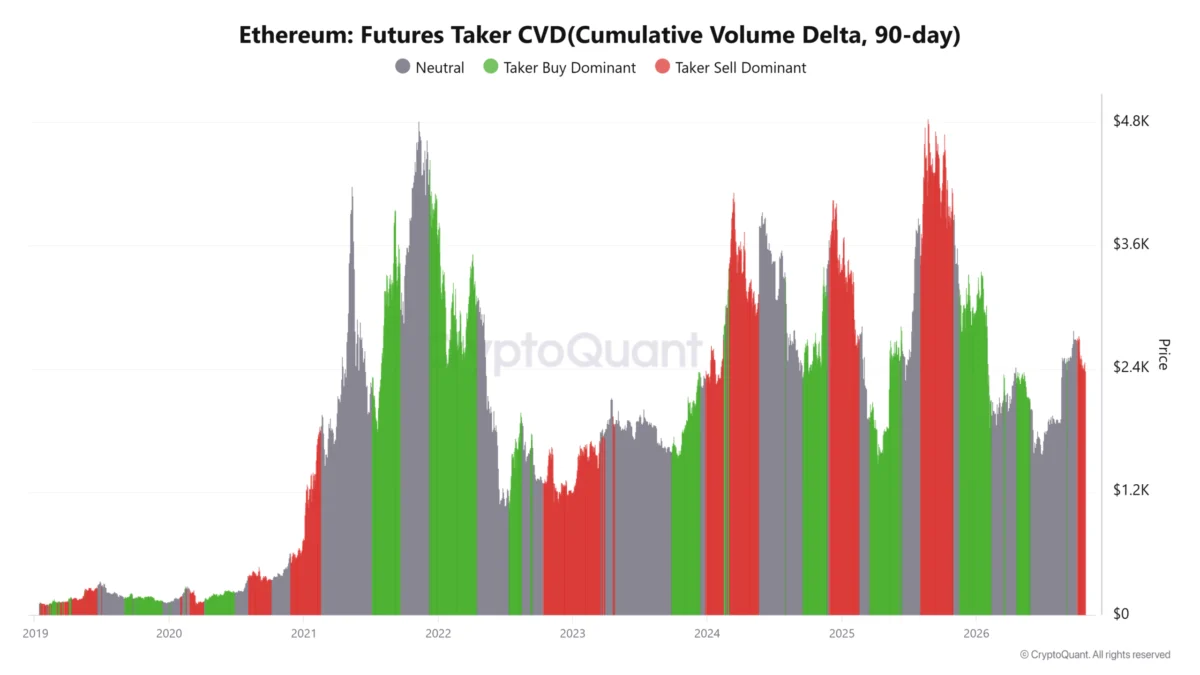
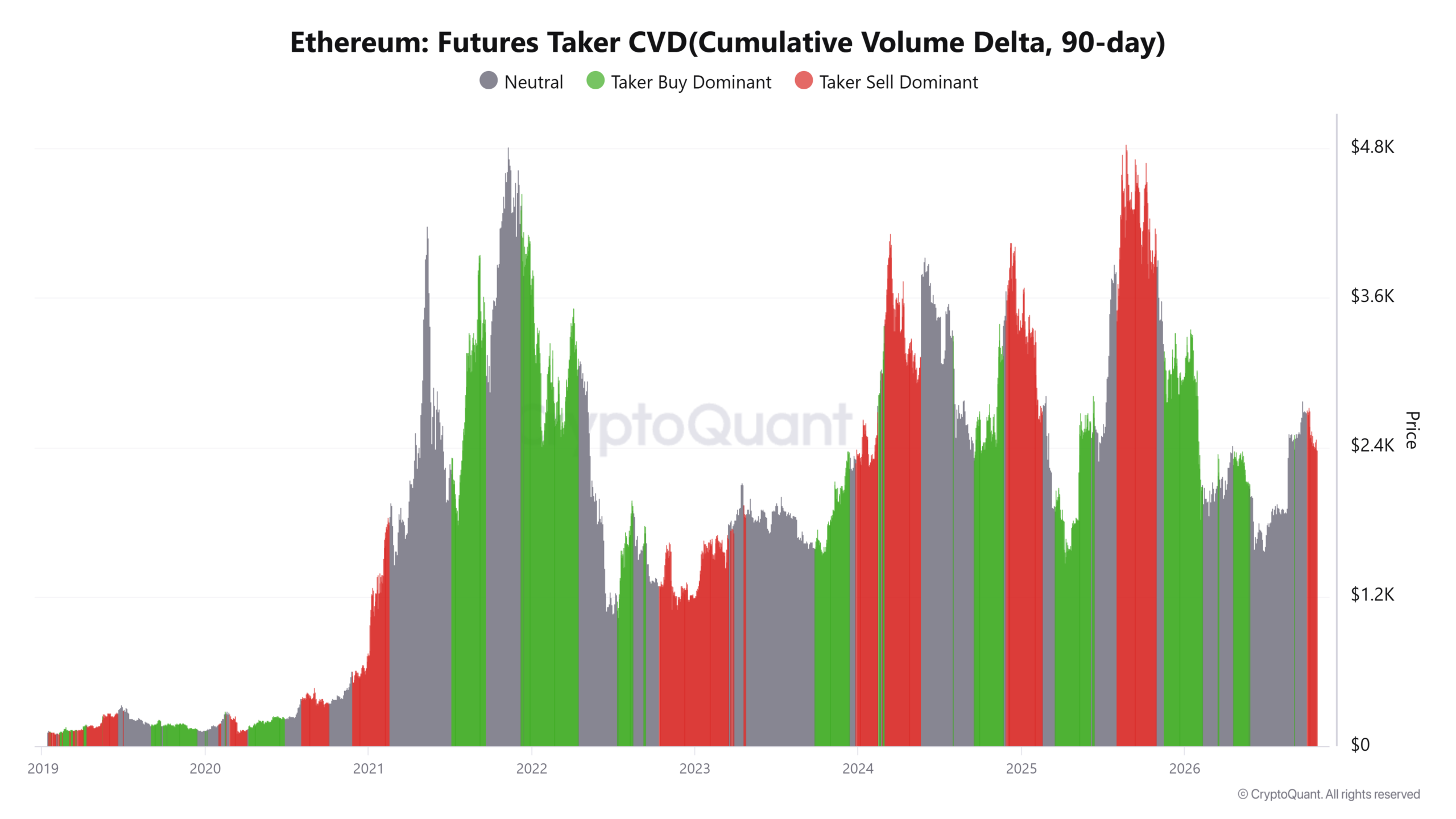
While spot market dynamics showed signs of consolidation, the derivatives sector painted a far more precarious picture for Ethereum bulls. Data from CryptoQuant’s Ethereum Futures Taker Cumulative Volume Delta (CVD) indicated that aggressive sellers continued to dictate terms across perpetual swap and futures markets. The CVD metric, which measures the net difference between market buy and sell orders over a specified timeframe, leaned heavily toward the bearish side. This persistent imbalance highlights ongoing institutional and speculative positioning against a sustained recovery, reinforcing the notion that derivatives traders are leaning into short-term downside momentum.
Compounding this derivatives-driven pressure is the immense exposure held by high-net-worth market participants, commonly referred to as whales. Lookonchain flagged a cluster of aggressive leveraged long positions totaling 93,184 ETH, carrying a nominal value of approximately $214 million. Because these positions were opened with substantial leverage, they operate on razor-thin margins and are acutely vulnerable to cascading price corrections.

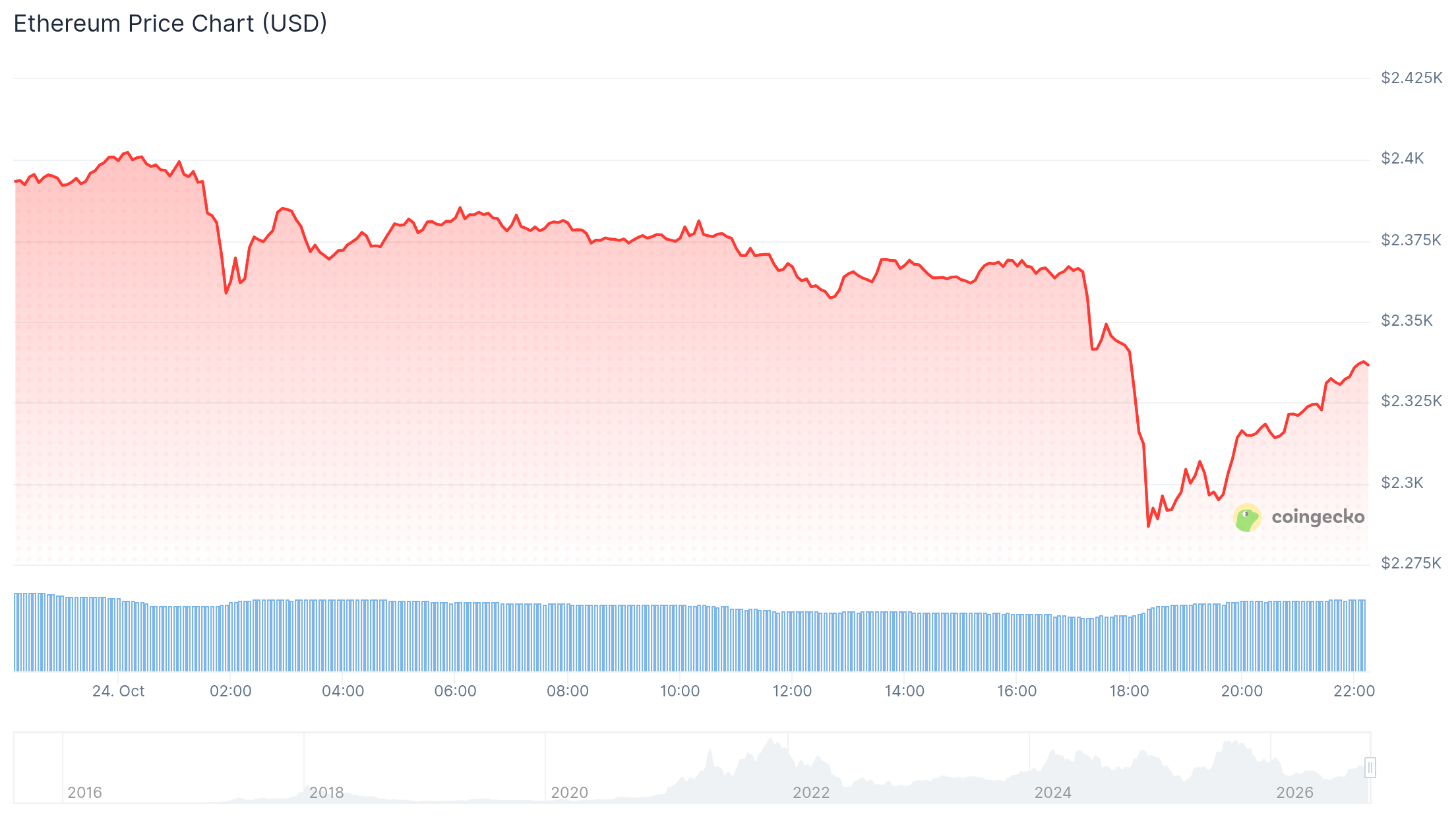
The analytical firm pinpointed two specific liquidation thresholds that threaten to unravel these massive positions: $2,256.45 and $2,226.53. As the daily price chart positioned Ethereum around $2,376.62—having decisively breached the vital $2,385.62 support level—the margin for error narrowed dramatically. Should a wave of selling push ETH downward to test these structural floors, the automated liquidation of these whale positions could trigger a domino effect. Forced liquidations systematically market-sell collateralized assets to cover debt obligations, injecting abrupt and heavy selling pressure into an already fragile order book.
Technical Landscape and Near-Term Price Action
From a technical perspective, Ethereum’s daily charts reflect a market struggling to regain its footing after a failed recovery attempt toward the $2,540.68 region. The inability to sustain momentum above the $2,385 support level has left the near-term rebound scenario highly uncertain, with technical indicators flashing persistent caution.
The Parabolic Stop and Reverse (SAR) indicator continues to trend well above the current market price, resting at $2,509.93 and signaling that the broader intermediate trend remains downward. Concurrently, the Moving Average Convergence Divergence (MACD) indicator maintains a clear bearish crossover, accompanied by a negative histogram reading of 8.90. These indicators collectively suggest that bullish momentum has dried up, leaving the asset vulnerable to extended retracements unless buyers can reclaim crucial historical levels.
For market participants, the immediate battleground is clearly defined. Bulls must orchestrate a decisive move back above the $2,385 resistance zone to neutralize immediate downside threats and rebuild structural confidence. Failure to do so exposes the cryptocurrency to a retest of the psychological and technical $2,300 handle, beneath which lie the dangerous whale liquidation clusters identified by Lookonchain.
Broader Implications and Market Outlook
The convergence of record-setting exchange outflows, vintage wallet profit-taking, and high-stakes whale leverage encapsulates the current state of the Ethereum market: a high-tension environment defined by structural contradictions. On one hand, the continuous removal of tokens from centralized trading venues points to an underlying supply squeeze that could fuel explosive upward volatility should macro conditions improve. On the other hand, relentless derivatives selling and the looming threat of multi-million-dollar liquidations create a hostile trading landscape for leveraged participants.
As Ethereum navigates these crosscurrents, market participants are forced to adopt a highly risk-conscious approach. The interplay between long-term supply contraction and short-term speculative fragility will likely dictate price discovery in the coming weeks. Whether the massive exchange outflows act as a springboard for a renewed bullish cycle—much like they did in early June—or whether derivatives-driven liquidations pull the asset down to test lower supports will depend entirely on how market participants manage their risk in an increasingly volatile macroeconomic climate.