Clean energy technology developer Emvolon has officially secured $22 million in a Series A funding round, a significant milestone that paves the way for the deployment of its innovative modular chemical systems. The startup, which emerged from the Massachusetts Institute of Technology (MIT) in 2021, aims to revolutionize the way industries handle waste methane by converting it into high-value sustainable fuels and chemicals at the source. This capital injection will enable the company to move beyond the pilot phase and initiate its first commercial-scale operations, providing a pragmatic solution for industries currently struggling to reduce their carbon footprints.
The funding round saw participation from a consortium of investors, including MassVentures, VX Ventures, and Wagner Carbon. By leveraging this financial support, Emvolon intends to scale its technology, which effectively repurposes existing industrial hardware—specifically internal combustion engines—to act as modular, onsite chemical reactors.
The Technological Evolution of Emvolon
Emvolon’s core innovation lies in its ability to decentralize the production of fuels. Traditionally, the conversion of waste gases like methane into usable fuels has required massive, centralized infrastructure that involves transporting hazardous or low-density gases over long distances. This process is not only logistically complex but often economically unviable due to the high capital expenditure required for pipeline construction and massive chemical plants.
Emvolon’s platform sidesteps these barriers by deploying containerized, prefabricated modules directly at the point of waste generation. Whether situated at landfills, wastewater treatment plants, agricultural operations, or industrial sites prone to gas flaring, these units capture methane and other waste gases and synthesize them into chemicals such as methanol. Methanol is a versatile commodity, serving as a critical precursor in plastics production and as a promising low-carbon fuel for the maritime and aviation sectors.
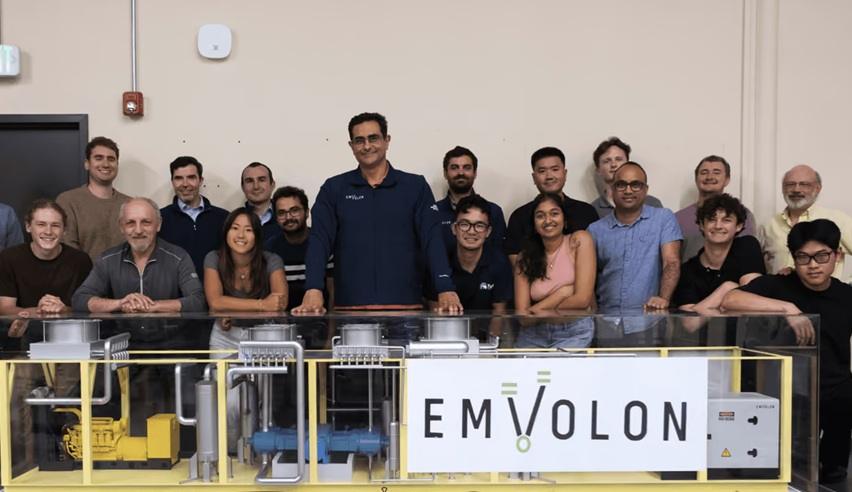
By utilizing off-the-shelf equipment, such as modified internal combustion engines, the company significantly lowers the barrier to entry. This approach allows the technology to be deployed in diverse geographic locations without the need for extensive grid connectivity or large-scale construction, aligning with the growing global demand for localized energy resilience.
Chronology and Development Timeline
The journey of Emvolon from an academic spinout to a commercial-scale entity has been marked by a methodical approach to engineering and validation.
- 2021: Emvolon is founded at MIT, drawing on years of research into efficient small-scale chemical synthesis and gas-to-liquids (GTL) conversion.
- 2022–2023: The company spends its early years refining its modular reactor design, focusing on the durability of the converted engines and the purity of the chemical outputs.
- 2024: Emvolon enters a strategic partnership with Montauk Renewables, a prominent renewable energy company, to establish a pilot project. This collaboration served as a critical proof-of-concept for the company’s ability to operate in real-world, high-volume environments.
- Late 2025: The success of the pilot program leads to a joint venture aimed at scaling biomethanol production. Initial targets are set at 50,000 tonnes annually across multiple sites.
- October 2026: Emvolon secures $22 million in Series A funding, marking the official transition to a commercial-scale growth phase.
Supporting Data and Industry Context
The urgency for technologies like Emvolon’s is driven by the intensifying global focus on methane mitigation. Methane is a potent greenhouse gas, with a global warming potential over 80 times that of carbon dioxide over a 20-year period. According to the International Energy Agency (IEA), methane emissions from the energy sector alone remain near record highs, despite the availability of cost-effective abatement solutions.
Emvolon’s model addresses several market gaps:
- Economic Viability: By transforming a waste liability into a revenue-generating asset (fuel/chemicals), the system creates an immediate financial incentive for site operators to capture methane rather than venting or flaring it.
- Energy Independence: As geopolitical volatility impacts global fuel supply chains, the ability to produce fuels locally provides a hedge against price spikes and supply disruptions.
- Capital Efficiency: The modular, prefabricated nature of the system reduces the "stranded asset" risk associated with multi-billion-dollar chemical mega-projects, which often take years to permit and build.
Official Statements and Strategic Vision
The investment community views Emvolon’s approach as a departure from the "bigger is better" philosophy that has historically dominated the chemical industry. Priya Yadav, representing MassVentures, highlighted the shift in perspective during the announcement of the funding: "Emvolon’s standardized, modular platform has the potential to fundamentally change the economics of distributed clean fuel production. This first commercial system marks a critical step toward scaling a repeatable, cost-competitive model across multiple projects."

Emmanuel Kasseris, the co-founder and CEO of Emvolon, emphasized the strategic importance of the funding for the company’s immediate future. "Emvolon has a unique ability to expand available energy sources by deploying onsite, establishing local fuel supply chains, and ensuring regional energy resilience. This round gives us the capital to deploy our first commercial system, prove the model, and start building the supply chains that hard-to-abate industries are actively looking for," Kasseris stated.
Broader Impact and Market Implications
The implications of Emvolon’s success extend beyond its own balance sheet. If the company can successfully scale its operations across North America and into international markets, it could fundamentally alter the economics of carbon capture and utilization (CCU).
For the maritime and aviation industries, which are under immense pressure to decarbonize, the availability of locally produced sustainable methanol offers a bridge to net-zero operations. These sectors require massive quantities of low-carbon fuels, and current supply chains are insufficient to meet the projected demand for 2030 and beyond. Emvolon’s ability to turn agricultural and industrial waste into a direct substitute for fossil-based methanol provides a tangible pathway to fulfilling these ESG mandates.
Furthermore, the technology serves as a template for "circular economy" industrial design. By utilizing equipment that would otherwise be retired or underutilized, the company minimizes the embedded carbon footprint of its own infrastructure. This "repurposing" philosophy is likely to gain traction as environmental regulations tighten and the cost of capital for traditional, resource-heavy projects rises.
Challenges and Future Outlook
Despite the optimism surrounding the Series A round, the path to widespread adoption is not without hurdles. Scaling modular hardware involves significant logistical challenges, including site-specific permitting, the variability of feedstocks from different types of waste, and the maintenance of distributed units across vast geographic areas.

Emvolon must ensure that its chemical reactors can maintain high uptime and performance consistency without the presence of a centralized team of engineers. Success will hinge on the company’s ability to automate monitoring and maintenance processes, likely utilizing predictive AI and remote diagnostics to ensure the systems operate at peak efficiency.
As the company prepares to deploy its first commercial-scale systems, the industry will be watching closely. The success of the joint venture with Montauk Renewables will likely serve as the primary indicator of whether this technology can truly scale. If the company achieves its target of 50,000 tonnes of biomethanol, it will provide a robust validation of the distributed manufacturing model, potentially sparking a wave of similar innovations in the waste-to-energy sector.
In summary, the $22 million funding of Emvolon is more than a simple capital infusion; it is a vote of confidence in the decentralization of chemical manufacturing. By turning methane from a climate threat into a building block for the green economy, Emvolon is positioning itself as a pivotal player in the transition to a sustainable industrial future. With the initial commercial systems expected to come online in the coming months, the company is poised to move from a promising startup to a critical component of the global energy transition.