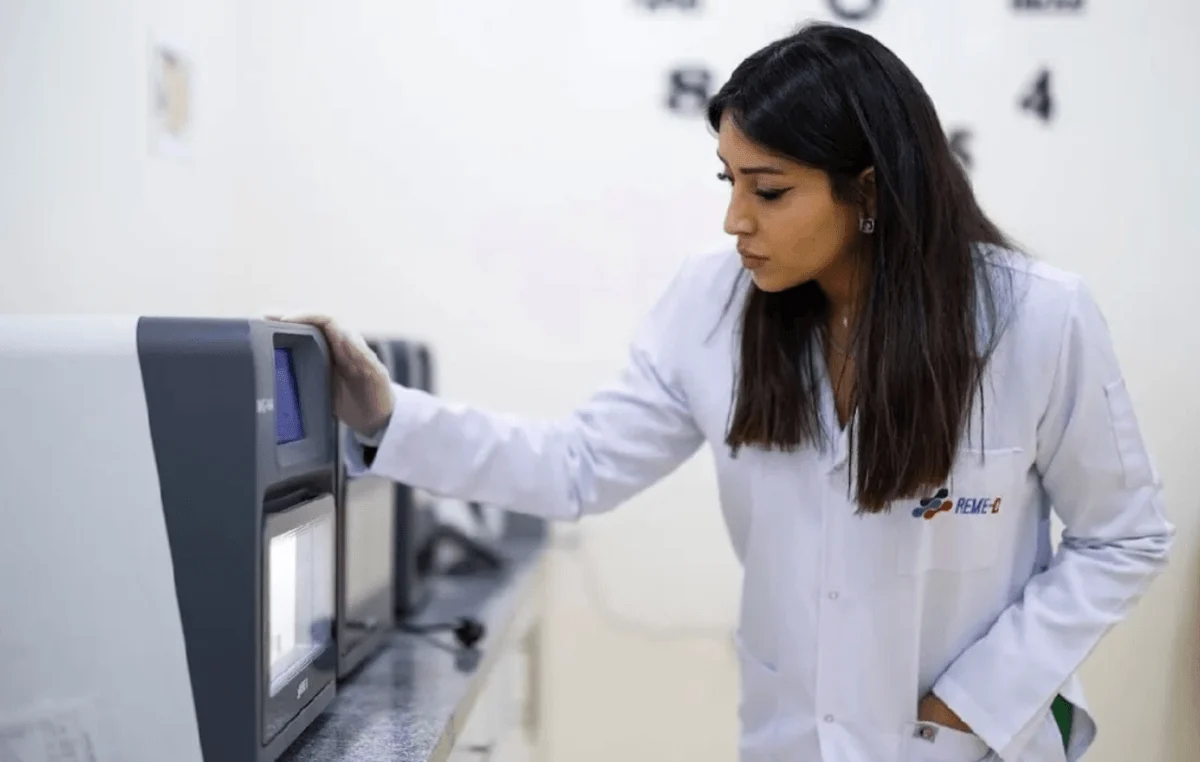
The Egyptian medical technology sector has reached a significant milestone as Reme-D, a Cairo-based startup specializing in affordable diagnostic solutions, successfully closed a $1.5 million pre-Series A funding round. This capital injection, led by Anara Impact Capital, marks a pivotal moment for healthcare accessibility in under-resourced regions, particularly across Africa and the Middle East. The round saw participation from a consortium of mission-aligned investors, including the Global Innovation Fund (GIF), which increased its previous commitment, and Cape Town-based Africa Health Ventures. This influx of capital is earmarked for the expansion of Reme-D’s manufacturing capabilities, the diversification of its product line into oncology and genetics, and the strengthening of its distribution networks in markets where traditional laboratory infrastructure remains a luxury.
Addressing the Global Diagnostics Gap
The core of Reme-D’s mission lies in addressing a critical "diagnostics gap" that disproportionately affects the Global South. According to data from the Lancet Commission on Diagnostics, nearly 47% of the global population has little to no access to basic diagnostic services. In low-income and lower-middle-income countries, the lack of timely testing means that diseases often go untreated until they reach advanced stages, leading to higher mortality rates and increased healthcare costs.
Traditional diagnostic methods for high-consequence diseases—such as Tuberculosis (TB), HIV, and Hepatitis—frequently rely on sophisticated molecular testing equipment that requires a stable power supply and rigorous climate control. For many rural clinics in sub-Saharan Africa or conflict-affected regions like Sudan and Iraq, these requirements are impossible to meet. Reme-D has disrupted this paradigm by developing diagnostic kits that are not only rapid and low-cost but are also "heat-stable," meaning they do not require refrigeration or a complex "cold chain" for transport and storage. This innovation allows healthcare providers in remote areas to conduct high-accuracy tests at the point of care, significantly reducing the time between diagnosis and treatment.
Strategic Investor Alignment and Financial Trajectory
The lead investor in this round, Anara Impact Capital, represents a new wave of regional venture activity. Spun out of the UK-based Alfanar Venture Philanthropy in late 2023, Anara focuses on social enterprises in the Middle East and Africa that demonstrate both commercial viability and high social impact. Their decision to lead Reme-D’s pre-Series A reflects a confidence in the startup’s ability to scale deep-tech solutions within emerging markets.
The Global Innovation Fund’s decision to "re-up" its commitment is equally telling. Having initially invested $500,000 in April of this year, GIF’s continued support suggests that Reme-D met or exceeded its initial performance benchmarks within a very short timeframe. Meanwhile, the inclusion of Africa Health Ventures provides Reme-D with a strategic foothold in the Southern African market, a region that continues to grapple with high burdens of infectious diseases.
Reme-D is also a notable graduate and portfolio company of Open Startup (OST), a Tunisia-based accelerator that recently transitioned into an investment vehicle. OST’s involvement highlights the growing interconnectedness of the African tech ecosystem, where North African startups are increasingly looking toward pan-African expansion rather than focusing solely on domestic or Middle Eastern markets.
Technological Innovation and Product Portfolio
Since its commercial launch in 2023, Reme-D has moved at a rapid pace, successfully commercializing 30 distinct diagnostic products. The company’s portfolio is currently centered on four major public health priorities:
- Tuberculosis (TB): Despite being curable, TB remains one of the world’s deadliest infectious diseases. Reme-D’s kits allow for rapid detection in settings where traditional sputum microscopy or expensive PCR machines are unavailable.
- HIV: Early detection is vital for the management of HIV and the prevention of mother-to-child transmission. Reme-D’s low-cost kits facilitate mass screening in high-prevalence areas.
- Hepatitis: Viral hepatitis causes significant liver disease and cancer worldwide. Reme-D provides tools for screening that can be deployed in community-level health centers.
- Human Papillomavirus (HPV): HPV is the primary cause of cervical cancer. In many developing nations, women lack access to regular Pap smears. Reme-D’s molecular tests for HPV offer a more effective screening alternative that can be administered even in resource-constrained environments.
To date, the company has supplied over 500,000 diagnostic kits across Egypt, Iraq, Kenya, and Sudan. The expansion into Sudan and Iraq is particularly noteworthy, as these regions present extreme logistical challenges due to ongoing instability and infrastructure damage. The ability of Reme-D’s products to function without refrigeration has been a decisive factor in their adoption by healthcare providers in these "last-mile" settings.
Leadership and Scientific Excellence
Reme-D stands out in the regional tech landscape not only for its product but also for its leadership and internal culture. Founded and led by Salma Tammam, the company has become a flagship for female-led deep-tech entrepreneurship in Egypt. Tammam has articulated a vision where "success" is measured by the removal of barriers to life-altering diagnoses for patients across the Global South.
The company employs a team of nearly 50 scientists, a significant feat for a pre-Series A startup. Notably, 50% of the scientific staff are women, a statistic that reflects a deliberate effort to foster gender diversity in STEM (Science, Technology, Engineering, and Mathematics). This scientific bench strength is currently focused on the next frontier for Reme-D: genetic testing and early-stage cancer detection. By moving into oncology, Reme-D aims to address the rising burden of non-communicable diseases in Africa, where cancer survival rates are often much lower than in Western nations due to late-stage diagnosis.
Chronology of Growth
The rise of Reme-D has followed a disciplined trajectory:
- 2021–2022: Research and development phase, focusing on the stabilization of molecular reagents to eliminate the need for cold-chain logistics.
- Early 2023: Official commercialization of the first suite of diagnostic products.
- April 2024: Secured an initial $500,000 investment from the Global Innovation Fund to begin international pilot programs.
- Mid-2024: Expanded distribution to Kenya and Iraq, surpassing the milestone of 500,000 kits distributed.
- Late 2024: Closure of the $1.5 million pre-Series A round led by Anara Impact Capital to fund R&D for cancer and genetic testing.
Broader Impact and Industry Implications
The success of Reme-D carries broader implications for the global health industry and the investment landscape in the MENA (Middle East and North Africa) region. First, it demonstrates the viability of "frugal innovation"—the process of reducing the complexity and cost of a good and its production. By stripping away the need for expensive laboratory environments, Reme-D is not just making a cheaper product; it is making a more resilient one.
Second, the investment underscores a shift in how international funds view African healthcare startups. There is an increasing recognition that local problems require locally manufactured solutions. Importing diagnostic kits from Europe or the United States is often prohibitively expensive for African ministries of health, and these imported kits are frequently not optimized for the environmental conditions of the continent. Reme-D’s localized manufacturing model in Egypt provides a blueprint for regional self-sufficiency in medical supplies.
Furthermore, the focus on HPV and cervical cancer screening aligns with global health initiatives like the World Health Organization’s (WHO) strategy to accelerate the elimination of cervical cancer. By providing the tools for high-precision screening at a fraction of the current market cost, Reme-D is positioning itself as a critical partner for NGOs and government health departments.
Future Outlook: Oncology and Genetics
With the new funding, Reme-D is poised to enter the complex fields of genetic testing and oncology. This is a bold move, as these areas typically require even more sophisticated technology than infectious disease testing. However, if the company can apply its "refrigeration-free" and "low-cost" philosophy to cancer markers, it could revolutionize how oncology is practiced in the Global South. Early detection of breast, lung, or colorectal cancer could save millions of lives in regions where radiotherapy and chemotherapy facilities are scarce and can only be effective if the disease is caught in its earliest stages.
As Salma Tammam and her team look toward the future, the primary challenge will be navigating the regulatory hurdles of different African and Middle Eastern nations, each with its own health authority and certification requirements. However, with the backing of Anara Impact Capital and the Global Innovation Fund, Reme-D possesses the financial runway and the strategic network to navigate these complexities.
In a global healthcare market often dominated by high-margin, high-tech solutions designed for wealthy nations, Reme-D serves as a reminder that some of the most impactful innovations are those that prioritize accessibility, durability, and the specific needs of the world’s most vulnerable populations. The $1.5 million raised is more than just a financial transaction; it is a vote of confidence in a future where a patient’s geography no longer determines their access to life-saving medical information.