
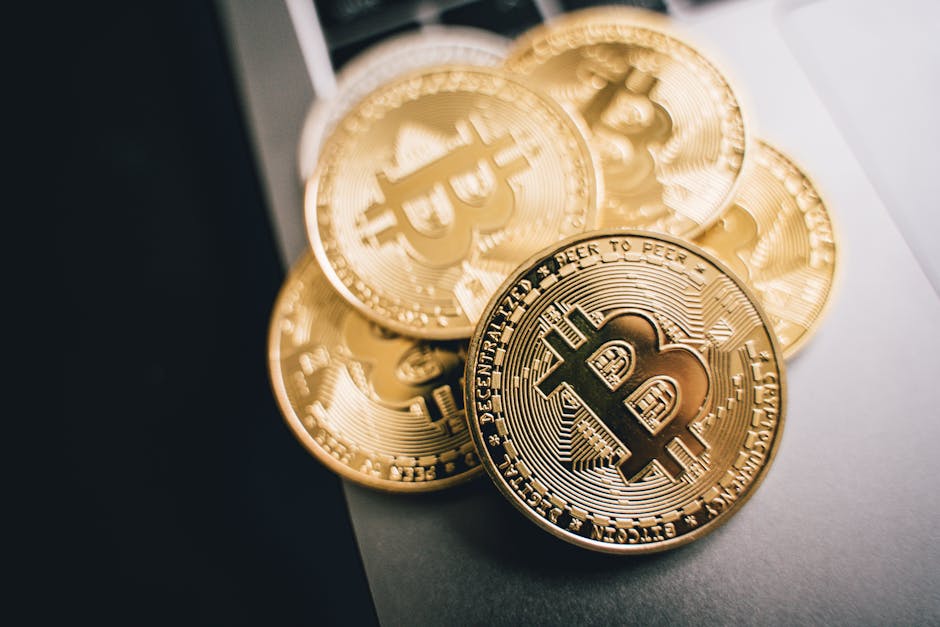
Digital Assets Suffer Bitcoin Leads: A Deep Dive into the Interconnected Cryptocurrency Market
The dominance of Bitcoin (BTC) in the cryptocurrency market is a well-established phenomenon. As the first and most recognizable digital asset, its price movements and market sentiment often dictate the trajectory of the entire altcoin ecosystem. This article will explore the intricate relationship between Bitcoin and other digital assets, analyzing how Bitcoin’s leadership role impacts their performance, the underlying mechanisms driving this correlation, and the implications for investors seeking to navigate this dynamic and often volatile landscape. Understanding this interconnectedness is crucial for anyone involved in the digital asset space.
The concept of "Bitcoin’s leadership" in the digital asset market is not merely anecdotal; it’s a quantifiable reality reflected in various on-chain metrics and market analyses. Bitcoin dominance, a metric representing Bitcoin’s market capitalization as a percentage of the total cryptocurrency market capitalization, serves as a primary indicator of this leadership. When Bitcoin dominance is high, it suggests that a significant portion of the overall investment in digital assets is concentrated in BTC. Conversely, a declining Bitcoin dominance often signals a period where altcoins are outperforming Bitcoin, a phenomenon sometimes referred to as an "altcoin season." However, even during these periods of altcoin resurgence, Bitcoin’s influence remains paramount. Its price action often acts as a leading indicator, with significant upward or downward movements in BTC price frequently preceding similar, albeit often amplified, movements in the altcoin market. This correlation isn’t a coincidence; it’s a systemic feature born from the foundational nature of Bitcoin within the digital asset ecosystem.
Several factors contribute to Bitcoin’s perennial leadership position and its subsequent influence on other digital assets. Firstly, Bitcoin’s historical significance and its status as a de facto digital gold or store of value lend it a unique gravitas. Early adopters, institutional investors, and a significant portion of retail investors often view Bitcoin as the safest entry point into the cryptocurrency market. When sentiment is positive, capital flows into Bitcoin first, and then, as investors seek higher potential returns and diversification, a portion of that capital spills over into altcoins. This "trickle-down" effect means that Bitcoin’s performance often sets the tone. If Bitcoin experiences a significant price surge, it injects a wave of optimism and liquidity into the broader market, encouraging investment in riskier, but potentially more rewarding, altcoins. Conversely, a Bitcoin downturn can trigger fear and uncertainty, leading to capital flight from the entire crypto market, with altcoins often being the first to experience significant sell-offs due to their higher volatility and perceived higher risk.
Secondly, the development of the cryptocurrency market itself has historically been driven by Bitcoin. Many early altcoins were created as forks or variations of Bitcoin’s codebase, aiming to improve upon its perceived shortcomings or introduce new functionalities. This lineage means that advancements and innovations in Bitcoin often have a ripple effect. For instance, major upgrades or significant news related to Bitcoin’s network or adoption can boost overall market confidence, indirectly benefiting altcoins. Furthermore, the development of infrastructure and services within the crypto space, such as exchanges, wallets, and custodial solutions, often prioritizes Bitcoin due to its market share and perceived stability. As these services mature and become more accessible, they facilitate broader adoption of digital assets, with Bitcoin often leading the charge. This foundational infrastructure then becomes available to altcoins, further solidifying Bitcoin’s central role.
The "risk-on, risk-off" sentiment in traditional financial markets often finds a parallel within the cryptocurrency space, with Bitcoin acting as the primary barometer. During periods of global economic uncertainty or heightened risk aversion, investors tend to move towards perceived safe-haven assets. While not universally accepted as such, Bitcoin has increasingly been viewed by some investors as a potential hedge against inflation and currency devaluation, similar to gold. When this "risk-off" sentiment prevails in broader markets, it can also translate into reduced appetite for speculative assets like cryptocurrencies. In such scenarios, Bitcoin might see a relative flight to perceived safety within the crypto market itself, while altcoins, often considered more speculative, experience sharper declines. Conversely, during "risk-on" periods, characterized by economic optimism and a willingness to embrace higher-risk investments, capital tends to flow more freely into speculative assets, including altcoins, often following Bitcoin’s lead.
The interconnectedness is also evident in the liquidity of the market. Bitcoin boasts the highest liquidity among all digital assets. This means that large buy or sell orders can be executed in Bitcoin with minimal price slippage compared to most altcoins. When significant capital enters the market, it often targets Bitcoin first due to its liquidity and established trading pairs. As Bitcoin’s price moves, it creates opportunities and influences trading strategies for altcoins. Traders looking to profit from market movements might buy Bitcoin as a primary position and then allocate a smaller portion of their capital to altcoins, anticipating that they will follow Bitcoin’s trajectory with amplified gains. Conversely, during market corrections, Bitcoin’s relative liquidity can act as a buffer, though it is not immune to substantial drops. The ease with which capital can move in and out of Bitcoin makes it a critical conduit for capital flow within the entire digital asset ecosystem.
The development of trading pairs also plays a significant role. Many altcoins are primarily traded against Bitcoin (e.g., ETH/BTC, XRP/BTC) on cryptocurrency exchanges. This means that the price of an altcoin is often denominated in Bitcoin, making its value directly tied to Bitcoin’s price. If Bitcoin’s price increases, the BTC-denominated value of an altcoin might remain the same, but its fiat-denominated value would also increase. However, if Bitcoin’s price decreases, even if an altcoin’s BTC-denominated price stays constant, its fiat-denominated price will fall. This direct trading relationship reinforces Bitcoin’s price-setting influence. When traders observe a significant move in BTC, they adjust their expectations and trading strategies for altcoins accordingly, often leading to synchronized price movements.
The emergence of Bitcoin-based exchange-traded products (ETPs) and other regulated investment vehicles has further solidified its leadership. As institutional investors increasingly enter the digital asset space, their initial and often primary focus remains on Bitcoin due to its regulatory clarity (relative to many altcoins), market capitalization, and established track record. The approval of Bitcoin ETFs in various jurisdictions, for example, has provided a more accessible on-ramp for institutional capital. This influx of institutional money into Bitcoin can create a positive feedback loop, driving up its price and, by extension, stimulating interest and investment in other digital assets. The perception of legitimacy and institutional adoption of Bitcoin often spills over, encouraging a broader acceptance and exploration of the wider digital asset market.
However, it is crucial to acknowledge that this leadership is not absolute and can, at times, be challenged. Periods of significant innovation and development within specific altcoin projects can lead to periods where altcoins decouple from Bitcoin’s price action, at least temporarily. These "altcoin seasons" are often characterized by substantial rallies in altcoins, driven by project-specific news, technological breakthroughs, or a general shift in investor sentiment towards alternative use cases and functionalities offered by these other digital assets. During such times, Bitcoin dominance might decline, indicating that altcoins are capturing a larger share of the market’s growth. Yet, even in these instances, Bitcoin’s overall market stability often provides a foundation upon which these altcoin rallies are built, and a significant downturn in Bitcoin can still pull down even the strongest altcoins.
The implications for investors are profound. For those new to the digital asset market, Bitcoin often serves as a sensible starting point due to its perceived relative stability and established infrastructure. Building a core portfolio around Bitcoin can be a prudent strategy, with smaller allocations to altcoins undertaken with a thorough understanding of their higher risk profiles. For experienced investors, understanding Bitcoin’s leadership allows for more strategic portfolio management. Identifying potential altcoin seasons by monitoring Bitcoin dominance and price trends can help in timing entries and exits. However, relying solely on Bitcoin’s movements to predict altcoin performance is a flawed approach. Fundamental analysis of individual altcoin projects, their technology, use cases, development teams, and community support remains essential to identify potential outperformers.
Furthermore, the increasing maturity of the digital asset market is leading to a more nuanced relationship between Bitcoin and its altcoin counterparts. While Bitcoin’s influence is undeniable, the growing number of sophisticated altcoins addressing diverse use cases – from decentralized finance (DeFi) and non-fungible tokens (NFTs) to supply chain management and gaming – is creating more independent value drivers. However, the sheer weight and established infrastructure of Bitcoin mean that its price action will likely continue to be a significant, if not dominant, factor influencing the broader digital asset market for the foreseeable future. The digital asset landscape is a complex, interconnected ecosystem, and Bitcoin, by virtue of its pioneering status and market capitalization, remains its undisputed leader. Analyzing this leadership is not just an academic exercise; it is a fundamental requirement for successful navigation of the cryptocurrency space.
