
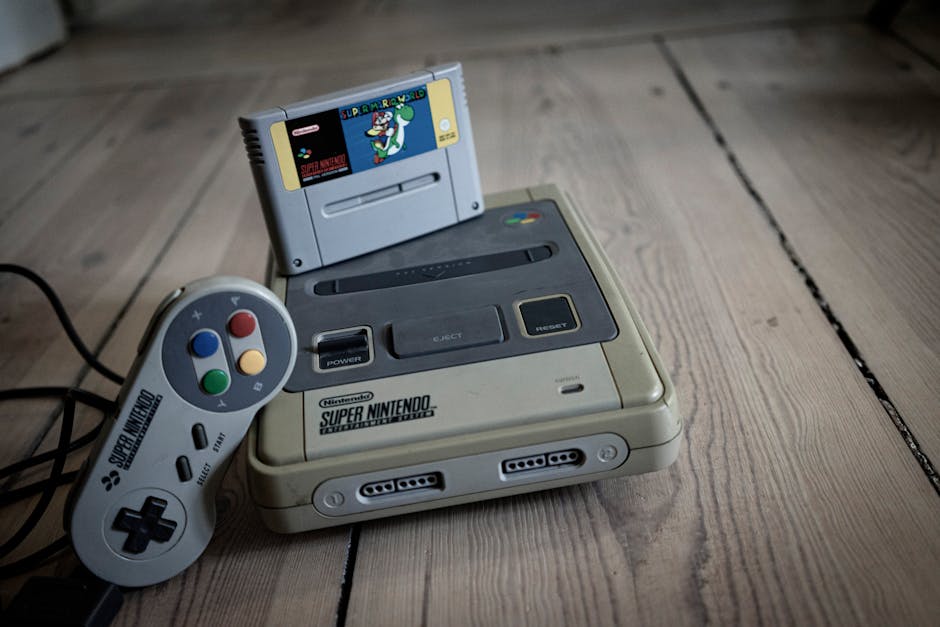
The Enduring Legacy of SNES Homebrew: How Developers Keep the Super Nintendo Alive
The Super Nintendo Entertainment System (SNES), a titan of 16-bit gaming, continues to captivate a dedicated following decades after its initial release. While official cartridges have long ceased production, a vibrant and innovative homebrew scene thrives, breathing new life into the console. This community of passionate developers, often working independently or in small teams, leverages their technical expertise and love for the SNES to create entirely new games, ports, and enhancements. This article delves into the intricacies of SNES homebrew development, exploring the tools, techniques, and challenges involved in inscribing new experiences onto this classic platform, and examines why this persistent dedication to a bygone era remains so compelling.
At the heart of SNES homebrew development lies a deep understanding of the console’s architecture. The SNES, known for its groundbreaking Mode 7 graphics, Super FX chip, and robust sound capabilities, presents both a playground and a puzzle for aspiring creators. Developers must master the hardware’s limitations and exploit its strengths to craft compelling gameplay. This often involves a thorough knowledge of the SNES’s central processing unit (CPU), the Ricoh 5A22, which is essentially a modified 65c816. Understanding its clock speed, memory access patterns, and instruction set is paramount. Furthermore, the graphics and sound processing units, the Picture Control Unit (P C U) and the Sound Expansion Unit (S E U), respectively, require intimate knowledge. The P C U, responsible for sprite handling, background layers, and Mode 7 transformations, is a particularly complex beast. Developers must orchestrate sprite palettes, tile maps, and scrolling registers with precision to achieve visual effects that push the SNES to its limits. Similarly, the S E U, a powerful sound chip for its time, requires careful programming to generate music and sound effects that evoke the iconic audio landscape of the SNES era.
The tools available to SNES homebrew developers have evolved significantly over the years. Initially, development relied on specialized, often expensive, hardware development kits and programming in assembly language. This steep learning curve discouraged many, limiting the scene to a select few with deep technical knowledge. However, the advent of more accessible tools has democratized SNES development. Assemblers like ca65, part of the cc65 toolchain, provide a powerful and flexible way to write SNES code in assembly language, allowing for maximum control over the hardware. For those less inclined towards pure assembly, C compilers, such as the widely used nes2c, offer a higher-level programming experience while still generating efficient machine code. These compilers translate C code into assembly, bridging the gap between modern programming paradigms and the SNES’s intrinsic architecture. Beyond compilers, various emulators like Snes9x and bsnes play a crucial role not only for testing but also for debugging. These emulators allow developers to meticulously step through code, inspect memory, and identify bugs without the need for physical hardware, significantly streamlining the development process. Debugging tools, often integrated within emulators or as standalone programs, are indispensable for diagnosing issues, optimizing performance, and ensuring the game behaves as intended across different SNES hardware revisions and emulated environments.
Creating a new game from scratch for the SNES involves a multifaceted process. It begins with an idea, a concept that can be translated into the limitations and capabilities of the platform. This is followed by meticulous planning, mapping out game mechanics, level design, character sprites, and audio assets. Game engines, while not as sophisticated as those for modern platforms, are often developed or adapted by homebrew communities. These engines provide frameworks for handling common game elements like physics, collision detection, input processing, and rendering, allowing developers to focus more on gameplay and content. Sprite design is a critical visual component. Artists must create detailed pixel art within strict color limitations and sprite size constraints. The SNES can handle up to 128 sprites on screen simultaneously, but managing their on-screen presence and avoiding sprite flickering requires careful programming and optimization. Background art, also pixel-based, contributes to the game’s atmosphere and visual identity. Mode 7, a signature feature of the SNES, allows for the creation of pseudo-3D environments through scaling and rotation of background layers. Mastering Mode 7 is a hallmark of many impressive SNES homebrew titles, enabling dynamic camera perspectives and immersive worlds.
Music and sound design are equally vital to the SNES experience. The S E U, with its eight sound channels, provides a versatile platform for composing original music and generating sound effects. Composers often work with trackers or specialized music creation tools that output data compatible with the SNES’s sound hardware. Replicating the catchy melodies and iconic sound effects that defined SNES games requires both musical talent and a deep understanding of the S E U’s capabilities, including its waveform generation, envelope control, and echo effects. The process of porting existing games from other platforms to the SNES is another significant area of homebrew activity. This involves analyzing the original game’s logic and assets and meticulously recreating them within the SNES’s technical constraints. This often requires significant re-engineering of code and graphics to fit the SNES’s memory and processing power. Successfully porting a complex game like a PC title or a PlayStation game to the SNES is a testament to the immense skill and dedication of these developers.
The challenges inherent in SNES homebrew development are numerous. Memory is a constant constraint. The SNES typically has 128KB of main RAM and 256KB of Video RAM, which must be carefully managed for storing game code, data, graphics, and sound. Optimizing code to reduce its memory footprint and ensure efficient execution is a core skill. Processing power, while impressive for its era, also dictates the complexity of games that can be created. Developers must find clever algorithms and efficient programming techniques to achieve smooth frame rates and responsive gameplay. Graphics limitations, particularly color palettes and sprite limits, require creative solutions to present visually appealing and engaging worlds. Furthermore, the lack of readily available official development tools and the need to reverse-engineer existing hardware and software add layers of difficulty. Documentation for the SNES hardware, while more prevalent now thanks to community efforts, was initially scarce, forcing developers to learn through experimentation and observation.
Despite these challenges, the SNES homebrew scene continues to flourish due to a confluence of factors. The nostalgia factor is undeniable. Many developers grew up playing SNES games and possess a deep emotional connection to the console. This passion fuels their drive to create new experiences that evoke the same sense of wonder and enjoyment. The artistic and creative freedom offered by homebrew development is another significant draw. Without the commercial pressures and marketing demands of major game studios, developers can pursue their unique visions and experiment with innovative game mechanics and artistic styles. The SNES, with its distinctive aesthetic and gameplay paradigms, provides a rich canvas for such experimentation. The strong sense of community is also crucial. Homebrew developers often share knowledge, tools, and resources, fostering a collaborative environment where learning and mutual support are prioritized. Online forums, dedicated websites, and social media groups serve as hubs for communication and idea exchange.
The SNES homebrew scene has produced a remarkable array of titles, ranging from entirely new, original games to faithful ports of modern indie titles and even ambitious reimaginings of classic arcade games. These games often showcase impressive technical prowess, pushing the SNES hardware in ways that were not thought possible during its original lifespan. Examples include visually stunning platformers, intricate puzzle games, and even complex RPGs that rival some of the console’s official releases in scope and ambition. The creativity on display is a testament to the enduring appeal of the SNES as a development platform. Moreover, the existence of homebrew contributes to the preservation of the SNES as a cultural artifact. By creating new content and ensuring the continued playability of existing homebrew titles, these developers are actively contributing to the longevity of the platform’s legacy. They are not just playing old games; they are actively shaping the ongoing narrative of the Super Nintendo.
The impact of SNES homebrew extends beyond mere hobbyism. It serves as a valuable educational tool, teaching aspiring programmers and game designers about hardware-level programming, resource management, and the fundamental principles of game development. Many professional game developers honed their skills by experimenting with homebrew development on classic consoles. The SNES homebrew scene also fosters innovation. Developers often invent novel techniques or develop new tools that can then be adopted by others, contributing to the evolution of retro game development practices. The accessibility of the SNES, relative to modern consoles, allows for a lower barrier to entry for those who wish to experiment with game creation. The continuous flow of new, high-quality homebrew releases demonstrates that the Super Nintendo is far from being a relic of the past. It remains a fertile ground for creativity, innovation, and enduring passion, ensuring that the 16-bit era will continue to resonate with gamers and developers for years to come. The act of inscribing new experiences onto the SNES is a powerful testament to the console’s timeless appeal and the unyielding dedication of its most ardent fans.
