

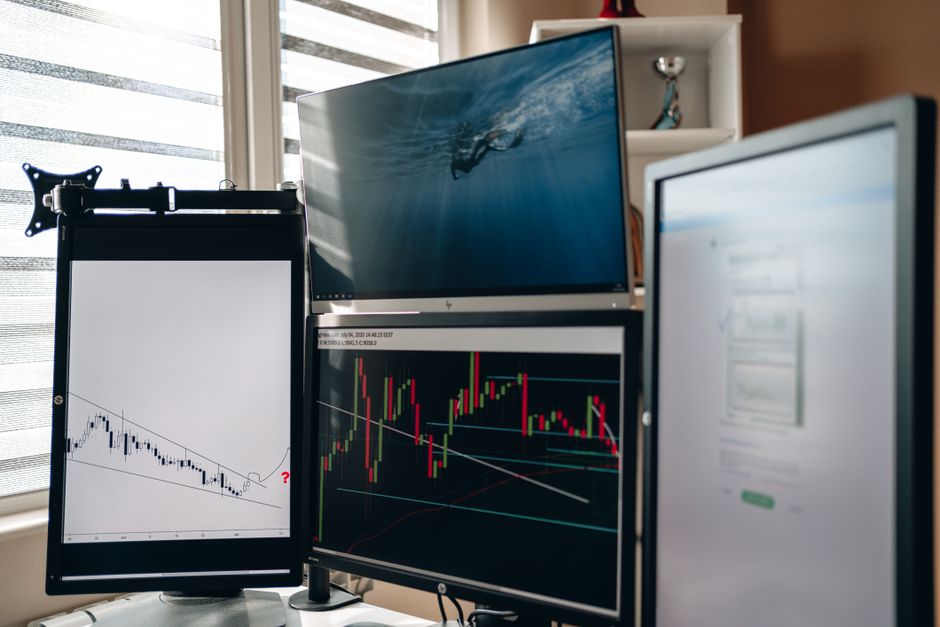
Decentralized Finance (DeFi) Technologies: Revolutionizing the Modern Trading Desk
The integration of Decentralized Finance (DeFi) technologies into traditional trading desk operations represents a paradigm shift, promising enhanced efficiency, reduced costs, and novel revenue streams. DeFi, a blockchain-based ecosystem, offers a permissionless and transparent financial infrastructure that fundamentally alters how assets are traded, managed, and leveraged. For trading desks, this translates into a significant opportunity to optimize existing workflows and unlock new market potentials. The core of this transformation lies in DeFi’s ability to disintermediate traditional financial institutions, thereby cutting out intermediaries, reducing transaction fees, and accelerating settlement times. Smart contracts, the self-executing agreements underpinning DeFi, automate complex trading processes, from trade execution and settlement to collateral management and risk mitigation. This automation minimizes human error and operational overhead, allowing trading desks to scale operations more effectively and respond to market volatility with greater agility.
One of the most immediate impacts of DeFi on trading desks is through enhanced liquidity provision and access. Decentralized exchanges (DEXs), powered by automated market makers (AMMs), enable peer-to-peer trading without centralized order books. Trading desks can participate in liquidity pools, providing assets in exchange for trading fees, thus generating passive income and increasing their market-making capabilities. This participation not only diversifies revenue but also contributes to deeper liquidity within the DeFi ecosystem, attracting more traders and further amplifying trading volume. Furthermore, DeFi protocols offer innovative lending and borrowing mechanisms. Trading desks can leverage their existing asset holdings as collateral to borrow stablecoins or other digital assets at competitive rates, enabling them to take on larger positions, engage in arbitrage opportunities, or manage short-term liquidity needs more efficiently. Conversely, they can lend out idle assets, earning interest and maximizing capital utilization. This frictionless access to capital fundamentally changes the risk and return profile for trading desks.
The transparency inherent in blockchain technology is another crucial advantage DeFi brings to trading desks. Every transaction on a public blockchain is immutable and auditable, providing an unprecedented level of visibility into trading activities, market movements, and counterparty risk. This transparency facilitates real-time risk management, compliance monitoring, and dispute resolution. Trading desks can gain a clearer picture of their exposure, identify potential market manipulation, and ensure adherence to regulatory frameworks more effectively. The reduction in counterparty risk is particularly significant. In traditional finance, trading desks rely on clearinghouses and custodians to mitigate counterparty risk, which introduces additional layers of complexity and cost. DeFi’s peer-to-peer nature, combined with the use of smart contracts for automated collateralization and settlement, significantly reduces this reliance, thereby lowering systemic risk and operational friction.
Tokenization is a key DeFi enabler that profoundly impacts trading desks by bringing traditional assets onto the blockchain. Real-world assets, such as equities, bonds, commodities, and even real estate, can be represented as digital tokens. This tokenization process unlocks a multitude of possibilities for trading desks. It allows for fractional ownership of high-value assets, democratizing investment opportunities and creating new avenues for trading. The ability to trade tokenized assets 24/7, globally, without the constraints of traditional market hours or geographical limitations, significantly expands the trading universe. Moreover, tokenization enables more efficient securitization and collateralization, as these digital representations are easily integrated into DeFi protocols for lending, borrowing, and derivatives trading. This opens up new markets for structured products and bespoke financial instruments, tailored to the specific needs of institutional investors.
The advent of decentralized derivatives platforms further amplifies the utility of DeFi for trading desks. These platforms allow for the creation and trading of a wide array of derivative products, including futures, options, and perpetual swaps, built and governed by smart contracts. This offers trading desks greater flexibility in hedging their portfolios, speculating on asset price movements, and executing complex trading strategies. The automated settlement and collateral management inherent in these decentralized derivatives eliminate the operational complexities and counterparty risks associated with traditional over-the-counter (OTC) derivatives. Furthermore, the ability to create bespoke derivatives through smart contract composition allows trading desks to design highly customized risk management solutions and capitalize on niche market opportunities that may be uneconomical or impossible to replicate in traditional markets.
Decentralized asset management solutions within DeFi also present compelling opportunities for trading desks. These platforms allow for the creation of decentralized autonomous organizations (DAOs) that can manage investment funds or trading strategies collaboratively. Trading desks can leverage these DAOs to pool capital, automate investment decisions, and participate in collective governance. This model can lead to more efficient resource allocation, increased transparency in fund management, and access to a broader range of investment strategies. The use of smart contracts for fund administration, performance tracking, and fee distribution streamlines operations and reduces administrative overhead. Furthermore, DAOs can foster innovation by enabling community-driven development of new financial products and services, which trading desks can then integrate into their offerings.
The integration of DeFi into trading desks is not without its challenges. Regulatory uncertainty remains a significant hurdle. As DeFi operates in a largely unregulated space, traditional financial institutions face compliance complexities when interacting with DeFi protocols. However, as the DeFi ecosystem matures, regulators are increasingly engaging with the technology, and frameworks for compliance are beginning to emerge. Trading desks must proactively monitor regulatory developments and adapt their strategies to ensure adherence to evolving legal requirements. Cybersecurity is another paramount concern. While blockchain technology itself is inherently secure, smart contracts can be vulnerable to exploits if not rigorously audited and secured. Trading desks must implement robust security protocols, conduct thorough due diligence on DeFi protocols they engage with, and prioritize the use of audited and battle-tested smart contracts.
The scalability of certain blockchain networks can also pose a challenge for high-frequency trading operations. Transaction throughput limitations and high gas fees can impede the speed and cost-effectiveness of executing a large volume of trades. However, ongoing advancements in blockchain scaling solutions, such as layer-2 protocols and sharding, are actively addressing these limitations. Trading desks are increasingly exploring and adopting these scaling technologies to enhance the performance of their DeFi-integrated trading operations. Furthermore, the user experience and learning curve associated with DeFi can be a barrier for some participants. The technical intricacies of interacting with blockchain wallets, smart contracts, and various DeFi protocols require a certain level of expertise. Investing in training and development for trading desk personnel is crucial to facilitate the effective adoption and utilization of DeFi technologies.
The potential for new revenue streams arising from DeFi integration is substantial. Beyond trading fees from liquidity provision and interest earned from lending, trading desks can explore opportunities in yield farming, where they stake assets in DeFi protocols to earn rewards. They can also participate in the creation and underwriting of new tokenized assets, acting as advisors or facilitators for the launch of digital securities or other blockchain-based instruments. The ability to offer decentralized derivatives and structured products can create significant fee income and attract new client segments. Moreover, by leveraging DeFi’s efficiency and cost reductions, trading desks can offer more competitive pricing to their clients, thereby increasing market share and profitability. The disintermediation offered by DeFi can also lead to lower operational costs, freeing up capital that can be redeployed into more profitable ventures or used to absorb market downturns.
The future of trading desks is undeniably intertwined with the evolution of Decentralized Finance. By strategically embracing and integrating DeFi technologies, trading desks can move beyond incremental improvements and achieve a transformative leap in their operational capabilities and market positioning. This involves a proactive approach to understanding the underlying technologies, identifying the most relevant protocols for their specific business needs, and developing the necessary expertise to navigate this rapidly evolving landscape. The shift towards a more decentralized, transparent, and efficient financial system is already underway, and trading desks that fail to adapt risk being left behind. The opportunities for innovation, cost reduction, and revenue generation are immense, making the integration of DeFi not just a strategic advantage, but an imperative for survival and growth in the modern financial markets. The ability to access global liquidity, automate complex processes, manage risk more effectively, and unlock new asset classes through tokenization will redefine the competitive landscape. As DeFi matures and gains broader institutional adoption, its impact on the trading desk will only deepen, paving the way for a more dynamic, accessible, and efficient financial ecosystem. The proactive adoption of DeFi technologies will be a key differentiator for trading desks seeking to thrive in the next era of financial innovation.

