

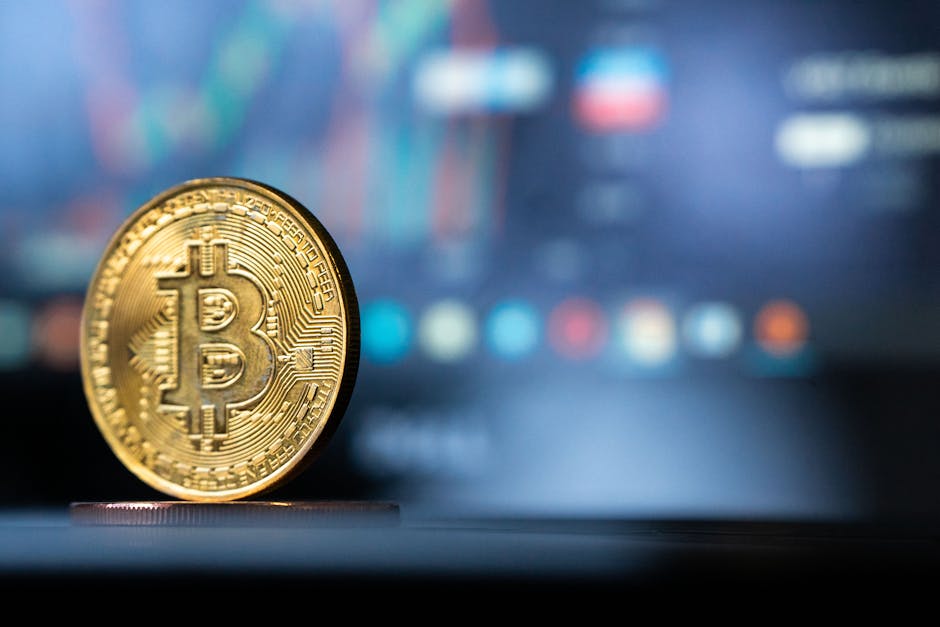
Coinbase Believes Tokenization and DeFi Will Revolutionize Finance
The financial world stands on the precipice of a transformative shift, driven by the burgeoning power of tokenization and decentralized finance (DeFi). Coinbase, a leading cryptocurrency exchange and a prominent player in the digital asset ecosystem, holds a strong conviction that these intertwined technologies will fundamentally reshape how assets are owned, managed, and traded, ushering in an era of unprecedented accessibility, efficiency, and innovation. This article will explore Coinbase’s perspective on the profound implications of tokenization and DeFi, delving into the core principles, potential benefits, and the challenges that lie ahead in realizing this decentralized financial future.
At its core, tokenization refers to the process of representing real-world or digital assets as unique digital tokens on a blockchain. These tokens can then be easily transferred, traded, and managed through smart contracts, enabling a fractionalization and democratization of ownership that was previously impossible or prohibitively complex. Think of anything of value – real estate, art, stocks, bonds, intellectual property, even carbon credits – being converted into digital tokens. Each token would represent a specific unit of ownership or claim to the underlying asset. This process dramatically lowers barriers to entry for investors, allowing individuals to acquire partial ownership of high-value assets with significantly smaller capital outlays. For instance, a fraction of a valuable piece of art or a commercial property can be tokenized, making it accessible to a much wider pool of investors than traditional ownership models would permit. This disintermediation inherent in tokenization also streamlines the entire lifecycle of an asset, from issuance and management to trading and settlement, reducing the reliance on costly intermediaries like custodians, brokers, and transfer agents. The immutable and transparent nature of blockchain technology ensures that ownership records are secure and verifiable, mitigating risks of fraud and disputes.
DeFi, on the other hand, is a broad ecosystem of financial applications built on blockchain technology, aiming to recreate traditional financial services in a decentralized and open manner. This includes lending and borrowing platforms, decentralized exchanges (DEXs), stablecoins, derivatives, insurance, and asset management protocols. The defining characteristic of DeFi is its permissionless nature, meaning anyone with an internet connection and a compatible crypto wallet can access these services without needing to go through traditional financial institutions, obtaining approvals, or meeting stringent Know Your Customer (KYC) requirements in many cases. Smart contracts, self-executing pieces of code on the blockchain, automate the execution of agreements and transactions within DeFi protocols, eliminating the need for human intervention and reducing operational costs and counterparty risk. Coinbase’s belief in the synergy between tokenization and DeFi stems from the understanding that tokenized assets can seamlessly integrate into the DeFi ecosystem, unlocking a wealth of new financial possibilities. Imagine a tokenized piece of real estate being used as collateral for a loan on a DeFi lending platform, or tokenized stocks being traded on a decentralized exchange. This fusion creates a more liquid, efficient, and accessible financial market for a vast array of assets.
Coinbase foresees tokenization acting as a foundational layer, bringing traditional and alternative assets onto the blockchain. This integration will significantly expand the universe of assets available within DeFi protocols. Currently, much of DeFi’s liquidity and innovation revolves around cryptocurrencies like Bitcoin and Ethereum, along with stablecoins. However, the true potential for a revolutionary financial system lies in the tokenization of real-world assets (RWAs). Once these RWAs are tokenized and interoperable with DeFi protocols, they can be utilized in novel ways. For example, tokenized bonds can be instantly tokenized and lent out on a DeFi platform, generating yield far faster and more efficiently than traditional bond markets. Similarly, tokenized venture capital fund interests could be traded on secondary markets, providing liquidity to investors who might otherwise be locked in for years. This unlocks a secondary market for illiquid assets, a significant improvement over traditional systems.
The benefits of this convergence, as envisioned by Coinbase, are multifaceted and far-reaching. Increased Liquidity: Tokenization dramatically enhances the liquidity of otherwise illiquid assets. By breaking down ownership into smaller, tradable tokens, a wider investor base can participate, leading to more active markets and easier price discovery. Enhanced Accessibility: The fractional ownership enabled by tokenization democratizes access to high-value assets, allowing individuals with smaller capital to invest in opportunities previously reserved for institutional investors or the ultra-wealthy. Improved Efficiency and Reduced Costs: Blockchain’s inherent efficiency, coupled with smart contract automation, slashes transaction times and the need for intermediaries, leading to significant cost reductions across financial operations. Greater Transparency and Security: The immutable and transparent ledger of blockchain technology provides an unparalleled level of security and auditable trails for asset ownership and transactions, reducing the risk of fraud and disputes. New Financial Products and Innovation: The combination of tokenized assets and DeFi protocols fosters the creation of innovative financial products and services that are impossible within the confines of traditional finance. This could include novel forms of collateralized lending, derivatives, and yield-generating strategies. Global Reach: Blockchain-based platforms are inherently global, removing geographical barriers and enabling seamless cross-border transactions, further expanding market access and opportunities.
Coinbase’s strategic investments and partnerships reflect this deep-seated belief. The company is actively exploring and developing solutions for tokenizing various asset classes and integrating them into a compliant and user-friendly DeFi ecosystem. Their focus extends beyond just the technological infrastructure; it also encompasses building robust regulatory frameworks and educating both institutional and retail investors about the potential and risks associated with tokenization and DeFi. They understand that widespread adoption hinges on trust and a clear understanding of the underlying mechanisms. For instance, they are likely investing in the development of platforms that can facilitate the issuance, management, and trading of tokenized securities, adhering to existing regulatory requirements while paving the way for future innovation. This includes exploring stablecoin integration, which acts as a vital bridge between traditional fiat currencies and the digital asset space, crucial for both tokenization and DeFi operations.
However, the path to a fully tokenized and decentralized financial future is not without its challenges. Regulatory Uncertainty: The evolving regulatory landscape surrounding digital assets and DeFi presents a significant hurdle. Governments and regulatory bodies worldwide are grappling with how to classify and oversee these new financial instruments, leading to a period of uncertainty that can stifle innovation and adoption. Coinbase, with its established presence, is actively engaging with regulators to help shape these frameworks. Scalability: While blockchain technology is advancing, ensuring the scalability of networks to handle the sheer volume of transactions required for a global financial system remains a critical challenge. Solutions like layer-2 scaling protocols are crucial for this growth. Security Risks and Smart Contract Vulnerabilities: DeFi protocols, while offering efficiency, are susceptible to smart contract bugs and exploits, which can lead to substantial financial losses. Robust auditing and security practices are paramount. User Experience and Education: The complexity of DeFi protocols and the need for technical understanding can be a barrier for mainstream adoption. Coinbase’s role in simplifying user interfaces and providing educational resources is vital for bridging this gap. Interoperability: Ensuring seamless interoperability between different blockchain networks and tokenized asset standards is crucial for a truly interconnected financial ecosystem. Without this, the benefits of tokenization and DeFi could be fragmented. Environmental Concerns: The energy consumption of some blockchain consensus mechanisms, particularly proof-of-work, has raised environmental concerns. The shift towards more energy-efficient consensus mechanisms like proof-of-stake is essential for long-term sustainability and broader acceptance.
Coinbase’s vision extends beyond simply facilitating transactions. They believe tokenization and DeFi will democratize finance by offering previously inaccessible investment opportunities and financial services to a global population. This includes individuals in emerging markets who may be underserved by traditional financial institutions. The ability to tokenize income streams, for example, could open up new avenues for financing and investment in these regions. Furthermore, the transparency inherent in blockchain technology can foster greater trust and accountability in financial systems, potentially reducing corruption and improving economic outcomes. The reduction in reliance on centralized authorities also shifts power and control towards individuals, promoting financial autonomy and self-sovereignty.
The implications for traditional financial institutions are profound. While some may view tokenization and DeFi as a threat, Coinbase likely sees them as an opportunity for evolution. Institutions that embrace these technologies can leverage them to offer new products, improve existing services, and reach new customer segments. Those that resist may find themselves increasingly irrelevant in a rapidly changing financial landscape. The potential for tokenized assets to be integrated into the balance sheets of traditional financial firms, offering new avenues for capital allocation and risk management, is a significant area of development.
In conclusion, Coinbase’s conviction that tokenization and DeFi will revolutionize finance is grounded in a deep understanding of the transformative potential of blockchain technology. By enabling the creation of digital representations of real-world and digital assets and building open, permissionless financial applications, these technologies promise to unlock unprecedented liquidity, accessibility, efficiency, and innovation. While significant challenges remain, including regulatory clarity, scalability, and security, Coinbase’s proactive approach to development, education, and regulatory engagement positions them as a key player in shaping this future. The convergence of tokenization and DeFi represents not just an evolution, but a fundamental reimagining of the global financial system, moving towards one that is more inclusive, efficient, and accessible for all. This paradigm shift, driven by technological innovation and a commitment to decentralization, is poised to redefine financial services for generations to come.

