Wealthfront has announced a significant expansion of its financial ecosystem in 2026, marking a strategic pivot toward deeper infrastructure integration and a broader array of investment and savings tools. The company’s latest product rollout, detailed by Vice President of Product Dave Myszewski, emphasizes the automation of complex financial tasks, from inter-account asset transfers to the management of generational wealth. These developments represent a departure from traditional, siloed financial services, aiming instead to create a unified platform that addresses the diverse life stages of its client base, including young families, long-term investors, and individuals managing high-yield cash reserves.
Chronology of 2026 Strategic Initiatives
The first three quarters of 2026 have been defined by a concerted effort to move beyond Wealthfront’s original mandate as a robo-advisor, evolving into a comprehensive wealth management hub. Following the initial stabilization of its high-yield cash products in early 2026, the company shifted its technical resources toward infrastructure hardening. This groundwork was intended to facilitate faster transaction processing and the launch of sophisticated products that require lower latency and higher security.
In the second quarter, the firm introduced its Custodial Account, addressing a persistent request from its client demographic—parents seeking to integrate their children’s financial futures into their existing investment dashboards. By mid-year, the company had successfully expanded its Stock Investing Account to include over 300 additional global securities, effectively positioning itself to compete with traditional brokerage platforms that offer more robust international equity access. Throughout this period, the introduction of the Vested Interest newsletter served as a tactical bridge between the platform’s technical offerings and the broader macroeconomic environment, providing users with context for interest rate volatility and market shifts.
Expanding the Investment Frontier: Custodial and Global Equity Access
The introduction of the Wealthfront Custodial Account is perhaps the most significant structural change for the platform this year. By offering an automated mechanism to manage tax burdens on behalf of a child before they reach the age of majority, Wealthfront is targeting the long-term planning needs of its aging user base. Unlike legacy custodial accounts that often require manual intervention to optimize for tax efficiency, the Wealthfront model utilizes automation to manage asset allocation and tax-loss harvesting.
Concurrently, the expansion of the Stock Investing Account to include major international players—such as Taiwan Semiconductor (TSM), ASML Holdings (ASML), and Novo Nordisk (NVO)—marks a pivotal shift in the platform’s accessibility. Previously, Wealthfront was viewed primarily as a home for passive, diversified index investing. By enabling individual stock purchases, the firm is acknowledging the "core-and-satellite" investment strategy favored by modern retail investors, who prefer to hold broad market indices for stability while allocating a smaller portion of their capital to specific growth-oriented equities.
This update is supported by a redesigned search architecture, which allows users to filter and identify securities with greater granularity. Furthermore, the introduction of customizable dividend reinvestment—allowing users to either compound their holdings or sweep dividend income into their interest-bearing Cash Account—provides a level of cash-flow control that was previously unavailable on the platform.
Automating Life Transitions: The Mechanics of Wealth Consolidation
One of the most notable, yet often overlooked, pain points in the retail finance industry is the friction associated with moving assets during life transitions such as marriage, divorce, or bereavement. Wealthfront’s decision to allow users to migrate assets from Individual Investing Accounts to Joint Accounts without liquidating holdings is a major technical advancement.
In traditional finance, moving assets between accounts often requires a taxable event—selling securities, transferring cash, and repurchasing the securities—which can trigger significant capital gains taxes and market exit/entry risk. By engineering a seamless internal transfer process, Wealthfront is effectively reducing the "switching cost" of managing shared finances. This aligns with broader industry trends toward "all-in-one" finance, where the goal is to keep as many of a client’s assets within a single ecosystem as possible, thereby increasing user retention and reducing churn.
Competitive Yields and the "Direct Deposit Plus" Strategy
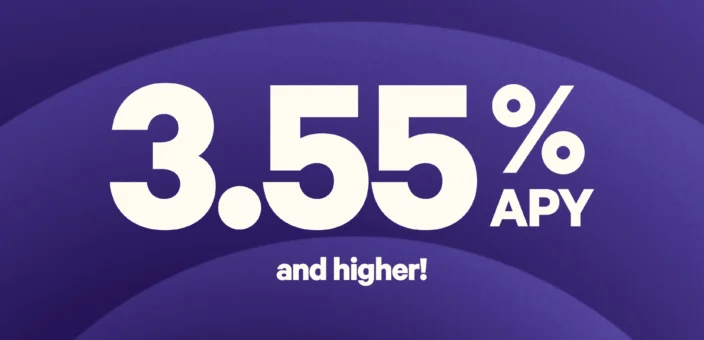
In the context of the current interest rate environment, the competition for consumer cash deposits remains fierce among fintech platforms. Wealthfront has reinforced its competitive posture by offering a base Annual Percentage Yield (APY) of 3.55% on its Cash Account, with a 0.25% boost available to users who meet specific direct deposit or recurring contribution criteria.

This strategy serves two purposes: it attracts capital from retail bank accounts, and it creates a "sticky" relationship with the user. By tying the yield boost to direct deposit requirements, Wealthfront secures a primary-account status with its users, moving the Cash Account from a peripheral savings vehicle to a central hub for everyday financial operations. The integration of automated savings tools—such as the ability to route interest into specific "buckets" or categories—further encourages users to manage their full financial lifecycle within the app, rather than relying on disparate apps for budgeting and investing.
Infrastructure and Security: The Shift Toward RTP and FedNow
The firm’s adoption of instant payment networks like RTP (Real-Time Payments) and FedNow is a direct response to the increasing demand for instant liquidity. As traditional ACH transfers are increasingly viewed as outdated, the ability to process withdrawals and deposits in real-time has become a benchmark for modern fintech platforms. Wealthfront’s ability to increase these limits suggests that the company has gained sufficient trust and operational maturity to handle larger transaction volumes, which is critical for attracting high-net-worth individuals who may have previously kept their liquid capital in traditional private banks.
Furthermore, the implementation of passkey support—leveraging Face ID and Touch ID for secure, device-level authentication—addresses growing concerns regarding account security. In an era of increased phishing and credential-stuffing attacks, moving away from traditional password-based logins toward biometric-backed passkeys is a standard that many traditional financial institutions have yet to fully embrace.
Broader Implications and Market Context
The aggregate effect of these updates is a more resilient and versatile financial platform. By lowering the barriers to entry for international investing and simplifying the complexities of joint-account management, Wealthfront is successfully positioning itself to capture a larger share of the "wallet" of the millennial and Gen Z demographic.
However, the expansion into complex areas like custodial management and international equities also brings increased regulatory scrutiny. While Wealthfront’s automated approach simplifies the user experience, the responsibility for tax-efficient management and cross-border security compliance remains significant. The platform’s heavy reliance on program banks for its cash sweep program also underscores the necessity of maintaining robust, diverse banking partnerships to ensure FDIC insurance coverage, which remains a cornerstone of the platform’s value proposition.
From a market analysis perspective, Wealthfront is demonstrating that it is no longer content to act as a secondary "investment-only" platform. Instead, it is actively working to displace the traditional banking and brokerage relationship. The success of these initiatives will likely be measured by the "stickiness" of its client base—specifically, whether users continue to funnel their primary income into Wealthfront accounts as these tools become more sophisticated.
Future Outlook
As the company looks toward the remainder of 2026, the focus appears to be on further integration of its mortgage-lending unit with its broader investing and savings ecosystem. The ability to leverage investment portfolios to secure favorable loan terms, combined with the firm’s commitment to a self-serve, zero-sales-call mortgage model, suggests that Wealthfront is preparing to disrupt the traditional mortgage origination process.
For the end user, these changes signal a future where the financial dashboard becomes a proactive, rather than reactive, tool. Whether through the automation of tax-sensitive custodial accounts or the streamlining of inter-personal financial mergers, Wealthfront’s strategy is clear: provide the tools for wealth accumulation and management with as little human friction as possible. As these infrastructure enhancements stabilize, the industry will be watching to see if this model can scale to meet the demands of a increasingly sophisticated and mobile-first investor base.
The company’s commitment to providing ongoing educational resources, such as the Vested Interest newsletter, highlights a secondary goal: to act as a trusted advisor in a landscape often crowded with conflicting financial advice. By balancing automation with expert-driven insight, Wealthfront is carving out a unique position in the digital wealth management sector, one that prioritizes efficiency without sacrificing the depth of service required for long-term wealth preservation.