
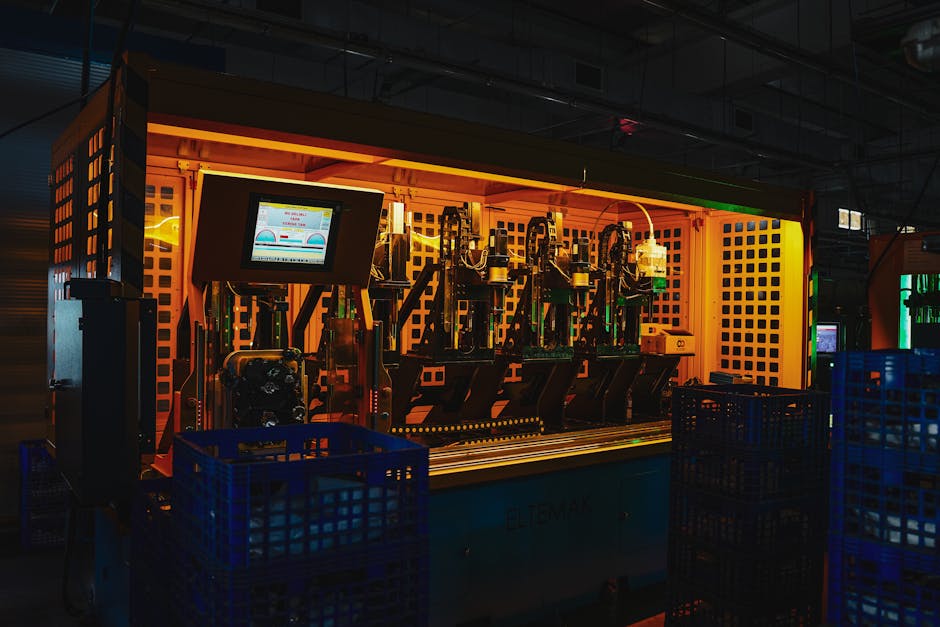
Bitmain Launches Production Line Outmaneuver: A Strategic Offensive in the Semiconductor Manufacturing Landscape
Bitmain, a name synonymous with cryptocurrency mining hardware, has ignited a seismic shift in the semiconductor manufacturing arena with the unveiling of its proprietary production line. This move, strategically positioned as an “outmaneuver” of existing industry giants, signifies a bold and ambitious diversification beyond its traditional ASIC chip fabrication for blockchain applications. The implications are far-reaching, potentially reshaping supply chains, fostering innovation, and challenging the long-standing dominance of established players in an industry characterized by immense capital investment, technological complexity, and geopolitical sensitivity. This article delves into the multifaceted aspects of Bitmain’s production line launch, analyzing its strategic motivations, technological capabilities, market impact, and the competitive landscape it seeks to disrupt.
The core of Bitmain’s strategic offensive lies in its ability to leverage its existing expertise in chip design and manufacturing, albeit for a specialized market. For years, the company has been a leading designer and producer of Application-Specific Integrated Circuits (ASICs) for Bitcoin and other cryptocurrency mining. This inherently requires a deep understanding of wafer fabrication processes, yield optimization, and supply chain management, albeit within a highly controlled and specialized ecosystem. The decision to extend this capability to a broader semiconductor production line suggests a calculated pivot, recognizing the burgeoning global demand for advanced chips across diverse sectors. The outmaneuver aspect stems from Bitmain’s ability to bypass the traditional, lengthy, and often restrictive pathways to establishing advanced semiconductor manufacturing. Instead of seeking to build new foundries from scratch or acquire existing ones in a highly competitive M&A environment, Bitmain appears to be integrating its production capabilities, potentially through strategic partnerships or by optimizing and repurposing existing, or newly acquired, manufacturing infrastructure and intellectual property. This agile approach allows them to enter the market with a potentially shorter ramp-up time and a more focused initial offering.
Bitmain’s foray into a broader semiconductor production line is not merely an expansion; it’s a calculated move to address critical global chip shortages and capitalize on the ongoing digital transformation. The COVID-19 pandemic exposed the vulnerabilities of concentrated semiconductor supply chains, leading to widespread shortages impacting industries from automotive to consumer electronics. Bitmain, by establishing its own production lines, aims to offer an alternative, potentially more responsive, and geographically diversified source of manufacturing. This positions them as a crucial partner for companies struggling to secure wafer fabrication capacity. Furthermore, the increasing demand for chips driven by artificial intelligence, 5G, IoT, and electric vehicles presents a vast and growing market. Bitmain’s existing technological prowess in designing high-performance, power-efficient chips for demanding applications like mining provides a strong foundation for developing and manufacturing chips for these burgeoning sectors. Their experience in optimizing for raw computational power and energy efficiency can be directly translated to AI accelerators, high-performance computing (HPC) components, and specialized processors for data centers.
The technological underpinnings of Bitmain’s production line are critical to its success. While specifics remain proprietary, it is highly probable that Bitmain is focusing on advanced node technologies, potentially leveraging established foundries for initial development or licensing advanced manufacturing processes. Their expertise in custom ASIC design allows them to tailor production to specific client needs, offering a level of specialization that generic foundries may struggle to match. The key differentiator lies in their ability to optimize production for high-performance computing and specialized applications, areas where their mining chip experience is directly applicable. This could involve developing custom fabrication processes for advanced materials or architectures that cater to specific performance metrics, such as low latency or extreme power efficiency. Furthermore, Bitmain’s integrated approach, encompassing design, verification, and manufacturing, offers a significant advantage. This vertical integration minimizes the communication overhead and potential for design-manufacturing mismatches that can plague outsourced fabrication models. The company’s deep understanding of the entire chip lifecycle, from silicon to finished product, allows for more efficient problem-solving and faster iteration cycles, crucial in the rapidly evolving semiconductor industry.
The “outmaneuver” aspect of Bitmain’s strategy is particularly evident in how they navigate the existing competitive landscape. The semiconductor manufacturing sector is dominated by a few behemoths like TSMC, Samsung Foundry, and Intel Foundry Services. These companies possess vast capital, decades of experience, and deep-rooted relationships with major chip designers. Bitmain’s strategy likely involves carving out a niche within this landscape, focusing on specific market segments where their unique expertise and agility can provide a competitive edge. Instead of directly competing with TSMC for high-volume, leading-edge logic, Bitmain might concentrate on specialized foundry services for AI chips, HPC, or even advanced packaging solutions. Their existing client base within the cryptocurrency industry, while specialized, provides a strong starting point and a proof of concept for their manufacturing capabilities. Furthermore, by potentially avoiding the extremely high upfront capital expenditure required to build entirely new, bleeding-edge foundries, Bitmain could offer more competitive pricing or faster turnaround times for certain types of chips. This strategic differentiation is key to their outmaneuver. The company may also be leveraging its understanding of geopolitical tensions and supply chain risks to position itself as a more secure and reliable manufacturing partner for certain regions or industries.
The economic and geopolitical implications of Bitmain’s production line launch are substantial. On an economic level, this move can foster greater competition, potentially driving down costs and increasing innovation in the semiconductor sector. It also offers a path for countries and regions looking to bolster their domestic chip manufacturing capabilities, reducing reliance on a few dominant players. Geopolitically, the establishment of new semiconductor production lines by a company with diverse global operations can contribute to supply chain resilience and mitigate risks associated with single points of failure. As nations increasingly prioritize technological sovereignty, Bitmain’s expansion could play a role in diversifying global semiconductor manufacturing hubs. This diversification is particularly relevant in the context of ongoing trade tensions and the strategic importance of advanced semiconductors in national security and economic competitiveness. By establishing a more distributed manufacturing footprint, Bitmain can contribute to a more balanced and resilient global semiconductor ecosystem.
The challenges and risks associated with Bitmain’s ambitious undertaking are not insignificant. The semiconductor manufacturing industry is notoriously capital-intensive, requiring billions of dollars in investment for advanced fabrication facilities. Yield optimization, process control, and wafer defect reduction are incredibly complex and demand highly skilled engineering talent. Bitmain will need to demonstrate its ability to consistently achieve high yields and meet the stringent quality standards expected by global chip designers. Furthermore, securing access to critical raw materials, specialized equipment, and a highly trained workforce will be paramount. The company’s existing expertise in ASIC manufacturing, while valuable, is a specialized domain. Transitioning to a broader range of semiconductor types and processes will require significant learning and adaptation. Intense competition from established players, who have long-standing relationships and economies of scale, presents another hurdle. Bitmain will need to offer compelling value propositions, whether through superior technology, competitive pricing, or enhanced customer service, to attract and retain clients. The regulatory landscape surrounding semiconductor manufacturing, particularly concerning intellectual property and technology transfer, will also require careful navigation.
Looking ahead, Bitmain’s production line outmaneuver has the potential to redefine the semiconductor manufacturing landscape. The company’s strategic agility, combined with its deep technical expertise, positions it as a formidable new entrant. Its success will hinge on its ability to execute on its manufacturing roadmap, attract top talent, forge strong partnerships, and consistently deliver high-quality chips to a diverse customer base. The long-term impact could include a more competitive and resilient global semiconductor supply chain, accelerated innovation in critical technology sectors, and a shift in the balance of power within the industry. Bitmain’s move is a clear signal that established industry structures are not immutable, and that disruptive innovation can emerge from unexpected quarters. Their ability to rapidly scale production and offer specialized manufacturing services could unlock new opportunities for startups and established companies alike, fostering a more dynamic and inclusive semiconductor ecosystem. The success of this venture will not only impact Bitmain but also ripple through the global technology industry, influencing the pace of innovation and the availability of critical components for years to come.
