
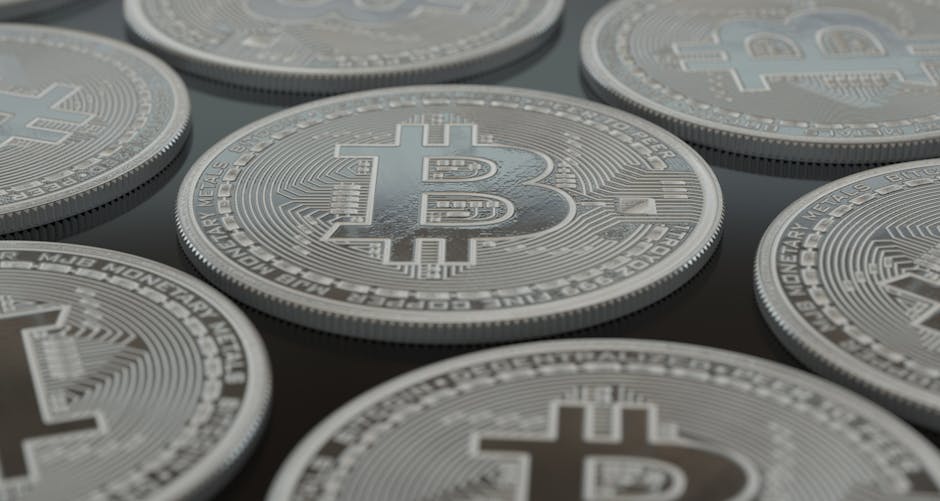
Bitcoin’s Seismic Shift: Digital Gold Overtakes Silver’s Market Dominance
The financial landscape has witnessed a monumental shift as Bitcoin, the world’s leading cryptocurrency, has officially surpassed the market capitalization of silver, the precious metal that has held significant store-of-value status for millennia. This event marks a critical inflection point, underscoring Bitcoin’s ascendance from a nascent digital experiment to a globally recognized and increasingly influential asset class. The implications of this valuation crossover are profound, impacting investor sentiment, traditional financial markets, and the ongoing debate surrounding the future of money and value storage. Bitcoin’s market cap, calculated by multiplying the circulating supply of Bitcoin by its current price, now dwarfs that of the entire global silver market. This isn’t merely a statistical curiosity; it represents a fundamental re-evaluation of perceived value and utility by a growing segment of the global populace and institutional investors alike. For decades, silver has been a benchmark for wealth preservation, prized for its industrial applications and historical role as currency. Its market cap has been a reliable, albeit often volatile, indicator of its perceived worth. However, Bitcoin’s rapid ascent, fueled by increasing adoption, institutional interest, and a narrative of digital scarcity, has fundamentally altered this dynamic. The drivers behind this shift are multifaceted and interconnected, reflecting technological innovation, evolving economic conditions, and a growing distrust in traditional fiat currencies.
The primary catalyst for Bitcoin’s surpassing silver’s market cap can be attributed to its unprecedented price appreciation, coupled with a robust and ever-increasing adoption rate. Bitcoin’s fixed supply of 21 million coins, a stark contrast to the finite but less rigidly controlled supply of precious metals, creates a compelling narrative of scarcity. As demand for Bitcoin grows, driven by both retail and institutional investors seeking an inflation hedge and a store of value independent of centralized control, its price naturally increases. This scarcity model, embedded in its blockchain protocol, is a key differentiator from commodities like silver, whose supply can be influenced by new discoveries and mining capabilities. Furthermore, the increasing institutional embrace of Bitcoin has been a game-changer. Major financial institutions, asset managers, and even publicly traded companies have begun allocating portions of their portfolios to Bitcoin, either directly or through investment vehicles like Bitcoin ETFs. This influx of institutional capital has significantly boosted demand and legitimized Bitcoin as an asset class, attracting further investment and contributing to its soaring valuation. The ease of digital transfer and storage, compared to the physical challenges of acquiring, storing, and trading silver, also plays a crucial role in Bitcoin’s appeal for a digital-first economy.
Silver’s traditional role as a store of value has been challenged by several factors. While it possesses industrial utility, contributing to its demand, its price is also subject to the cyclical nature of industrial production and economic downturns. In contrast, Bitcoin’s narrative as "digital gold" has gained significant traction during periods of heightened economic uncertainty and inflation concerns. Investors are increasingly turning to Bitcoin as a hedge against the devaluation of fiat currencies, a sentiment amplified by quantitative easing policies and global debt accumulation. The perceived immutability and decentralized nature of Bitcoin offer a compelling alternative for those seeking to preserve wealth outside the traditional financial system. Moreover, the technological advancements and network effects associated with Bitcoin have fostered a growing ecosystem of applications and services, further enhancing its utility and appeal. As more individuals and businesses integrate Bitcoin into their financial strategies, its network value, as described by Metcalfe’s Law, tends to increase, driving further price appreciation. The narrative of Bitcoin as a hedge against inflation and a store of value in an increasingly uncertain global economic environment is resonating deeply with investors seeking to protect their purchasing power.
The comparison between Bitcoin and silver is not merely about market capitalization; it’s about a fundamental paradigm shift in how value is perceived and stored. For millennia, tangible assets like gold and silver have been the bedrock of wealth preservation. Their physical presence, historical acceptance, and perceived intrinsic value have made them the go-to options for safeguarding fortunes. However, the digital revolution has introduced a new contender, one that challenges these long-held notions. Bitcoin, born from cryptographic principles and operating on a decentralized network, offers a form of scarcity that is auditable and mathematically verifiable. Its limited supply, capped at 21 million coins, is a core tenet of its value proposition. This inherent scarcity, unlike the more fluid supply of mined commodities, creates a powerful narrative for long-term value preservation. The global reach and accessibility of Bitcoin, allowing for instant transactions across borders without intermediaries, further enhance its appeal in an interconnected world. While silver’s utility in industrial applications provides a floor to its demand, Bitcoin’s value is increasingly driven by its network effects, its adoption as a medium of exchange, and its growing acceptance as a speculative and investment asset.
The implications of Bitcoin surpassing silver’s market cap extend far beyond the realm of cryptocurrency enthusiasts. It signals a broader acceptance of digital assets as legitimate investment vehicles by mainstream finance. Financial advisors are increasingly incorporating Bitcoin into diversified portfolios, and traditional financial institutions are exploring ways to offer Bitcoin-related products and services to their clients. This institutional adoption, driven by the recognition of Bitcoin’s potential for high returns and its role as an inflation hedge, has injected significant capital into the market, contributing to its sustained growth. The narrative of Bitcoin as "digital gold" has resonated with a growing number of investors who are seeking alternatives to traditional safe-haven assets. As concerns about inflation and currency devaluation persist, Bitcoin’s fixed supply and decentralized nature make it an attractive option for preserving wealth. The ease with which Bitcoin can be transferred and stored digitally also appeals to a generation accustomed to digital transactions and online banking.
The digital nature of Bitcoin presents a unique set of advantages and challenges compared to silver. Its portability is unparalleled; a vast fortune can be stored on a small hardware wallet or even memorized as a seed phrase. This frictionless transferability and accessibility, especially across geographical boundaries, contrasts sharply with the logistical complexities of physically moving and securing large quantities of silver. However, this digital form also introduces unique risks, such as the potential for cyber theft and the reliance on technological infrastructure. Conversely, silver, while physically tangible, is subject to the risks of theft, storage costs, and the inefficiencies of physical trading. The industrial demand for silver, while a significant driver of its value, can also lead to price volatility tied to manufacturing output and global economic cycles. Bitcoin, on the other hand, has largely detached itself from traditional industrial correlations, its price movements more closely aligned with investor sentiment, adoption rates, and macroeconomic trends.
The ongoing debate about the long-term viability and legitimacy of Bitcoin as a store of value continues, yet its market capitalization surpassing that of a centuries-old commodity like silver is a powerful testament to its growing influence. This event forces a re-evaluation of traditional investment paradigms and opens the door for further innovation in the digital asset space. The increasing participation of institutional investors, coupled with a growing retail base, suggests that Bitcoin’s ascent may be far from over. While regulatory landscapes are still evolving, the sheer momentum and market validation represented by this valuation crossover indicate that Bitcoin is no longer a fringe asset but a significant player in the global financial ecosystem. The question is no longer whether Bitcoin has value, but rather how its value will continue to evolve and what role it will play in the future of finance. The network effects of Bitcoin are undeniable. As more users join the network, its utility and security increase, creating a virtuous cycle that further drives adoption and demand. This self-reinforcing mechanism, coupled with its deflationary monetary policy, positions Bitcoin as a unique and potentially enduring store of value in the digital age.
The shift from silver to Bitcoin as a benchmark for value comparison also reflects a broader societal transition towards digitalization. As economies become increasingly digital, it is only natural that the assets deemed most valuable will also migrate to the digital realm. Bitcoin, with its inherent digital scarcity and decentralized architecture, is perfectly positioned to capitalize on this trend. The continued innovation within the cryptocurrency space, including the development of scalable solutions and more user-friendly interfaces, further solidifies Bitcoin’s long-term prospects. While the future remains uncertain, the fact that Bitcoin has now eclipsed silver in market capitalization is a clear indication that the world is embracing a new form of value, one that is both digital and decentralized. The implications for traditional finance are immense, as institutions and investors are forced to adapt to this evolving landscape. The ongoing adoption of Bitcoin by both retail and institutional investors, coupled with its increasing integration into the global financial system, suggests that this is not a fleeting trend but a fundamental shift in how value is perceived and exchanged.
The narrative of Bitcoin as a hedge against inflation and a store of value is increasingly resonating with investors who are concerned about the long-term stability of fiat currencies. The unprecedented levels of quantitative easing and government stimulus packages implemented in response to global economic challenges have fueled concerns about inflation and currency devaluation. In this environment, Bitcoin’s fixed supply and decentralized nature offer a compelling alternative for preserving wealth. The increasing adoption of Bitcoin by major financial institutions and corporations further legitimizes its role as a store of value. As more institutional capital flows into the Bitcoin market, its price appreciation is likely to continue, reinforcing its position as a digital asset of significant consequence. The technological underpinnings of Bitcoin, including its robust blockchain technology and cryptographic security, provide a foundation of trust and immutability that is attractive to investors seeking a reliable store of value. The global reach and accessibility of Bitcoin, allowing for instant transactions across borders without intermediaries, further enhance its appeal in an increasingly interconnected world.
The shift in market capitalization between Bitcoin and silver represents more than just a change in valuation; it signifies a fundamental redefinition of what constitutes a valuable asset in the 21st century. While silver has served as a tangible store of value for millennia, Bitcoin’s digital scarcity and decentralized nature are proving increasingly attractive to a new generation of investors and a rapidly digitizing global economy. The continued institutional adoption, coupled with ongoing technological advancements, suggests that Bitcoin’s journey as a leading asset class is likely to continue, potentially reshaping the future of finance as we know it. The robust security features of the Bitcoin network, powered by a distributed ledger and cryptographic encryption, provide a high degree of trust and transparency. This, combined with its transparent and immutable transaction history, makes it a reliable and auditable store of value. The increasing accessibility of Bitcoin through user-friendly exchanges and wallets further democratizes access to this emerging asset class, attracting a wider and more diverse investor base. The ongoing development of layer-two scaling solutions and other technological innovations promises to further enhance Bitcoin’s transaction speed and capacity, addressing some of the historical limitations and paving the way for even broader adoption.
