
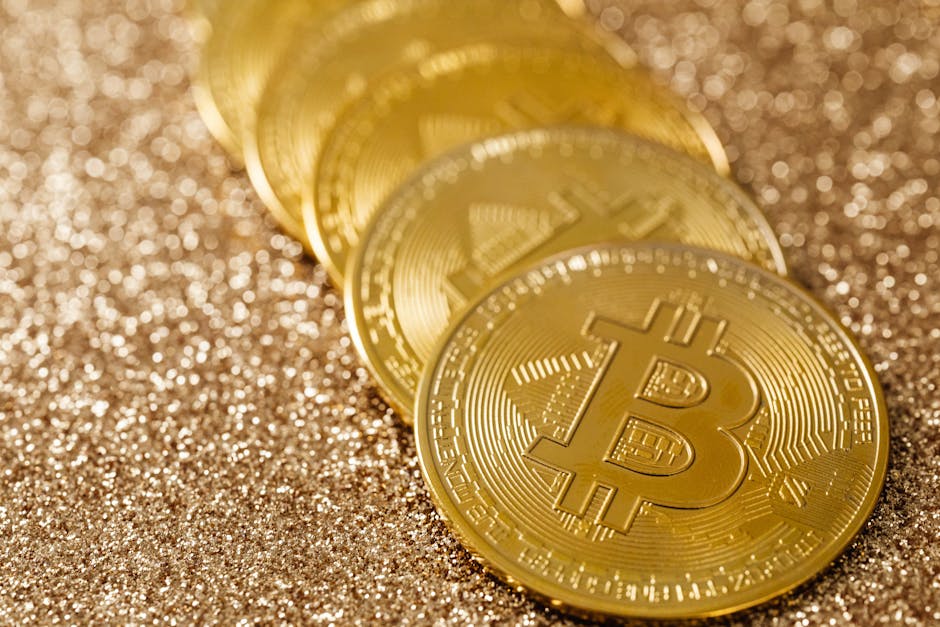
Bitcoin Sees Return of Kimchi Premium: A Deep Dive into South Korea’s Crypto Market Dynamics
The resurgence of the "Kimchi Premium" on Bitcoin is a compelling indicator of shifting market sentiment and capital flows within South Korea’s vibrant cryptocurrency ecosystem. This premium, which represents the price difference between Bitcoin traded on South Korean exchanges and those on global platforms, has historically served as a barometer of domestic demand and speculative fervor. Its return signifies a renewed interest from Korean retail investors, potentially driven by a confluence of factors including anticipated regulatory clarity, macroeconomic uncertainties, and the broader bullish sentiment permeating the global crypto market. Understanding the drivers behind this phenomenon requires a granular examination of the South Korean crypto landscape, its unique characteristics, and the macroeconomic environment that influences investor behavior.
South Korea has long held a prominent position in the global cryptocurrency market, characterized by a highly active retail investor base and a sophisticated trading infrastructure. Exchanges like Upbit, Bithumb, Coinone, and Korbit are major players, facilitating significant trading volumes. The Kimchi Premium arises from several distinct factors inherent to the South Korean market. Firstly, the strong preference for domestic fiat currency, the Korean Won (KRW), as a primary on-ramp for crypto investments creates a unique demand dynamic. When Korean investors are particularly enthusiastic about acquiring Bitcoin, the demand for KRW-denominated Bitcoin on local exchanges outpaces that on international platforms where transactions are typically conducted in USD or other major fiat currencies. This increased demand, coupled with potentially lower liquidity on local exchanges compared to global giants, can drive up the KRW price of Bitcoin, thus creating the premium.
Secondly, the speculative nature of a significant portion of the South Korean retail investor base plays a crucial role. Korean investors have historically demonstrated a higher tolerance for risk and a penchant for active trading, often seeking rapid gains. During periods of heightened market optimism or anticipation of significant price movements, this inherent speculative appetite can lead to aggressive buying activity on local exchanges. This concentrated demand, when not matched by an equivalent increase in supply on those same platforms, naturally widens the price differential, manifesting as the Kimchi Premium. The allure of potentially higher returns within their familiar KRW trading environment can be a powerful motivator.
Furthermore, information asymmetry and localized market narratives can also contribute to the Kimchi Premium. While global crypto news and trends are readily accessible, South Korea often develops its own unique market sentiment and internal discussions around cryptocurrencies. This can be influenced by local media coverage, social media trends within the Korean community, and the perceived investment opportunities presented by specific coins or the market as a whole. When these localized narratives are predominantly bullish, it can fuel a localized buying frenzy that is not immediately reflected in global markets, thus widening the premium.
The return of the Kimchi Premium, therefore, is not merely a price anomaly but a symptom of a broader market phenomenon. Its emergence often coincides with periods of significant upward price momentum for Bitcoin globally. When Bitcoin’s price begins a substantial ascent, global investors flock to acquire the cryptocurrency. Simultaneously, South Korean investors, observing this global trend and buoyed by their own market sentiment, also increase their buying pressure. If the supply of Bitcoin available on Korean exchanges is not as elastic as on larger global platforms, or if the demand from Korean retail investors is particularly insatiable, the price on these domestic exchanges will naturally climb higher than the global average. This discrepancy is what is observed as the Kimchi Premium.
Macroeconomic factors within South Korea and on a global scale can also indirectly influence the Kimchi Premium. Periods of economic uncertainty or inflation concerns can drive investors towards alternative assets like Bitcoin, seeking a hedge. If these concerns are particularly pronounced within South Korea, or if the government’s response to economic challenges is perceived as insufficient by investors, capital might flow into cryptocurrencies as a perceived safer haven. This increased allocation of capital into crypto, channeled through domestic exchanges, would naturally contribute to a higher demand for Bitcoin in KRW terms, thereby inflating the Kimchi Premium.
Moreover, regulatory developments, or the anticipation of them, can significantly impact the Kimchi Premium. South Korea has historically had a somewhat complex and evolving regulatory framework for cryptocurrencies. Periods of regulatory uncertainty can lead to cautious trading, while the prospect of clearer, more investor-friendly regulations can unlock significant capital. When the market anticipates a more favorable regulatory environment, potentially making it easier and safer to invest in cryptocurrencies, it can trigger a surge in demand from both institutional and retail investors. If this anticipation is particularly strong within South Korea, and if the perceived benefits of such regulatory clarity are concentrated in the domestic market, it can lead to a pronounced Kimchi Premium. Conversely, crackdowns or stringent regulations can lead to its evaporation.
The sustained presence of a significant Kimchi Premium can also be viewed as an opportunity for arbitrage. Sophisticated traders and institutional players can exploit the price difference by buying Bitcoin on global exchanges at a lower price and selling it on South Korean exchanges at a premium, thereby profiting from the differential. This arbitrage activity, in theory, should help to normalize prices across markets. However, the effectiveness of arbitrage can be limited by factors such as transaction fees, withdrawal and deposit times between exchanges and jurisdictions, and potential regulatory hurdles. Furthermore, the sheer volume of retail demand can sometimes overwhelm the capacity of arbitrageurs to immediately close the gap, allowing the premium to persist.
The technical aspects of trading on South Korean exchanges also play a role. The prevalence of trading pairs denominated in KRW is a primary driver. While global exchanges offer a wider array of fiat currencies, the accessibility and familiarity of KRW for South Korean residents make local exchanges the preferred entry point. This inherent structure means that any surge in KRW-denominated demand will directly and visibly impact the price on these platforms.
Analyzing the magnitude and duration of the Kimchi Premium provides valuable insights into the sentiment of Korean crypto investors. A consistently high and stable premium suggests strong and sustained domestic demand, potentially driven by long-term conviction. A volatile premium, on the other hand, might indicate more speculative or short-term trading activity, reacting rapidly to news and price fluctuations. Tracking this premium alongside other market indicators, such as trading volumes, social media sentiment, and regulatory news, offers a more holistic understanding of the South Korean crypto market’s health and direction.
The implications of a returning Kimchi Premium extend beyond South Korea. It can signal renewed interest in Bitcoin from a significant segment of the global retail investor base, which can contribute to broader market rallies. It also highlights the persistent influence of localized market dynamics within the interconnected world of cryptocurrency trading. As the crypto market matures, understanding these regional nuances becomes increasingly important for investors and analysts seeking to navigate its complexities. The resurgence of the Kimchi Premium is a potent reminder that the global Bitcoin market is not monolithic, but rather a composite of diverse regional influences and investor behaviors. It underscores the importance of localized demand, regulatory landscapes, and cultural trading preferences in shaping asset prices within this rapidly evolving financial frontier.
