
Apple Announces for All: Unveiling a Future of Accessibility and Inclusion
Apple’s latest announcement, "Apple Announces for All," represents a pivotal moment in the company’s ongoing commitment to accessibility and inclusive design. This comprehensive suite of software and hardware advancements isn’t merely about incremental updates; it signifies a strategic, top-down integration of accessibility features across the entire Apple ecosystem, ensuring that its products and services are not only powerful and intuitive but also fundamentally usable by everyone, regardless of their abilities. The core philosophy underpinning "Apple Announces for All" is a profound recognition that technology’s true potential is unlocked when it serves the broadest possible audience, empowering individuals and fostering a more connected and equitable digital landscape. This initiative transcends mere compliance; it’s about proactively designing for diversity, anticipating needs, and embedding accessibility into the very DNA of Apple’s innovation pipeline. From the initial stages of product conceptualization to the final polished experience, accessibility is no longer an afterthought but a driving force.
The cornerstone of "Apple Announces for All" is the unveiling of a groundbreaking suite of software enhancements, deeply integrated into iOS, iPadOS, macOS, watchOS, and tvOS. These features are designed to address a wide spectrum of needs, focusing on visual, auditory, motor, and cognitive accessibility. For users with visual impairments, Apple has significantly expanded its VoiceOver capabilities, introducing more natural-sounding voices generated by machine learning, enhanced descriptive audio for image and video content, and a more refined Braille display support that offers bidirectional communication and smoother navigation. The introduction of "Sound Recognition" is another significant stride, allowing devices to alert users to important sounds in their environment, such as alarms, doorbells, and even crying babies, providing crucial auditory cues for those who are deaf or hard of hearing. This feature leverages on-device machine learning, ensuring privacy and responsiveness.
Further bolstering auditory accessibility, Apple has introduced "Background Sounds," a feature that plays calming or distracting sounds like rain, ocean waves, or white noise to help users focus, relax, or fall asleep. This is particularly beneficial for individuals with sensory sensitivities or those seeking to create a more controlled auditory environment. For users with motor impairments, the advancements are equally impactful. "AssistiveTouch" has received a major overhaul, offering a more customizable and intuitive gesture-based control system. This includes the ability to map complex actions to simple taps and swipes, significantly reducing the need for precise physical manipulation. Furthermore, "Pointer Control" now incorporates head tracking, allowing users to control their device cursor using subtle head movements, a revolutionary step for individuals with severe motor limitations. The integration of "Switch Control" with expanded options for custom actions and gestures further enhances the granular control available to users.
Cognitive accessibility has also been a key focus, with Apple introducing features designed to simplify device interaction and reduce cognitive load. "Guided Access" has been enhanced with more granular controls for app usage, allowing users, or their caregivers, to restrict device access to specific apps or features, preventing accidental navigation or distractions. The introduction of "Text Size and Bold Text" options have been further refined, offering more dynamic adjustments that adapt across applications, ensuring readability without compromising layout. Moreover, Apple has made significant strides in simplifying complex user interfaces, offering contextual menus that prioritize frequently used actions and reduce the visual clutter. These software innovations are not isolated features; they are woven into the fabric of the operating systems, making them readily available and seamlessly integrated into the user experience for all. The underlying principle is to provide a personalized and adaptable experience, recognizing that accessibility is not a one-size-fits-all solution.
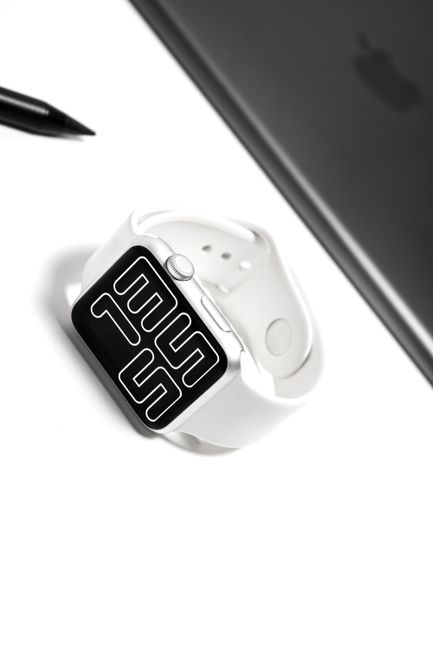
Beyond software, "Apple Announces for All" also encompasses hardware innovations that directly support enhanced accessibility. The redesigned Apple Watch Series, for example, now features a larger, brighter display with enhanced haptic feedback, making it more accessible for users with visual and motor impairments. The new Digital Crown boasts increased tactile feedback and a larger surface area, facilitating easier scrolling and selection. For the hearing impaired, the Apple Watch introduces "Hearing Health," a feature that monitors ambient noise levels and provides alerts when noise exposure could potentially damage hearing, further empowering users to protect their auditory health. Furthermore, the Apple Watch’s fall detection capabilities have been refined, with more accurate algorithms and the ability to initiate emergency calls to designated contacts.
The iPad, a device increasingly used for education and creative endeavors, sees significant accessibility upgrades. The new Apple Pencil 2nd generation, with its magnetic attachment and wireless charging, offers a more intuitive and less physically demanding input method. The display technology in the latest iPads has also been optimized for reduced glare and improved contrast, benefiting users with visual sensitivities. Apple’s commitment to universal design extends to its Mac lineup as well. The new MacBook Pro models, while pushing the boundaries of performance, also incorporate enhanced accessibility features. This includes improved trackpad responsiveness, more customizable keyboard shortcuts, and enhanced compatibility with external assistive technologies. The focus on energy efficiency also translates to longer battery life, a crucial factor for many users who rely on their devices for extended periods without access to charging.
A key element of "Apple Announces for All" is the expansion and refinement of Apple’s existing accessibility framework, the Accessibility Keyboard, Voice Control, and Magnifier. The Accessibility Keyboard, a powerful on-screen keyboard that can be customized with predictive text, custom layouts, and larger keys, has been further optimized for a wider range of input methods. Voice Control, which allows users to control their entire device using only their voice, has seen significant improvements in natural language understanding and accuracy, enabling more complex commands and a more fluid interaction. Magnifier, a powerful tool that allows users to zoom in on anything happening on their screen, has been enhanced with new color filters, brightness adjustments, and the ability to freeze an image for closer inspection, making it an indispensable tool for users with low vision. The integration of these established features with the newly announced advancements creates a holistic and powerful suite of accessibility tools.
Furthermore, Apple is deepening its commitment to the accessibility developer community. "Apple Announces for All" includes expanded resources, documentation, and training programs for developers looking to build accessibility into their own applications. This includes new APIs that provide deeper access to system-level accessibility features, enabling developers to create more sophisticated and personalized experiences for their users. The company is also investing in research and development partnerships with leading accessibility organizations to ensure that its future innovations are guided by the lived experiences of individuals with disabilities. This collaborative approach is crucial for ensuring that accessibility remains at the forefront of technological advancement. The focus is on empowering developers to be agents of change, creating apps that are not just functional but truly inclusive from the ground up. This includes providing tools for testing accessibility features, understanding user needs, and implementing best practices.
The impact of "Apple Announces for All" extends beyond individual users to broader societal implications. By making its technology more accessible, Apple is fostering greater participation in education, employment, and social engagement for a significant portion of the population. This democratization of technology has the potential to reduce digital divides, empower individuals to achieve their full potential, and foster a more inclusive and equitable society. The focus on on-device processing for many of these new features also ensures greater privacy and security, a critical consideration for all users, especially those who may rely on these assistive technologies for their daily lives. The commitment to continuous improvement and regular updates signifies that accessibility is not a static goal but an ongoing journey.
In conclusion, "Apple Announces for All" is a testament to Apple’s evolving vision of technology as a force for universal empowerment. The comprehensive integration of advanced software features, hardware innovations, and robust developer support signals a paradigm shift towards truly inclusive design. This initiative moves beyond superficial additions, embedding accessibility into the core of the Apple experience, ensuring that its products and services are not just for a select few, but genuinely available and beneficial for everyone. The implications are far-reaching, promising to unlock new possibilities, foster greater independence, and ultimately contribute to a more connected and equitable world. The breadth and depth of these announcements suggest a long-term strategy, not a fleeting trend, reinforcing Apple’s position as a leader in shaping the future of accessible technology.
