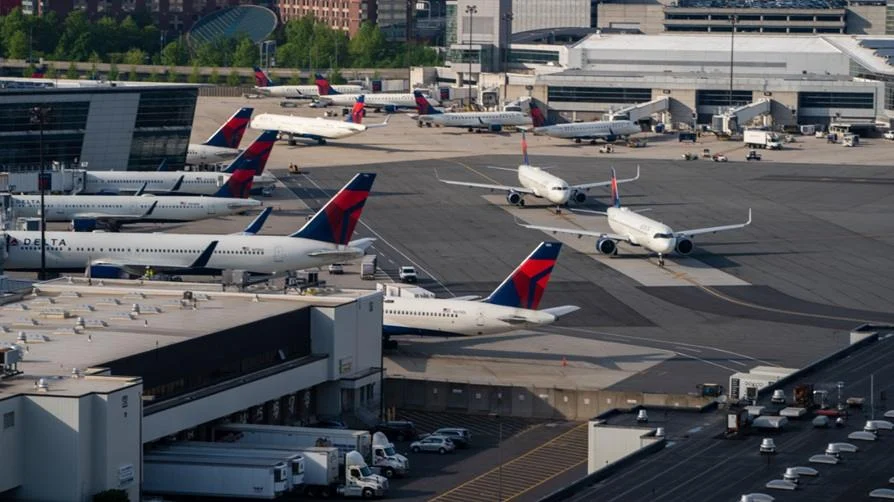
Delta Air Lines has formalized a significant five-year agreement with Shell Aviation, marking a strategic expansion of its sustainable aviation fuel (SAF) procurement and infrastructure development. This partnership is designed to bolster the supply of low-carbon fuel at several of Delta’s most critical domestic hubs and priority cities, addressing both the immediate need for fuel and the long-term logistical challenges of integrating alternative energy sources into the global aviation supply chain. By focusing on key airports including Los Angeles International Airport (LAX), Portland International Airport (PDX), John F. Kennedy International Airport (JFK), Logan International Airport (BOS), and Minneapolis-St. Paul International Airport (MSP), the deal aims to create a more resilient and diversified energy portfolio for the airline.
The collaboration represents a pivotal step in Delta’s broader decarbonization strategy, which seeks to mitigate the environmental impact of air travel through the adoption of cleaner technologies. Beyond the mere purchase of fuel, the agreement emphasizes the development of the physical and logistical infrastructure necessary to move SAF from production facilities to the wing of the aircraft. This includes investments in blending capabilities, storage solutions, and distribution networks that have historically been optimized for conventional petroleum-based jet fuel.
Strategic Hubs and Geographical Focus
The selection of Los Angeles, Portland, New York, Boston, and Minneapolis as the primary sites for this expansion is a calculated move by Delta and Shell. These locations serve as major gateways for both domestic and international traffic, where the volume of fuel consumption is highest.
In Los Angeles and Portland, West Coast environmental regulations and existing low-carbon fuel standards (LCFS) have already created a more hospitable environment for SAF adoption. By strengthening its presence in these markets, Delta can leverage regional policy incentives to improve the economic viability of sustainable fuels. Conversely, the inclusion of East Coast hubs like JFK and Boston, alongside the Midwestern stronghold of MSP, signals a commitment to scaling SAF availability across the entire United States, rather than limiting it to specific geographic corridors.
The agreement specifies that Shell will support the delivery of both "neat" SAF—the pure biofuel component—and blended SAF, which is typically mixed with conventional Jet A fuel at ratios up to 50% to meet current engine certification standards. Establishing reliable delivery mechanisms at these diverse locations is essential for making SAF a routine part of daily airline operations rather than a niche experimental project.
The Role of Infrastructure in the Energy Transition
One of the most significant hurdles to the widespread adoption of sustainable aviation fuel is the "last-mile" problem: how to get the fuel into the airport’s hydrant system. Most major airports operate on a shared fuel infrastructure that was not originally designed to handle multiple types of fuel or complex blending processes on-site.
Under the new five-year deal, Delta and Shell will work closely to solve these logistical bottlenecks. This involves coordinating with airport authorities and fuel terminal operators to ensure that SAF can be integrated into existing pipelines and storage tanks without disrupting traditional fueling operations. By focusing on infrastructure, the partnership aims to prove that the transition to sustainable fuels is not just a theoretical possibility but a logistically achievable reality.
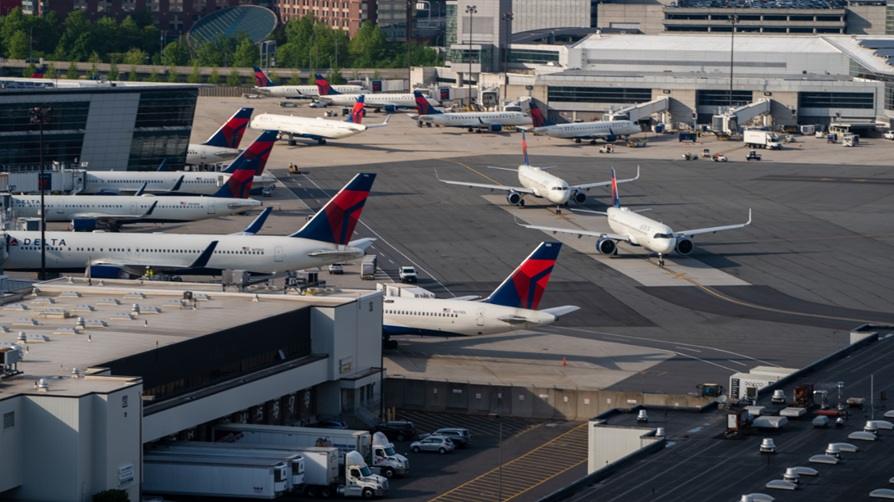
This infrastructure-first approach is also intended to build supply chain resilience. As global energy markets face increasing volatility due to geopolitical tensions and climate-related disruptions, having a diversified fuel supply that includes locally produced, sustainable alternatives can provide a buffer against price shocks and supply shortages in the conventional oil market.
Delta’s Decarbonization Roadmap and the 10% Goal
The partnership with Shell arrives at a time when Delta is under increasing pressure to meet its ambitious climate targets. The airline has maintained its commitment to replacing 10% of its conventional jet fuel with SAF by the end of 2030. However, the company has also been transparent about the significant headwinds facing the industry.
In recent communications, Delta leadership acknowledged that the technological and production advancements required to meet these targets have not materialized as quickly as originally forecasted. The global production of SAF currently accounts for less than 0.1% of total aviation fuel demand, creating a massive supply-demand imbalance that keeps prices high and availability low.
Delta’s roadmap to reach net-zero emissions by 2050 relies on a multi-pronged strategy:
- Fleet Renewal: Replacing older, less efficient aircraft with newer models that consume significantly less fuel.
- Operational Efficiency: Optimizing flight paths and ground operations to reduce unnecessary fuel burn.
- SAF Adoption: Scaling the use of drop-in sustainable fuels that can be used in existing engines.
- Revolutionary Technology: Supporting the long-term development of hydrogen-powered or electric aircraft for short-haul routes.
The Shell agreement is specifically designed to address the third pillar of this strategy, providing a steady offtake agreement that gives fuel producers the financial certainty needed to invest in new refineries and production capacity.
Advancing Next-Generation Fuel Technologies
While current SAF production is largely dependent on Hydroprocessed Esters and Fatty Acids (HEFA)—which use feedstocks like used cooking oil and animal fats—Delta and Shell are looking toward the next generation of fuel pathways to ensure long-term scalability. The agreement includes provisions for evaluating and advancing "Alcohol-to-Jet" (AtJ) and "Power-to-Liquid" (PtL) technologies.
The Alcohol-to-Jet pathway involves converting alcohols, such as ethanol derived from agricultural residues or non-food crops, into synthetic jet fuel. This method has the potential to tap into much larger feedstock pools than the current fats-and-oils-based approach.
Power-to-Liquid, often referred to as "e-fuel," is perhaps the most promising long-term solution for deep decarbonization. This process uses renewable electricity to split water into hydrogen, which is then combined with captured carbon dioxide to create a synthetic hydrocarbon fuel. Because PtL does not rely on biological feedstocks, its theoretical production limit is much higher, and its lifecycle carbon footprint can be near zero if powered by 100% renewable energy. By collaborating on these innovations, Delta and Shell are positioning themselves at the forefront of the technological shift required to sustain the aviation industry in a carbon-constrained world.

Industry Reactions and Economic Implications
The aviation industry is widely regarded as one of the "hard-to-abate" sectors of the global economy. Unlike passenger vehicles, which can be transitioned to battery-electric power, long-haul aviation requires the high energy density of liquid fuels. Consequently, the success of the industry’s net-zero ambitions is almost entirely dependent on the rapid scaling of the SAF market.
Reema Bari, Head of Aviation Americas at Shell, emphasized that this collaboration is about strengthening energy security while contributing to the transformation of the sector. For Shell, the deal represents a continued shift from being a traditional oil major to an integrated energy provider. For Delta, it is a defensive move against future carbon taxes and a proactive step toward meeting the demands of environmentally conscious corporate clients and passengers.
Economically, the "green premium"—the price difference between SAF and conventional jet fuel—remains a challenge. However, policies such as the U.S. Inflation Reduction Act (IRA), which provides tax credits for SAF production, are helping to narrow this gap. Long-term offtake agreements like the one between Delta and Shell are essential for de-risking the massive capital investments required for fuel producers to build out their infrastructure.
Timeline of Delta’s Sustainability Milestones
To understand the significance of this deal, it is helpful to view it within the context of Delta’s recent sustainability efforts:
- March 2020: Delta commits $1 billion over 10 years to become the first carbon-neutral airline globally, focusing on carbon offsets and internal efficiencies.
- 2021: The airline joins the First Movers Coalition, a public-private partnership aimed at accelerating the market for emerging low-carbon technologies.
- Early 2023: Delta releases its comprehensive "Climate Lobbying Report" and updated decarbonization roadmap, shifting focus from carbon offsets to direct emissions reductions via SAF.
- July 2024: Delta confirms its 10% SAF by 2030 target while acknowledging the industry-wide supply shortages.
- July 2026: The announcement of the five-year expanded agreement with Shell Aviation, focusing on infrastructure and five major U.S. hubs.
Conclusion and Future Outlook
The five-year agreement between Delta Air Lines and Shell Aviation serves as a blueprint for how the aviation industry might navigate the transition to a low-carbon future. It moves the conversation beyond theoretical goals and into the realm of physical infrastructure and supply chain logistics. By securing a reliable stream of SAF at major hubs and investing in the technologies of tomorrow, Delta is attempting to build a bridge between the current era of fossil-fuel dependence and a future of sustainable flight.
As the partnership progresses, the industry will be watching closely to see if these efforts can successfully drive down the cost of SAF and encourage other carriers and energy providers to follow suit. The success of this initiative will not only be measured by the gallons of fuel delivered but by the permanence of the infrastructure created and the acceleration of the technological breakthroughs required to make net-zero aviation a reality. For now, the deal stands as a significant marker of intent in the challenging journey toward decarbonizing the skies.