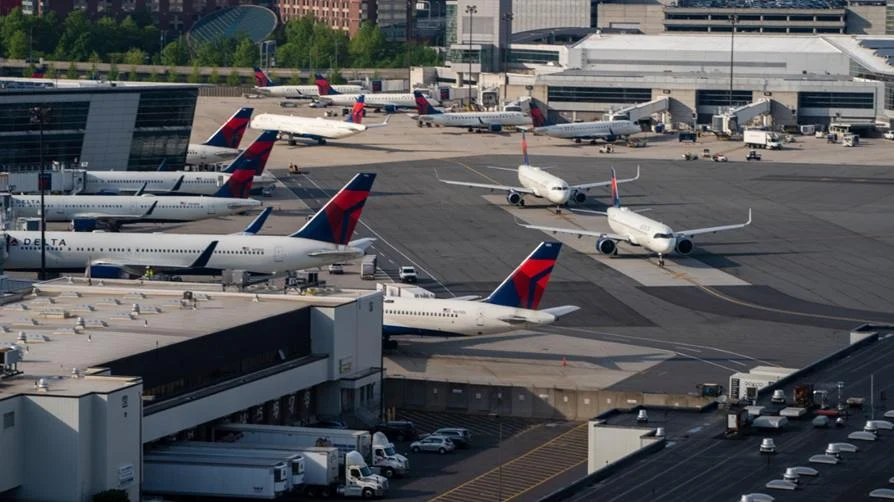
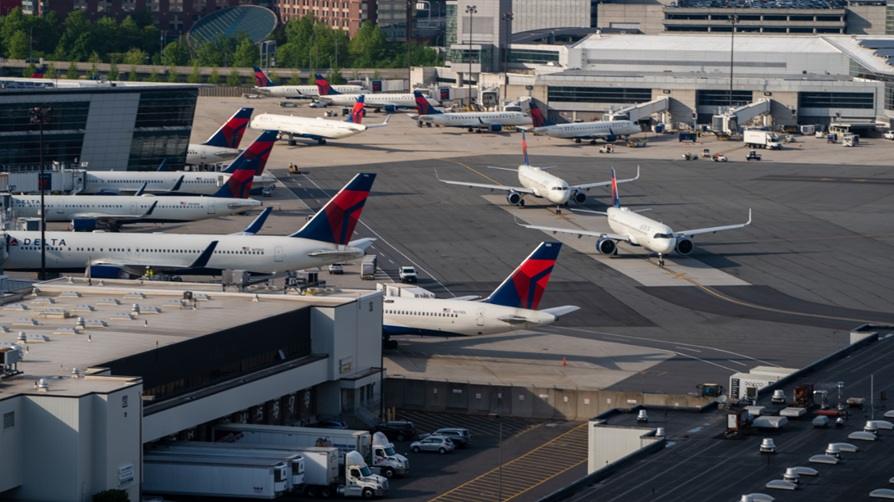
Delta Air Lines has formalized a strategic five-year agreement with Shell Aviation to significantly bolster the supply and logistical framework of sustainable aviation fuel (SAF) across its primary domestic operations. This partnership, which centers on five major U.S. aviation hubs, represents a critical step in Delta’s broader decarbonization strategy, focusing not only on the procurement of lower-carbon fuels but also on the essential infrastructure required to integrate these fuels into existing airport delivery systems. By securing consistent supply chains at Los Angeles International Airport (LAX), Portland International Airport (PDX), John F. Kennedy International Airport (JFK), Logan International Airport (BOS), and Minneapolis-St. Paul International Airport (MSP), the airline is moving to insulate its operations against the volatility of the emerging green fuel market.
The collaboration comes at a pivotal moment for the global aviation industry, which is currently grappling with the dual challenges of high production costs and limited availability of sustainable alternatives to traditional kerosene-based jet fuel. Under the terms of the agreement, Shell Aviation will facilitate the delivery of both blended and "neat" (unblended) SAF. This distinction is vital; while most SAF is currently used in a blended form with conventional jet fuel to meet safety and engine performance standards, the ability to handle neat SAF signifies a forward-looking approach to infrastructure that can accommodate future shifts in regulatory and technical requirements.
Strengthening the Infrastructure Backbone
A significant portion of the Delta-Shell agreement is dedicated to the "last mile" of fuel delivery. While the production of SAF is often the focus of environmental discussions, the physical movement of the fuel from production facilities to the wing of the aircraft remains a significant bottleneck. The partnership aims to address this by co-developing the logistics, blending capabilities, and distribution networks necessary for a dependable and resilient supply chain.
In major metropolitan hubs like New York and Los Angeles, the complexity of airport fuel hydrants and storage farms means that introducing a new fuel type requires rigorous coordination. By leveraging Shell’s extensive experience in global energy logistics, Delta intends to create a blueprint for how SAF can be transitioned from a niche experimental product to a routine component of daily airline operations. This includes the development of dedicated blending facilities where SAF can be mixed with conventional Jet A fuel to the maximum allowable percentage—currently capped at 50% by international standards—before being pumped into the airport’s common-use fuel systems.
Delta’s 2030 Vision and the Decarbonization Roadmap
The five-year deal is a tangible manifestation of Delta’s commitment to achieving 10% SAF usage by the end of 2030. This target, reaffirmed by the company despite acknowledging the slow pace of technological advancement in the sector, is a cornerstone of its "Flight to Net Zero" plan. The airline has been transparent about the risks involved, noting in previous communications that the current global supply of SAF meets less than 0.1% of total aviation fuel demand. To bridge this gap, Delta is pursuing a multi-pronged strategy that includes long-term offtake agreements, investments in fuel technology startups, and advocacy for policy frameworks that incentivize production.
Delta’s Chief Sustainability Officer, Amelia DeLuca, emphasized that the partnership with Shell is designed to move past the theoretical phase of the energy transition. DeLuca noted that current global instability and the resulting uncertainty in energy markets have underscored the necessity of supply diversity. By establishing a robust presence in five key markets, Delta is effectively diversifying its energy portfolio, reducing its reliance on traditional fossil fuel markets that are susceptible to geopolitical shocks.
The Role of Next-Generation SAF Technologies
Beyond immediate supply needs, the Delta-Shell collaboration is set to explore the frontier of aviation fuel science. The two companies have committed to evaluating and advancing "next-generation" SAF technologies, specifically focusing on the Alcohol-to-Jet (AtJ) and Power-to-Liquid (PtL) pathways.
Currently, the majority of SAF is produced via the HEFA (Hydroprocessed Esters and Fatty Acids) process, which uses waste oils and fats. While efficient, the scalability of HEFA is limited by the availability of feedstock. In contrast, Alcohol-to-Jet technology utilizes ethanol derived from agricultural residues or captured carbon, offering a much larger potential feedstock pool. Power-to-Liquid, often referred to as "e-fuel," represents the ultimate goal for many environmentalists; it combines green hydrogen—produced via electrolysis using renewable electricity—with captured carbon dioxide to create a synthetic fuel that is almost entirely carbon-neutral over its lifecycle.
By investing in the research and development of these pathways, Delta and Shell are positioning themselves to capitalize on the next wave of fuel innovation. These technologies are expected to be essential for the industry to reach its ultimate goal of net-zero emissions by 2050, as they offer the most viable route to producing the massive volumes of fuel required for long-haul international flight.

Shell Aviation’s Strategic Transition
For Shell, this agreement is a key component of its transformation from a traditional oil major into a diversified energy provider. Reema Bari, Head of Aviation Americas at Shell, highlighted that the deal is designed to address both contemporary fuel requirements and future aviation solutions. Shell’s involvement provides the necessary scale and financial backing to de-risk SAF projects, which often struggle to find traditional financing due to the high capital expenditure required for refinery conversions and new plant construction.
The partnership also aligns with Shell’s global ambition to become a net-zero emissions energy business by 2050. By securing a long-term partner like Delta—one of the world’s largest consumers of jet fuel—Shell ensures a guaranteed market for its SAF production, which in turn justifies further investment in its global refining and distribution network.
Chronology of Delta’s Sustainability Milestones
Delta’s path to this agreement has been marked by several years of intensifying focus on environmental social governance (ESG) metrics:
- 2020: Delta became the first airline to go carbon neutral on a global basis by offsetting emissions through the voluntary carbon market, a move it later transitioned away from in favor of direct decarbonization efforts like SAF.
- 2021: The airline joined the First Movers Coalition, a global initiative to harness purchasing power to decarbonize seven "hard-to-abate" industrial sectors.
- 2022: Delta signed a massive agreement with DG Fuels for up to 385 million gallons of SAF over seven years, signaling its intent to dominate the domestic SAF market.
- 2023: The company released its comprehensive decarbonization roadmap, identifying SAF as the single most important lever for reducing its carbon footprint over the next two decades.
- 2024: The current agreement with Shell expands on previous collaborations, shifting the focus from simple purchase agreements to infrastructure and technological co-development.
Economic and Regulatory Context
The expansion of SAF in the United States is being significantly bolstered by federal policy, most notably the Inflation Reduction Act (IRA). The IRA provides tax credits for SAF production that are higher than those for traditional renewable diesel, specifically designed to encourage producers to prioritize the aviation sector. These incentives are crucial for narrowing the "green premium"—the price difference between SAF and conventional jet fuel—which can currently be two to four times higher.
Furthermore, individual states are implementing their own incentives. For instance, the inclusion of Portland (PDX) in this deal is likely influenced by Oregon’s Clean Fuels Program, which creates a market-based incentive for lower-carbon fuels. Similarly, California’s Low Carbon Fuel Standard (LCFS) makes Los Angeles (LAX) a prime location for SAF integration. By targeting these specific hubs, Delta and Shell are maximizing the economic viability of their partnership through a combination of federal and state-level subsidies.

Broader Industry Implications
The Delta-Shell deal sends a strong signal to the rest of the aviation industry and the energy sector. It demonstrates that large-scale SAF adoption is no longer a matter of "if" but "how." For aircraft manufacturers like Airbus and Boeing, such agreements provide the confidence to continue developing engines and airframes optimized for 100% SAF usage.
However, the challenge of scale remains daunting. The International Air Transport Association (IATA) has estimated that reaching net-zero by 2050 will require a massive ramp-up in SAF production, potentially requiring over 400 billion liters annually. The Delta-Shell agreement, while significant, represents a localized success that must be replicated globally to achieve industry-wide targets.
The focus on five specific hubs also suggests a strategic shift toward "SAF clusters"—geographic areas where production, policy, and demand intersect to create sustainable ecosystems. As these clusters mature, they are expected to drive down costs through economies of scale and technological learning, eventually making SAF competitive with fossil fuels even without heavy subsidies.
In conclusion, the five-year agreement between Delta Air Lines and Shell Aviation serves as a comprehensive approach to the aviation industry’s energy transition. By combining long-term supply security with infrastructure development and a commitment to next-generation technology, the two companies are attempting to build a resilient foundation for the future of sustainable flight. As the industry moves toward 2030, the success of this model at hubs like LAX and JFK will likely determine the pace of decarbonization for the entire global aviation network.