
The global landscape of enterprise technology reached a significant milestone this week as MuleSoft, a subsidiary of Salesforce, announced the general availability of MuleSoft RPA (Robotic Process Automation). This release marks the final piece of a strategic puzzle, positioning MuleSoft as the industry’s first and only unified platform that integrates APIs, integration workflows, and robotic automation into a single ecosystem. By bridging the gap between modern cloud-based applications and legacy systems that lack native API support, the new RPA capabilities aim to facilitate end-to-end business automation at a time when enterprises are under immense pressure to increase efficiency and reduce operational overhead.
The announcement, which follows the initial preview at the MuleSoft CONNECT conference earlier this year, signifies a fundamental shift in how organizations approach digital transformation. Traditionally, IT departments have had to manage disparate tools for different types of connectivity: one for API management, another for data integration, and a third for task-based automation. With the launch of MuleSoft RPA, these functions are now consolidated under the MuleSoft Automation portfolio, which also includes MuleSoft Composer and the Anypoint Platform.
The Strategic Evolution of MuleSoft’s Automation Portfolio
The journey toward this unified platform began in earnest in September 2021, when Salesforce acquired Servicetrace, a leading German RPA provider. The integration of Servicetrace’s technology into the MuleSoft ecosystem was designed to address the "last mile" of automation. While APIs are effective for connecting modern systems, many business processes still rely on legacy software, terminal emulators, and manual data entry into spreadsheets or web forms that do not offer accessible interfaces for integration.
MuleSoft RPA addresses these challenges by deploying software "bots" that mimic human actions. These bots can navigate user interfaces, extract data from documents using optical character recognition (OCR), and perform repetitive tasks such as data entry or claim processing. By integrating these capabilities directly into the broader MuleSoft environment, developers and business users can now trigger RPA bots from an API call or a low-code workflow, creating a seamless transition between back-end data processing and front-end UI automation.
The general availability of this tool comes at a critical juncture. According to recent market research, the global RPA market is projected to grow at a compound annual growth rate (CAGR) of over 20% through 2030. This growth is driven by a necessity to modernize operations without the prohibitive costs of replacing core legacy infrastructure.
Technical Capabilities and the No-Code Revolution
One of the defining characteristics of MuleSoft RPA is its accessibility to non-technical "citizen developers." The platform is built on a no-code philosophy, allowing business teams—such as those in human resources, finance, or customer service—to design and deploy bots without deep programming knowledge.
The suite includes several core components designed to manage the lifecycle of an automation project:
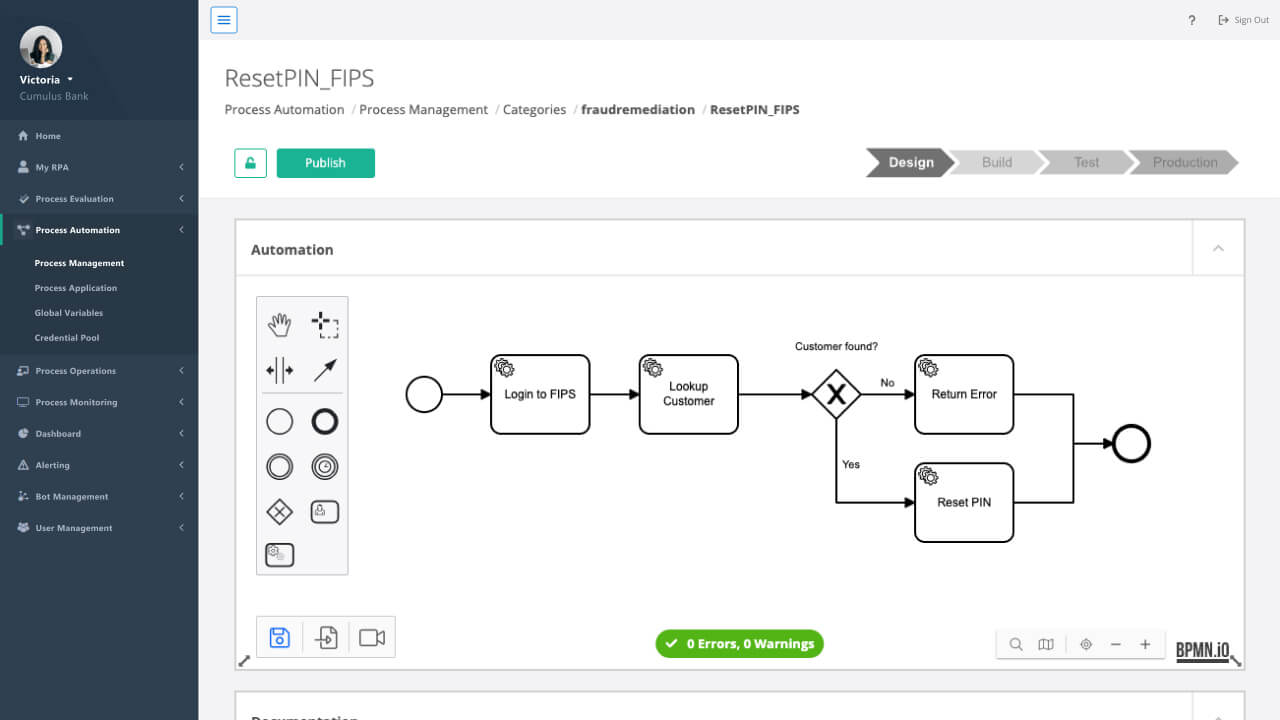
- MuleSoft RPA Builder: A low-code environment where users can record human interactions with applications and turn them into automated workflows.
- MuleSoft RPA Manager: A centralized dashboard for governing the bot workforce, managing security permissions, and monitoring performance metrics.
- MuleSoft RPA Recorder: A tool that captures process steps as they are performed by a human user, automatically generating a skeleton for the bot to follow.
Furthermore, the integration with Salesforce Flow—a suite of automation technologies across the Salesforce Customer 360 platform—allows organizations to embed RPA bots directly into their CRM workflows. For instance, a customer service representative using Salesforce Service Cloud can trigger a MuleSoft RPA bot to look up a legacy billing system, retrieve a PDF invoice, and email it to a customer, all with a single click within their primary workspace.
Macroeconomic Drivers and the Demand for Hyperautomation
The timing of this release is largely influenced by the current global economic climate. As businesses navigate market volatility, rising labor costs, and a shortage of technical talent, the drive toward "hyperautomation"—the disciplined approach of automating as many business and IT processes as possible—has become a board-level priority.
A 2022 Salesforce research report highlighted that more than 90% of organizations have seen a surge in demand for automation from their business teams over the past two years. However, the same report noted that the average enterprise now manages 976 individual applications, yet only 28% of them are integrated. This "integration gap" creates significant friction, as data remains siloed in disparate systems, forcing employees to perform manual "swivel-chair" tasks to move information from one place to another.
Industry analysts suggest that by unifying RPA and integration, MuleSoft is addressing the primary bottleneck of digital transformation. "The challenge for most enterprises isn’t a lack of tools, but a lack of cohesion," noted an industry analyst tracking the automation sector. "By putting RPA on the same platform as APIs, MuleSoft allows IT to maintain governance and security while giving business units the agility to automate their own repetitive tasks."
Detailed Industry Use Cases and Operational Impact
The practical applications of MuleSoft RPA span across various sectors, particularly those burdened by heavy regulatory requirements and legacy technology debt.
Financial Services:
In the banking sector, loan processing often requires pulling data from legacy credit scoring systems and manual verification of employment documents. MuleSoft RPA can be programmed to extract data from uploaded payslips, cross-reference it with internal databases via APIs, and then input the results into a mainframe system that lacks a modern API. This reduces loan approval times from days to minutes.
Healthcare:
Healthcare providers often struggle with patient data fragmentation across different electronic health record (EHR) systems. RPA bots can assist in the patient intake process by automatically syncing insurance information and medical histories between modern web portals and older on-premise databases, ensuring that clinicians have real-time access to accurate data.
Public Sector:
Government agencies can utilize RPA to handle the high volume of permit applications or benefit claims. By automating the initial data validation and document sorting, agencies can free up human staff to focus on complex cases that require subjective judgment, thereby improving public service delivery.

Security, Governance, and Scalability
A recurring concern with RPA deployment in large enterprises is the "shadow IT" effect, where business units deploy unmanaged bots that create security vulnerabilities or break when underlying applications are updated. MuleSoft has addressed this by building RPA into its existing governance framework.
Because RPA bots are managed through the same platform as APIs, IT departments have full visibility into what the bots are doing, what data they are accessing, and who is responsible for them. This unified governance model ensures that automations comply with enterprise security standards and regulatory requirements, such as GDPR or HIPAA. Additionally, the scalability of the MuleSoft platform allows organizations to start with a single bot and scale to hundreds of automated processes without needing to re-architect their underlying infrastructure.
Timeline of Implementation and Market Positioning
Following the general availability announcement, MuleSoft has outlined a roadmap for further integration. The company plans to showcase advanced features at the upcoming Dreamforce 2022 conference, with a focus on how artificial intelligence and machine learning can further enhance bot intelligence—a concept known as "Intelligent RPA."
The competitive landscape for RPA is currently dominated by specialized players such as UiPath, Automation Anywhere, and Blue Prism. However, MuleSoft’s entry into the space changes the dynamic by offering RPA as a feature of a broader integration platform rather than a standalone product. This "platform-play" strategy is expected to appeal to existing Salesforce and MuleSoft customers who prefer a consolidated vendor stack over a best-of-breed approach that requires complex cross-vendor integration.
Conclusion: The Future of Unified Automation
The release of MuleSoft RPA marks a turning point in the evolution of enterprise software. By consolidating the tools necessary for modern digital connectivity, Salesforce and MuleSoft are providing a blueprint for the "future of work," where human employees are liberated from the drudgery of manual data manipulation.
As organizations continue to grapple with the complexities of the digital-first world, the ability to rapidly automate end-to-end processes will likely become a primary differentiator for market leaders. The move toward a unified platform for integration, APIs, and automation is not merely a technical upgrade; it is a strategic response to the growing need for organizational agility in an increasingly automated global economy. With MuleSoft RPA now generally available, the barrier to entry for comprehensive business automation has been significantly lowered, paving the way for a new era of productivity and innovation across the enterprise landscape.