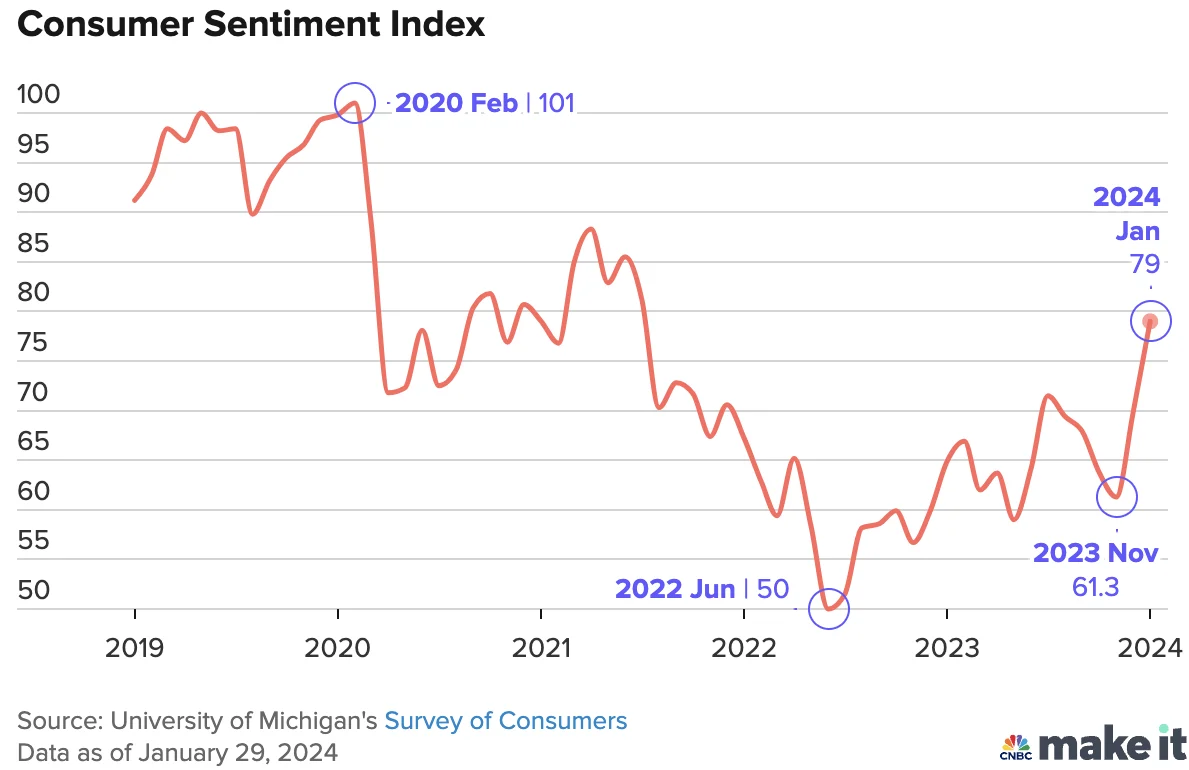
Last month, Tearsheet reported on the resilience of small businesses (SMBs) navigating a landscape of diverse challenges while maintaining an optimistic economic outlook. This sentiment of hopefulness is not an isolated phenomenon confined to the entrepreneurial sector; it now demonstrably reverberates among consumers, painting a picture of shared optimism regarding the broader economic trajectory. This confluence of positive sentiment across two crucial economic pillars – small businesses and individual consumers – suggests a potential turning point in the economic narrative, shifting from one of apprehension to one of cautious recovery and renewed confidence.
A Surge in Consumer Confidence: Key Indicators and Driving Forces
The most recent data paints a compelling picture of a strengthening consumer sentiment. In January of this year, U.S. consumer confidence reached its highest level in five months, a significant uptick that was subsequently followed by a two-year peak in February. This sustained and accelerating surge in confidence is not a random occurrence but rather a response to a confluence of tangible economic improvements. Experts, analyzing these trends, point to several key factors that are collectively contributing to this positive shift.
Foremost among these drivers are the ongoing wage increases observed across various sectors. As incomes rise, consumers feel more financially secure, empowering them to spend and invest more freely. This is complemented by a robust labor market, characterized by reduced unemployment rates. A low unemployment figure signifies that more individuals are gainfully employed, contributing to household incomes and overall economic activity. This dual benefit of higher wages and greater employment opportunities directly translates into increased disposable income for a significant portion of the population.
Furthermore, a notable moderation in inflation, especially when compared to the pronounced price hikes experienced over the past couple of years, has been a critical factor in restoring consumer purchasing power. While inflation has not disappeared entirely, its deceleration has eased the pressure on household budgets, allowing consumers to stretch their dollars further. This cooling of price pressures is particularly welcome after a period where rising costs for essentials like groceries, fuel, and housing significantly eroded real wages and dampened spending power. The stabilization of prices, even at higher levels than pre-pandemic, provides a much-needed sense of predictability and relief.
The recovery of the stock market has also played a substantial, albeit perhaps less direct, role in bolstering consumer confidence. For individuals with investments, a rising stock market translates into increased wealth and a more optimistic outlook on their financial future. This "wealth effect" can encourage greater spending and a willingness to take on more financial risk, further contributing to the positive economic sentiment. The interconnectedness of these economic indicators – wages, employment, inflation, and market performance – creates a reinforcing cycle that is driving this notable rebound in consumer optimism.

A Mindful Shift in Consumer Spending Habits
With macroeconomic conditions showing clear signs of improvement, consumers are actively re-evaluating and adjusting their spending habits. This recalibration follows a period of considerable economic uncertainty and financial strain for many households. A recent survey conducted by McKinsey underscores this trend, revealing that while consumers have not ceased spending or shopping altogether, they are adopting a more mindful and deliberate approach to their priorities and purchases.
This shift is characterized by a greater emphasis on value, necessity, and intentionality. Consumers are scrutinizing their expenditures, seeking out deals, and prioritizing goods and services that offer genuine utility or align with their core values. This doesn’t necessarily mean a wholesale reduction in spending, but rather a reallocation of resources towards what matters most. For instance, while discretionary spending might be more carefully considered, spending on experiences that foster well-being or durable goods that represent long-term value might see continued or even increased investment.
The McKinsey survey data suggests a nuanced understanding of consumer behavior:
- Prioritization of Essentials: Spending on necessities like food, housing, and healthcare remains a stable priority, though consumers are actively seeking ways to optimize these expenditures, such as by opting for store brands or delaying non-urgent purchases.
- Value-Conscious Decisions: Consumers are increasingly comparing prices across different retailers and brands, demonstrating a heightened awareness of price sensitivity. This has led to a surge in demand for private label goods and a greater willingness to switch brands if a better value proposition is offered.
- Experiential Spending Re-evaluation: While experiences were a major focus post-pandemic, consumers are now more discerning. They are likely to invest in experiences that offer unique value, are considered essential for well-being (e.g., travel for family events), or are perceived as offering significant long-term memories, rather than simply impulse-driven outings.
- Focus on Durability and Longevity: In the face of past inflationary pressures, consumers are increasingly looking for products that are built to last, reflecting a desire for greater return on investment and a move away from disposable or short-lived items.
- Digital Engagement: The digital realm continues to be a primary channel for research and purchasing, with consumers leveraging online tools to compare prices, read reviews, and identify the best deals.
This evolving consumer mindset has significant implications for businesses across all sectors. Companies that can effectively communicate value, offer competitive pricing, and understand the shifting priorities of their target demographic are best positioned to thrive in this new economic environment.
Broader Economic Context and Historical Perspective
To fully appreciate the current rebound in confidence, it is crucial to place it within a broader economic context and consider the preceding period. The past few years have been marked by a series of unprecedented economic shocks, beginning with the COVID-19 pandemic. This event triggered widespread supply chain disruptions, labor shortages, and a surge in government stimulus, all of which contributed to a period of high inflation.
Timeline of Key Economic Events and Trends:

- Early 2020: The onset of the COVID-19 pandemic leads to widespread lockdowns, economic shutdowns, and significant disruptions to global supply chains. Governments implement unprecedented fiscal and monetary stimulus measures.
- 2021-2022: Inflationary pressures begin to mount significantly due to a combination of robust consumer demand fueled by stimulus, persistent supply chain issues, and the war in Ukraine impacting energy and food prices. The U.S. Federal Reserve begins to signal a shift towards monetary policy tightening.
- 2022-2023: The Federal Reserve embarks on a series of aggressive interest rate hikes to combat inflation. This leads to concerns about a potential recession, increased borrowing costs for businesses and consumers, and a cooling of the housing market. Consumer confidence experiences volatility during this period.
- Late 2023 – Early 2024: Inflation begins to show a sustained moderation. The labor market remains surprisingly resilient, with unemployment rates staying low. Wage growth continues, albeit at a slower pace than inflation initially. The stock market begins a steady recovery. Consumer confidence starts to trend upwards.
This historical perspective highlights the cyclical nature of economic sentiment. Periods of high inflation and uncertainty are often followed by phases of stabilization and recovery, driven by policy interventions and underlying economic resilience. The current surge in confidence can be viewed as a direct consequence of the successful, albeit painful, efforts to tame inflation and the continued strength of the labor market.
Implications for Businesses and Financial Institutions
The resurgence of both consumer and small business optimism carries significant implications for various economic actors, particularly businesses and financial institutions. For small businesses, which form the backbone of the economy, renewed confidence translates into a greater willingness to invest, expand, and hire. This can lead to increased demand for goods and services, creating a virtuous cycle of economic growth.
Financial institutions, such as banks, stand to benefit from this improved economic sentiment. As consumer confidence rises and businesses feel more secure, there is a greater likelihood of increased demand for credit, loans, and other financial products. This can lead to higher deposit growth, as individuals and businesses have more disposable income to save. Furthermore, a more robust economic environment generally correlates with lower default rates on loans, improving the overall health of the financial sector.
Specific Implications:
- Increased Demand for Goods and Services: A more confident consumer is more likely to spend on both essential and discretionary items, boosting revenue for businesses.
- Investment and Expansion by SMBs: With a brighter economic outlook, small businesses may be more inclined to invest in new equipment, technology, and personnel, driving job creation and innovation.
- Growth in Lending and Deposit Activity: Banks may see an uptick in loan applications from both consumers and businesses, as well as an increase in deposit balances.
- Reduced Credit Risk: A stronger economy generally leads to lower unemployment and higher business profitability, which can decrease the risk of loan defaults for financial institutions.
- Shifting Product Demand: Businesses will need to adapt their product and service offerings to align with the more mindful spending habits of consumers, emphasizing value and utility.
- Talent Acquisition and Retention: A more optimistic economic environment may make it easier for businesses to attract and retain skilled workers, although competition for talent may persist in certain sectors.
The current economic climate, marked by improving consumer and small business confidence, presents a promising outlook. The convergence of moderating inflation, strong employment figures, and wage growth has created a more stable and predictable environment. While challenges may still persist, the prevailing sentiment suggests a collective move towards recovery and growth, signaling a potentially positive trajectory for the economy in the coming months. Businesses and financial institutions that can adapt to the evolving consumer landscape and leverage the renewed economic optimism are poised for success.