
The ongoing geopolitical instability in the Middle East, a region historically central to global energy supply, serves as a stark reminder of oil’s enduring influence on the world economy and financial markets. Despite significant advancements in renewable energy sources and the increasing prominence of natural gas, crude oil continues to be a cornerstone of global energy consumption, accounting for approximately one-third of the world’s total energy needs. A substantial portion of this critical resource originates from the Middle East, making any disruption in the region a potential catalyst for significant economic ripple effects.
The current geopolitical climate, while relatively nascent in its unfolding, underscores the inherent vulnerability of the global oil supply chain. Even a temporary disruption, or the perception of one, can trigger immediate and far-reaching consequences. The immediate and most visible impact of such a squeeze on oil supply is invariably felt at the consumer level, manifesting as higher prices at the gasoline pump. However, the economic ramifications extend far beyond individual fueling costs.
The Chain Reaction: From Pump Prices to Federal Reserve Policy
The rise in crude oil prices initiates a cascading effect throughout various sectors of the economy. As the cost of a fundamental input like oil increases, so too do the operational expenses for numerous industries. Transportation, manufacturing, agriculture, and even the production of everyday goods are all susceptible to higher energy costs. This inflationary pressure can translate into increased prices for consumers across a wide array of products and services, eroding purchasing power and potentially slowing economic growth.
Furthermore, elevated oil prices can significantly influence the decision-making processes of central banks, particularly the U.S. Federal Reserve. The Fed’s mandate includes maintaining price stability and fostering maximum employment. When inflation begins to climb, driven in part by energy costs, the central bank may be compelled to adjust its monetary policy. This often involves delaying or even reducing the pace of interest rate cuts, which are typically implemented to stimulate economic activity. Higher interest rates, in turn, can have a dampening effect on stock market valuations. Companies become more expensive to finance, and future earnings are discounted at a higher rate, potentially leading to a reevaluation of equity prices and a period of market volatility.
The Imperative of Diversification: Beyond Asset Classes to Within Them
The interconnectedness of the global economy and the sensitivity of markets to geopolitical events like those unfolding in the Middle East underscore a fundamental principle of prudent investing: the critical importance of diversification. This principle extends beyond simply allocating capital across different asset classes, such as stocks and bonds, to a more nuanced approach of diversifying within those asset classes.
For instance, when considering fixed-income investments, commonly referred to as bonds, the concept of diversification becomes particularly relevant. Bonds represent loans made by investors to corporations, governments, and other entities, and they form a crucial component of many investment portfolios. Reputable investment strategies often advocate for diversification across multiple types of bonds, encompassing various issuers, maturities, and credit qualities.
Inflation-Protected Securities (TIPS): A Shield Against Rising Prices
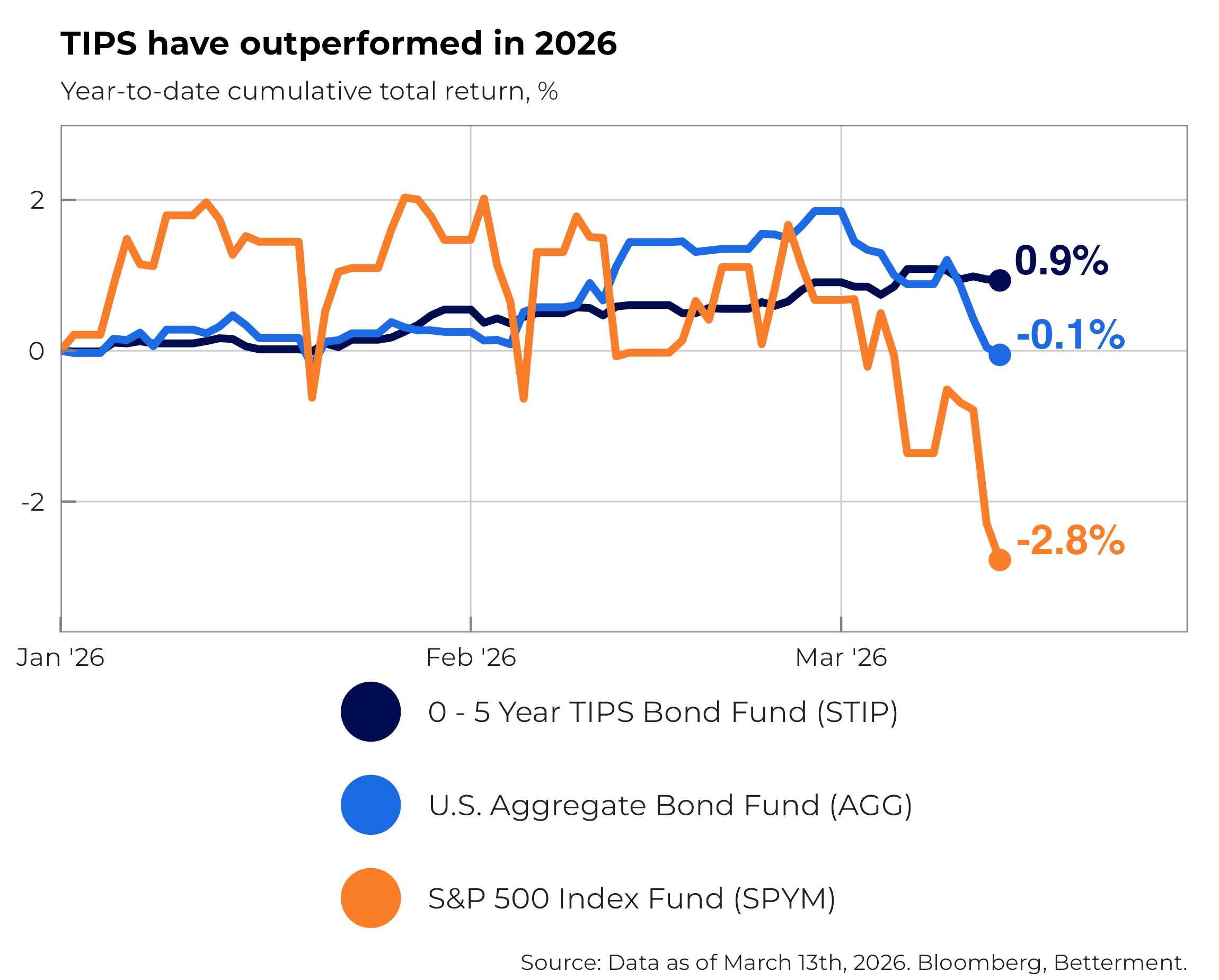
Within the broad spectrum of fixed-income instruments, a specific sub-asset class has demonstrated remarkable resilience and effectiveness in navigating periods of inflationary concern: Treasury Inflation-Protected Securities, or TIPS. These are U.S. government bonds specifically designed to protect investors from the erosion of purchasing power caused by inflation.

The mechanics of TIPS are straightforward yet powerful. Their principal value, or face value, is adjusted semi-annually in accordance with changes in the Consumer Price Index (CPI), a widely used measure of inflation. Crucially, the interest payments, which are made twice a year, are calculated based on this inflation-adjusted principal. This means that as inflation rises, both the principal amount of the bond and the interest payments it generates increase, providing a direct hedge against the diminishing value of currency.
The performance of TIPS has been particularly noteworthy in recent years. Following a period of relatively low inflation, concerns about its resurgence began to take hold in 2022. During this time, when many traditional bond categories experienced significant declines in value due to rising interest rates and inflationary pressures, TIPS often proved to be a stabilizing force. Their ability to adjust with inflation provided a buffer against losses, offering investors a valuable layer of protection during a challenging market environment.
A Deeper Dive into TIPS Performance and Strategic Allocation
The strategic inclusion of TIPS within diversified portfolios is not merely a tactical adjustment; it is rooted in a comprehensive investment philosophy that prioritizes both financial and psychological well-being for investors. The inherent stability and inflation-hedging capabilities of TIPS can contribute to a more resilient portfolio, capable of withstanding a wider range of economic conditions. This robustness can translate into greater investor confidence and a reduced propensity for making emotionally driven investment decisions during periods of market turbulence.
Leading investment firms often incorporate TIPS into their model portfolios, recognizing their unique benefits. The allocation to TIPS can vary depending on the investor’s risk tolerance and overall portfolio objectives. For instance, in more conservative portfolio constructions, the allocation to TIPS might reach as high as 20%. This strategic weighting aims to harness the protective qualities of TIPS without compromising the potential for growth offered by other asset classes.
Furthermore, investment platforms are increasingly designed to facilitate dynamic portfolio management. This includes providing investors with the tools and flexibility to adjust their bond allocations over time, allowing them to adapt to changing economic conditions and personal financial goals. The ability to readily access and review a portfolio’s exact holdings empowers investors with transparency and control, ensuring they have a clear understanding of their investment strategy and its underlying components.
The Broader Economic Context: Oil’s Enduring Influence
The reliance on oil as a primary energy source, despite the global push towards sustainability, remains a defining characteristic of the modern economy. The International Energy Agency (IEA) has consistently highlighted oil’s significant share in global energy consumption, even as renewable energy sources gain traction. For example, the IEA’s World Energy Outlook reports typically show oil accounting for a substantial portion of the global primary energy supply, often in the range of 30-35%. This dominance is particularly pronounced in sectors like transportation, where the transition to alternative fuels is still in its early stages.
The Middle East, specifically countries within the Organization of the Petroleum Exporting Countries (OPEC) and its allies (OPEC+), plays a pivotal role in this global oil supply dynamic. Their production decisions and geopolitical stability have a direct and immediate impact on global oil prices. Historical events, such as the oil crises of the 1970s and subsequent supply disruptions, have repeatedly demonstrated the profound economic consequences of instability in this region. These events not only led to sharp increases in energy prices but also contributed to periods of high inflation, economic recession, and significant shifts in global economic power.
The current geopolitical tensions in the Middle East, while the specific triggers and potential resolutions remain fluid, evoke these historical precedents. The involvement of major global powers and the potential for escalation introduce an added layer of uncertainty. The Trump administration’s past approach to international relations and its impact on global energy markets, as referenced in the original context, adds another dimension to the analysis, suggesting that policy shifts can further influence the trajectory of oil prices and their broader economic impact.
Federal Reserve’s Dilemma: Inflation vs. Growth
The Federal Reserve faces a complex balancing act in its monetary policy decisions. On one hand, persistent inflation, exacerbated by rising energy costs, necessitates a hawkish stance to maintain price stability. This could involve continued high interest rates or a slower pace of rate reductions. On the other hand, an overly aggressive approach to inflation fighting could stifle economic growth, potentially leading to a slowdown or even a recession.
Economists and market analysts closely monitor oil price fluctuations as a key indicator of inflationary pressures and their potential impact on Fed policy. A sustained increase in oil prices above a certain threshold, for instance, could force the Fed to recalibrate its economic outlook and adjust its interest rate trajectory accordingly. This would have significant implications for borrowing costs for businesses and consumers, as well as for investment decisions across all sectors of the economy.
The Strategic Advantage of Diversified Portfolios
The consistent performance of inflation-protected bonds, such as TIPS, within diversified portfolios during periods of economic uncertainty highlights the enduring value of strategic asset allocation. By spreading investments across different asset classes and, crucially, within those asset classes, investors can build portfolios that are more resilient to market shocks and economic downturns.
This multi-layered approach to diversification is a cornerstone of sound investment strategy. It acknowledges that no single asset class or investment vehicle is immune to market fluctuations. Instead, it seeks to create a portfolio that can weather a variety of economic storms by holding assets that may perform differently under various conditions.
The ability for investors to easily adjust their bond allocations over time further enhances the adaptability of their portfolios. This flexibility allows them to respond to evolving economic landscapes and personal circumstances, ensuring their investments remain aligned with their long-term financial objectives. The transparency offered by platforms that allow investors to view their exact holdings provides the clarity needed to make informed decisions and maintain confidence in their investment strategy.
In conclusion, the current geopolitical climate in the Middle East serves as a potent reminder of the enduring influence of oil on the global economy and financial markets. The potential for supply disruptions and the subsequent inflationary pressures underscore the critical importance of diversification in investment portfolios. By strategically allocating capital not only across different asset classes but also within them, particularly through instruments like inflation-protected bonds, investors can build more robust and resilient portfolios capable of navigating an increasingly unpredictable world. The ability to adapt and maintain a clear understanding of one’s investments becomes paramount when the world’s most essential commodity faces uncertainty, ultimately making the difference in achieving long-term financial security.