Open Banking has officially graduated from a disruptive regulatory compliance framework into the operational bedrock of modern retail, business, and corporate financial architectures. This transformation took center stage at the Open Banking Expo UK and Europe 2026, where senior executives from Lloyds Banking Group and Visa detailed how account-to-account (A2A) capabilities are rapidly being embedded into everyday financial workflows. Far from existing merely as an alternative online checkout button, Open Banking is now powering complex corporate liquidity management, seamless wealth-tech onboarding, and automated money movement designed to remove operational friction for consumers and businesses alike.
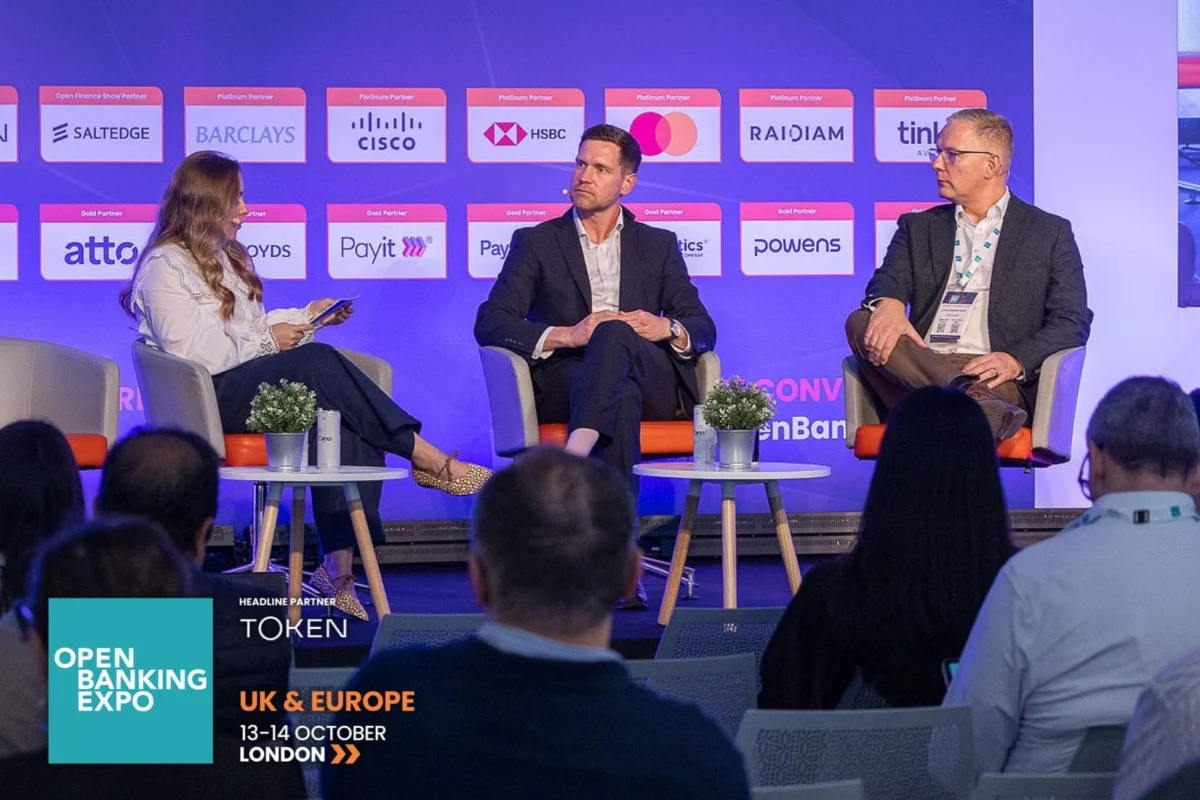
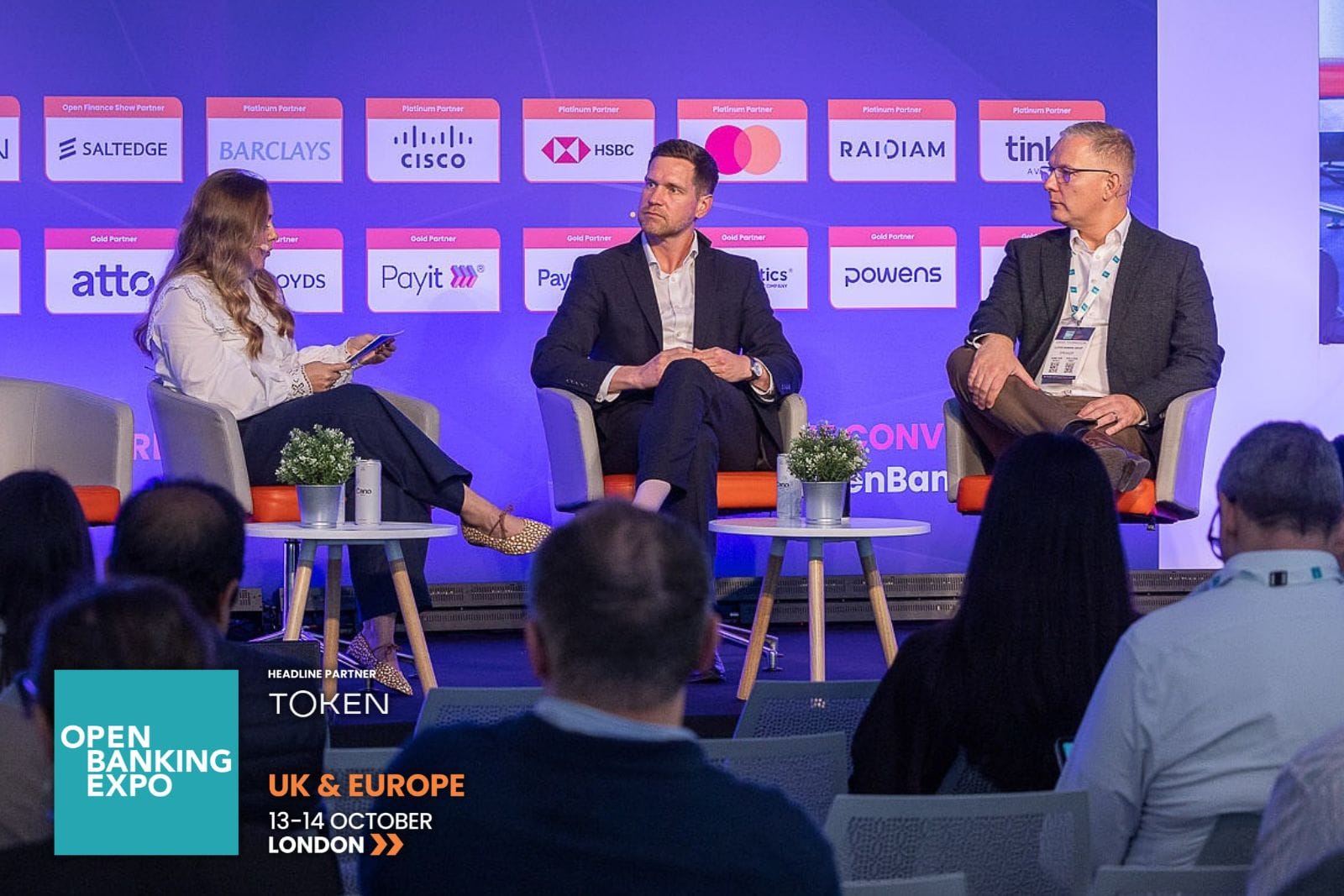
The high-profile discussion, titled Beyond payments: Scaling payment innovation across banking, was spearheaded by David Thomasson, managing director of business transaction banking at Lloyds Banking Group, and Jack Spiers, senior director of issuing and risk at Visa. The session was moderated by Dominique Cranstone, senior account manager at Visa. Together, the panel unpacked the strategic convergence of customer expectations, robust technological investment, and cross-industry partnerships necessary to deploy next-generation payment systems at enterprise scale.
The Strategic Shift: Payments as a Seamless Journey Rather Than a Siloed Transaction
To understand the current trajectory of Open Banking, financial institutions must first acknowledge a fundamental shift in consumer psychology. According to David Thomasson, contemporary bank customers—spanning both retail accounts and multinational commercial enterprises—no longer view payments as isolated events. Instead, they evaluate their banking experiences against the frictionless digital interactions they encounter in consumer tech, e-commerce, and everyday software platforms.
When a user initiates a transaction, whether it is funding an individual savings account (ISA), settling a credit card balance, or reallocating corporate cash reserves, they expect the underlying payment mechanism to be natively woven into the broader activity. "Payments are expected to be part of a journey rather than a separate standalone," Thomasson told delegates at the expo.
Crucially, both Lloyds and Visa emphasized that this evolution does not signal the immediate obsolescence of legacy infrastructure such as debit cards or Direct Debits. Rather, Open Banking functions as an additive component within a diversified ecosystem. Jack Spiers of Visa noted that the ultimate objective—bolstered by Visa’s acquisition and integration of open banking platform Tink—is not to force customers down a single funnel, but to match the precise payment instrument to the optimal use case. Wallet top-ups and instantaneous credit card repayments serve as primary examples where A2A infrastructure has effectively eliminated historical settlement delays and transactional friction.
Real-World Applications: Expanding Beyond Retail into Wealth Management and Corporate ERPs
While early-stage Open Banking adoption was largely characterized by simple account information services (AIS) and rudimentary payment initiation services (PIS) for retail checkouts, institutional deployment has matured dramatically. Lloyds Banking Group is currently leading the charge by embedding Open Banking infrastructure deep into high-value wealth management and commercial business operations.
In the wealth and insurance sectors, Lloyds has partnered with specialized providers to streamline the onboarding journey for investment clients. Historically, setting up an investment vehicle or an ISA involved cumbersome manual data entry, identity verification delays, and separate funding steps via manual bank transfers. By utilizing Open Banking rails, Lloyds now allows customers to simultaneously verify account ownership and execute their initial funding deposit within a single, unified digital workflow. This innovation not only accelerates account activation timelines but also dramatically reduces drop-off rates during onboarding.
Simultaneously, Lloyds has turned its attention to the complex operational pain points faced by corporate treasurers. Large enterprises managing capital across multiple banking institutions traditionally had to log into disparate corporate portals or initiate manual batch transfers through enterprise resource planning (ERP) systems. By integrating Open Banking capabilities directly into these corporate software environments, Lloyds enables businesses to move funds seamlessly between accounts held at different financial institutions without ever leaving their central ERP dashboard.
"It’s a simple thing, but it’s working really, really well," Thomasson remarked, highlighting how low-complexity, high-utility backend integrations can yield immediate operational efficiencies for commercial clients.
Infrastructure and Implementation: The Philosophy of Moving Slow to Move Fast
Scaling financial innovation across a systemically important banking institution requires navigating a complex matrix of regulatory compliance, operational resilience, and cybersecurity governance. Rather than building bespoke, isolated technical pipelines for every new product offering, Lloyds Banking Group adopted a methodical, platform-based infrastructural strategy.
Working in close collaboration with Tink, Lloyds initially tested its open banking architecture on low-risk, high-frequency consumer use cases. Once stability, fraud prevention protocols, and regulatory compliance were thoroughly validated, the bank systematically extended the underlying core infrastructure into credit card repayments, retail investments, and ultimately, high-value commercial and business banking.

This phased methodology drew high praise from Visa’s Jack Spiers, who commended the bank’s ability to balance long-term architectural vision with pragmatic, incremental delivery. "Moving slow to move fast has been the one thing that I think they’ve nailed," Spiers observed.
Looking forward, Thomasson stressed the importance of democratizing these sophisticated tools. While large corporate clients were the early beneficiaries of multi-bank cash-sweeping and ERP integration, Lloyds is actively seeking to extend these same capabilities to small and medium-sized enterprises (SMEs). Because SMEs form the macroeconomic backbone of the UK economy, bringing institutional-grade payment efficiency to smaller merchants is expected to create a profound ripple effect across domestic commerce. To accelerate this vision, Lloyds has issued an open invitation to independent software vendors, ERP providers, and payment gateways to co-create solutions tailored to shared enterprise clients.
The Synergy of Trust and Technology: Bank-Fintech Collaboration
The success of modern Open Banking initiatives relies heavily on an effective division of labor between regulated financial institutions and agile technology partners. During the panel, the speakers underscored how the unique strengths of banks and fintechs must be combined to maximize market penetration and user adoption.
Tink, operating under the broader Visa umbrella, provides the specialized technological plumbing, user experience (UX) optimization tools, and conversion-rate analytics necessary to ensure smooth transaction completion rates. However, technology alone is insufficient without end-user trust—a commodity that legacy financial institutions have spent decades cultivating.
"They own the trust with the customer," Spiers noted, referring to Lloyds Banking Group. "They own the relationship with the end user or the business." By pairing Tink’s advanced API infrastructure and developer toolkits with Lloyds’ entrenched customer base and brand equity, the partnership successfully bridges the gap between raw technological capability and mass-market deployment.
The Horizon: Money on Autopilot and the Next Wave of Financial Innovation
As the financial services sector looks past 2026, industry leaders anticipate that the convergence of open banking data, digital identity frameworks, artificial intelligence, and account-to-account rails will fundamentally redefine personal and corporate finance.

Thomasson predicted that future payment journeys will become completely invisible, embedded natively into background digital ecosystems and facilitated by emerging technologies such as stablecoins alongside traditional rails. Meanwhile, Visa’s Jack Spiers introduced a compelling vision for the future driven by variable recurring payments (VRP) and advanced AI agents: proactive money management, or "money on autopilot."
In this near-future paradigm, intelligent financial agents could autonomously analyze a consumer’s financial health, dynamically shifting funds between savings accounts, investment portfolios, and mortgage liabilities to optimize returns and minimize borrowing costs without requiring manual user intervention.
Nevertheless, both executives issued cautionary notes regarding the governance of hyper-connected financial ecosystems. As transaction volumes surge and payment automation accelerates, the industry must maintain rigorous, scalable infrastructure capable of neutralizing sophisticated fraud vectors while preserving consumer trust and regulatory compliance.
Ultimately, the consensus emerging from the Open Banking Expo UK and Europe 2026 is clear: the future of payments will not be defined by competition between isolated payment methods, but by how seamlessly financial institutions, technology providers, and digital platforms can integrate their systems to create a more unified, intuitive, and accessible global economy.