
The financial services landscape is undergoing a profound structural transformation, driven by the rapid mainstream adoption of Open Banking infrastructure. At the Open Banking Expo UK & Europe 2026, industry leaders from Lloyds Banking Group and Visa took center stage to demonstrate how account-to-account capabilities, automated money movement, and advanced digital partnerships are moving far beyond niche checkout tools. Instead, Open Banking is rapidly becoming the invisible operational tissue binding together retail banking, investment funding, corporate treasury management, and everyday consumer financial routines.
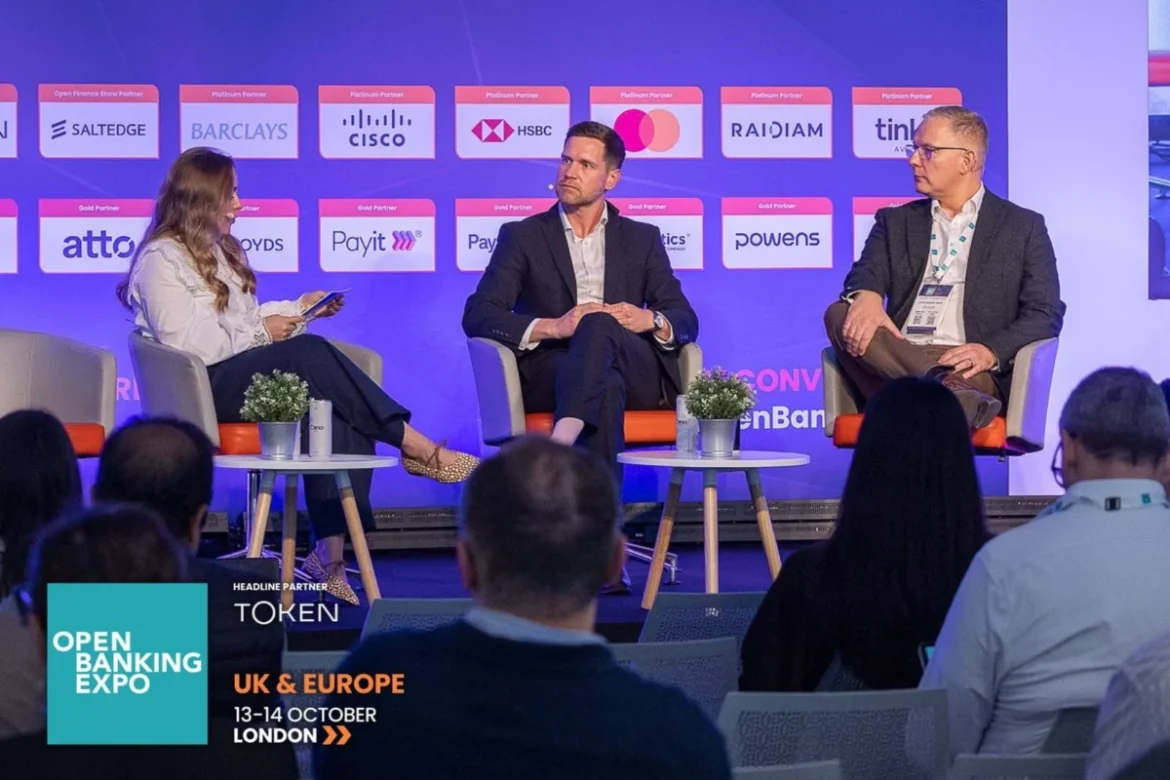
The high-profile panel, titled "Beyond payments: Scaling payment innovation across banking," brought together David Thomasson, managing director of business transaction banking at Lloyds Banking Group, and Jack Spiers, senior director of issuing and risk at Visa. The session was skillfully moderated by Dominique Cranstone, senior account manager at Visa, drawing an audience of global fintech executives, banking innovators, and regulatory strategists eager to glean insights into how legacy financial institutions can successfully scale emerging payment technologies.
Background Context and the Evolution of Open Banking
To understand the significance of the discussions at Open Banking Expo UK & Europe 2026, it is vital to examine the historical trajectory of the ecosystem. Introduced initially in the United Kingdom through regulatory mandates via the Competition and Markets Authority (CMA) in 2018, Open Banking was designed to foster competition, drive innovation, and give consumers ownership over their financial data.
In its infancy, the technology faced hurdles related to consumer trust, user friction, and uneven technological adoption across smaller financial institutions. However, over the subsequent eight years, the ecosystem matured significantly. Driven by commercial incentives, API standardization, and the integration of third-party providers (TPPs) like Tink—which Visa acquired to bolster its European open banking network—the technology evolved from simple read-only account aggregation into robust write-capabilities, including Variable Recurring Payments (VRP) and instant account-to-account (A2A) transfers.
By 2026, Open Banking transactions across the UK and Europe have crossed multi-billion-pound thresholds, transitioning from a regulatory compliance burden into a vital commercial growth engine for tier-one banks.
Integrating Payments into Seamless Customer Journeys
During the fireside chat, David Thomasson emphasized that consumer expectations have been fundamentally reshaped by Big Tech and hyper-personalized digital services. Modern consumers and corporate treasurers no longer view payments as discrete, isolated checkpoints at the end of a process. Instead, they expect financial transactions to be contextually embedded within broader digital journeys.
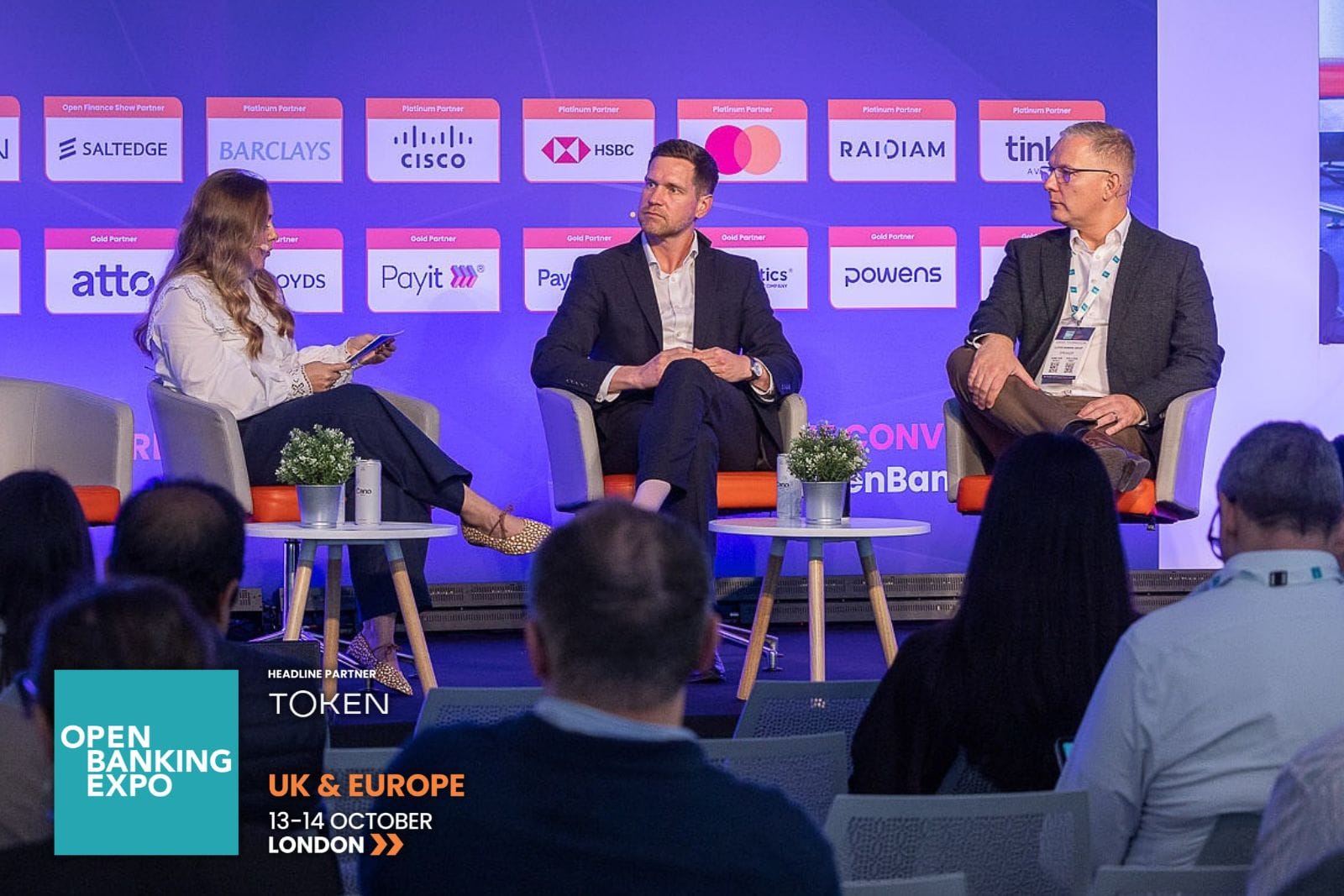
"Payments are expected to be part of a journey rather than a separate standalone," Thomasson stated, highlighting a core shift in product design philosophy at Lloyds Banking Group. Rather than positioning Open Banking payment rails as a zero-sum competitor to established debit cards, credit cards, or Direct Debit mandates, Lloyds views A2A solutions as a complementary expansion of the customer’s choice architecture.
Jack Spiers of Visa echoed this sentiment, noting that successful payment innovation always begins by diagnosing specific operational friction points within a given user journey. He pointed to digital wallet top-ups, e-commerce checkouts, and credit card debt repayments as prime examples where Open Banking has already eliminated historical friction, reduced settlement times, and lowered operational processing costs for merchants. For Visa and its subsidiary Tink, the strategic objective is not to cannibalize traditional card portfolios, but to orchestrate a multi-rail ecosystem where consumers effortlessly access the optimal payment instrument for their specific context.
Expanding Horizons: Investment Funding and Corporate Treasury
While early Open Banking use cases focused predominantly on retail e-commerce and personal finance management apps, institutions like Lloyds Banking Group are aggressively pushing the technology into high-value, complex segments such as wealth management and corporate banking.
Thomasson detailed how Lloyds has collaborated closely with insurance and wealth-management partners to overhaul the onboarding experience for investment accounts, including Individual Savings Accounts (ISAs). Traditionally, opening and funding an investment account required manual account verification, cumbersome sort-code and account-number entries, and delays associated with standard BACS or Faster Payments processing.
By integrating Open Banking protocols directly into the digital onboarding flow, Lloyds now allows customers to seamlessly verify account ownership and execute their initial funding transfer within a single, unified user session. This innovation not only drastically reduces drop-off rates during account creation but also accelerates activation timelines for wealth management firms.
On the corporate front, Lloyds has turned its attention to the complex pain points of large commercial clients operating multi-bank architectures. Enterprises holding funds across accounts in various financial institutions traditionally had to log into multiple proprietary corporate banking portals or manually pull data into enterprise resource planning (ERP) systems to manage liquidity.
Through the implementation of corporate Open Banking solutions, Lloyds now empowers businesses to orchestrate internal fund transfers across different financial institutions directly from within their existing ERP software. "It’s a simple thing, but it’s working really, really well," Thomasson noted, illustrating how targeted API integrations can deliver immediate operational efficiencies without forcing businesses to abandon legacy enterprise software stacks.

Building Scalable Infrastructure and Collaborative Ecosystems
Scaling innovations across a financial institution of Lloyds Banking Group’s magnitude requires rigorous engineering discipline, robust cybersecurity frameworks, and a methodical deployment strategy. Rather than rushing isolated features to market, Lloyds prioritized foundational resilience, risk governance, and core technology infrastructure.
Collaborating with Tink, Lloyds initially deployed payment functionality for lower-risk, high-frequency use cases. Once stability and consumer trust were established, the bank systematically scaled the underlying technology upward into credit card repayments, retail lending journeys, and eventually complex commercial and business banking platforms.
Jack Spiers lauded this measured approach during the panel, praising the bank’s operational ethos: "Moving slow to move fast has been the one thing that I think they’ve nailed." By getting the foundational architecture right early on, Lloyds has avoided the pitfalls of fragmented technology stacks, enabling the rapid deployment of new products onto a singular, scalable core infrastructure.
Looking outward, Thomasson expressed a strong desire to democratize these enterprise-grade capabilities. While initial rollouts naturally targeted large corporations, the bank aims to cascade the same benefits down to small and medium-sized enterprises (SMEs)—the foundational backbone of the UK economy. Furthermore, Thomasson extended an open invitation to software platforms, ERP developers, payment gateways, and fintech startups to co-create solutions tailored to shared enterprise clients.
The partnership model between traditional banking giants and specialized technology providers was a recurring theme throughout the session. Spiers emphasized that Tink’s primary value proposition lies in providing deep technological expertise, API reliability, user experience (UX) design, and continuous conversion-rate optimization. Meanwhile, banks like Lloyds contribute the most irreplaceable asset in financial services: consumer trust and deeply entrenched customer relationships. "They own the trust with the customer," Spiers observed. "They own the relationship with the end user or the business."
The Horizon of Innovation: Money on Autopilot and AI-Driven Finance
Looking toward the future, the panel shifted focus to the next evolutionary phase of money movement. Both leaders agreed that the coming decade will be defined by hyper-automated financial management, where manual transaction initiation becomes the exception rather than the rule.
Thomasson predicted that the convergence of Open Banking APIs, rich financial data standards, verified digital identities, and artificial intelligence agents will cause payments to dissolve entirely into the background of digital experiences. While acknowledging the nascent exploration of alternative settlement assets like stablecoins, both speakers emphasized that regulated fiat rails enhanced by Open Banking remain the primary vehicle for near-term commercial transformation.

Jack Spiers introduced a compelling vision for the future of consumer banking, coining the paradigm "money on autopilot." Leveraging advanced Variable Recurring Payments (VRP) frameworks and proactive AI-driven financial agents, Spiers envisions a financial ecosystem where consumer funds automatically flow between accounts, savings vehicles, and investment portfolios to optimize yield, minimize borrowing costs, and automatically satisfy financial obligations without requiring active consumer intervention.
"The future of money is going to be money on autopilot," Spiers asserted. However, both executives issued firm caveats regarding this utopian vision. As automation accelerates, the financial sector must simultaneously scale fraud prevention, real-time risk monitoring, and cybersecurity frameworks to protect consumers against sophisticated, tech-enabled financial crime.
Fact-Based Analysis of Market Implications
The strategic trajectory outlined by Lloyds Banking Group and Visa at Open Banking Expo UK & Europe 2026 carries several profound implications for the broader European and global financial services industry:
- The Commoditization of Traditional Rails: As A2A payments and Open Banking overlays become more seamlessly integrated into complex financial journeys, traditional card networks and legacy clearing systems face mounting pressure to evolve. The future belongs to multi-rail providers who can seamlessly route transactions based on cost, speed, and context.
- B2B Digitization as the New Frontier: While consumer-facing e-commerce has dominated fintech discourse over the past decade, the true value unlock for major commercial banks lies in digitizing B2B workflows, treasury operations, and ERP integrations. Solutions that eliminate corporate friction command higher customer loyalty and stickier revenue streams.
- The Imperative of Strategic Collaboration: The days of banks attempting to build proprietary fintech solutions entirely in-house are effectively over. The successful execution demonstrated by Lloyds and Tink proves that the future of banking relies on symbiotic ecosystems where tech providers supply agile infrastructure and legacy institutions provide trusted regulatory licenses and massive customer distribution networks.
- Regulatory and Security Challenges: As the industry transitions toward automated money movement and AI-driven agents ("money on autopilot"), regulatory frameworks must adapt to address questions of liability, data privacy, and algorithmic bias. Ensuring robust fraud mitigation will be the ultimate differentiator between sustainable innovation and systemic vulnerability.
Ultimately, the dialogue between Lloyds Banking Group and Visa underscores a mature industry shifting its focus from regulatory compliance to value creation. By combining deep customer relationships with cutting-edge API technology, financial institutions are successfully turning Open Banking from a compliance mandate into an indispensable driver of modern commerce.
