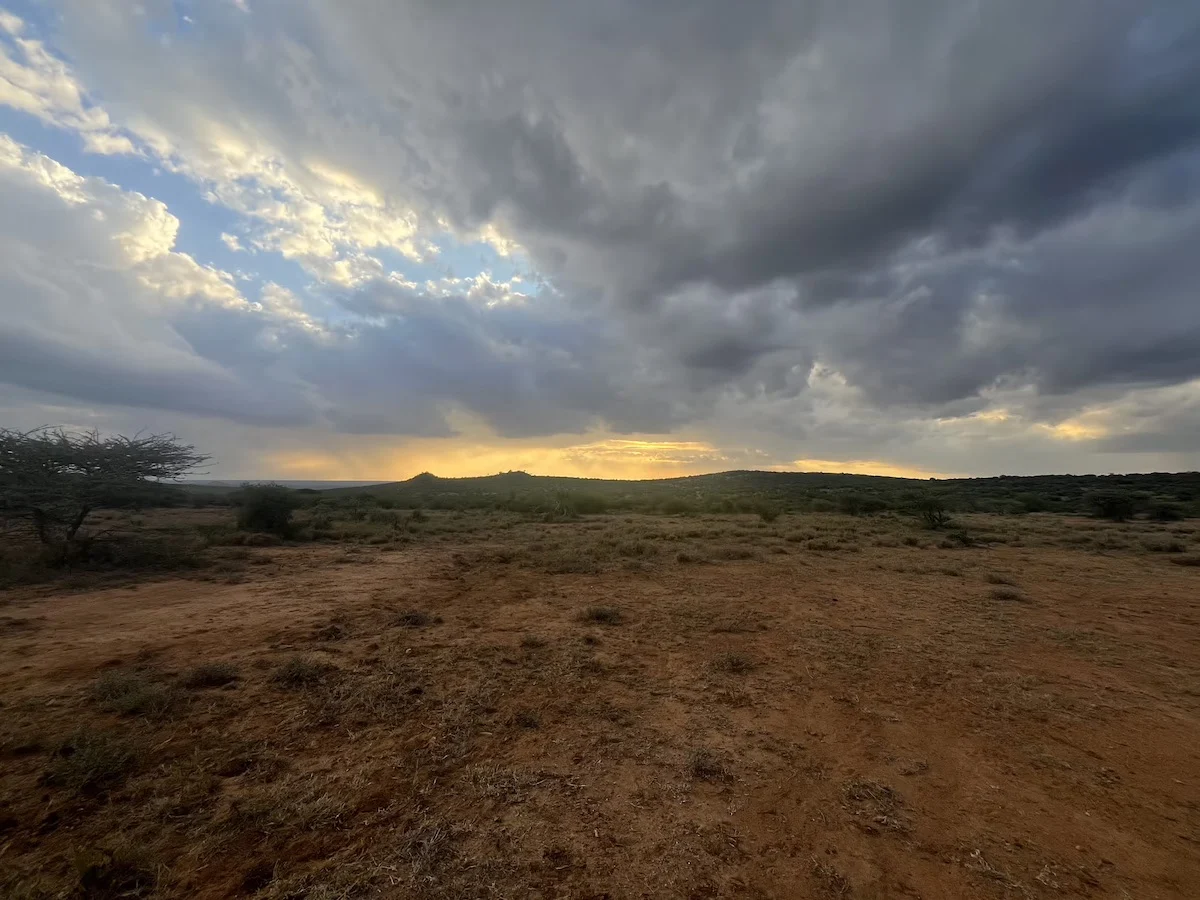
The landscape of global conservation finance is undergoing a quiet yet profound transformation, anchored in the expansive terrain of Kenya’s Laikipia region. In a world-first financial deployment, Munich-based nature finance firm The Landbanking Group has successfully facilitated $150,000 in growth capital for the family-run Male Conservancy (pronounced Malé). Backed by an undisclosed international consulting firm, this pioneering transaction utilizes a novel, equity-like financing vehicle known as “nature stocks.” Rather than relying on traditional debt, philanthropic grants, or single-commodity carbon offsets, this mechanism ties investor returns directly to the ecological condition and holistic productivity of the land.
This landmark agreement represents more than just a localized capital injection; it serves as a stress test for a financial architecture that could redefine how global capital interacts with indigenous ecosystems. By monetizing the ecological health of the soil and habitat rather than forcing the sale of the physical property itself, the initiative bridges the historical divide between economic development and environmental preservation. As the international community searches for scalable models to halt biodiversity loss and mitigate climate change, the unfolding experiment in Laikipia offers a compelling blueprint for balancing local sovereignty with institutional investment.
The Mechanics of Nature Stocks: Moving Beyond Carbon and Timber
For decades, the mainstream conservation market has operated through rigid, siloed financial products. Investors looking to fund environmental stewardship typically turn to carbon credits, agroforestry yields, or timber sales. These instruments, while valuable, often incentivize single-outcome management—such as planting fast-growing monoculture trees to capture carbon—at the expense of broader ecosystem resilience. Furthermore, they frequently require complex, bureaucratic certification processes that price out smallholders and local stewards.
The Landbanking Group’s “nature stocks” approach dismantles this paradigm. Modeled conceptually on the German genussschein—a passive, open-ended profit-sharing certificate—nature stocks function as a mezzanine-like financing instrument. Investors provide upfront capital for ecological restoration, land management equipment, and regenerative infrastructure. In return, they secure a proportional share of future revenue streams generated by the restored landscape, ranging from sustainable eco-tourism and wildlife management to emerging ecosystem service markets.
Crucially, the instrument shifts the locus of value creation. “We turn the natural capital that sits on the land into the asset, rather than the land itself,” explains Martin Stuchtey, co-founder of The Landbanking Group, who has spent decades working in and studying Kenya’s ecological corridors.
Under this framework, absolute ownership and governance of the physical land remain entirely in the hands of the local stewards. This structural safeguard addresses a deeply rooted trauma in African land tenure history. The legacy of colonial land appropriations left many indigenous communities suspicious of green initiatives, fearing that modern conservation could serve as a stealthy, neo-colonial land grab. By ensuring that title deeds and community self-determination are untouched, nature stocks offer a radical departure from historical patterns of dispossession.
A Legacy of Resistance and Restoration in Laikipia
To understand the significance of the Male Conservancy deployment, one must examine the complex socioeconomic and historical fabric of Laikipia. Spanning thousands of acres of semi-arid savannah and rich pastoral lands, Laikipia has long been a crucible for human-wildlife coexistence and land rights struggles.
The origins of the Male Conservancy are deeply intertwined with the resistance and resilience of the Maasai community. The patriarch of the Lekorere family—who owns the land—was among the first members of the Maasai population to actively repurchase ancestral lands that had been systematically appropriated during the British colonial era. This hard-won sovereignty laid the groundwork for the current generation of stewards to experiment with innovative land management strategies.
Today, the family’s nearly 5,000-acre ranch is managed collectively by four of the patriarch’s 14 children. However, decades of shifting climatic pressures, overgrazing, and economic marginalization had taken a severe toll on a 1,000-acre portion of the property. The land suffered from severe degradation, reduced soil water retention, and a decline in native perennial grasses, threatening both pastoralist livelihoods and local wildlife populations.
Recognizing that traditional conservation models often required local populations to be displaced or marginalized to make way for wildlife, the Lekorere family sought a different path. For too long, conservation has been framed as a zero-sum game where local communities must choose between economic survival and ecological protection. The infusion of $150,000 via nature stocks provides the family with the necessary capital to acquire modern restoration equipment, implement rotational grazing practices tailored to pastoralist traditions, and revitalize the degraded soil without abandoning their cultural heritage or economic autonomy.
Chronology of a Paradigm Shift
The journey toward deploying the world’s first nature stocks reflects a multi-year effort to rethink the intersection of macroeconomics, ecology, and indigenous rights.
- Pre-2020: Martin Stuchtey and a multidisciplinary team of scientists, economists, and finance professionals begin conceptualizing a financial system that treats nature not as an externality, but as foundational economic infrastructure. Their research highlights the failure of traditional financial markets to price natural capital accurately.
- 2021–2022: The Landbanking Group is officially established in Munich, Germany, focusing on the development of scalable, digital, and verifiable frameworks for natural capital accounting and investment.
- 2023: Engagement deepens in East Africa, leading to strategic partnerships with land stewards in Kenya’s Laikipia region who are actively seeking alternatives to concessional grants and exploitative debt.
- Late 2023 to Early 2024: Structuring of the pilot transaction with the Lekorere family’s Male Conservancy. Legal and financial frameworks for the nature stocks are finalized, aligning German corporate finance principles with Kenyan property and trust laws.
- Mid-2024: Securing of the initial $150,000 investment from an undisclosed international consulting firm, paving the way for immediate deployment on the 1,000-acre restoration site.
- Late 2024 and Beyond: Public rollout of the case study, marking the official commercial validation of the nature stocks instrument and setting the stage for scaling the model across larger tracts of African and global ecosystems.
Perspectives from the Ground and the Boardroom
The deployment of nature stocks has drawn praise from conservationists, economists, and local stakeholders alike, who view it as a necessary correction to the paternalistic tendencies of traditional international aid and environmentalism.
Edward Hough of the Male Conservancy emphasized the psychological and practical shift enabled by the financing model. “For too long, conservation has meant local people making way for nature and being removed from their land because they cannot economically sustain conservation as a land use,” Hough stated. He noted that the nature stocks provide an empowering framework that enables the community to restore ecosystems, generate valuable services from nature, and reward active protection, all while ensuring the land remains firmly in the hands of its Kenyan owners.
From a macroeconomic perspective, Martin Stuchtey argues that the global investment community remains fundamentally too timid in the face of converging ecological and climate crises. “Economies grow with the quality of their infrastructure. Nature arguably is critical infrastructure that supports our productivity pathways and that supports societies at large,” Stuchtey observed in discussions with financial analysts. He stresses that impact investors must abandon incrementalism in favor of systemic, catalytic, and long-term capital deployment.
Furthermore, Stuchtey has been blunt about the historical baggage carried by Western conservation efforts in the Global South. “Nowhere else did human history go so wrong as appropriating folks’ land,” he noted. By designing a financial product that explicitly respects land tenure and elevates local stewardship, The Landbanking Group aims to disarm the legitimate skepticism directed at green finance initiatives.
Broader Implications and Future Economic Outlook
The successful execution of the Male Conservancy transaction carries wide-ranging implications for the future of global nature finance. As international frameworks—such as the Taskforce on Nature-related Financial Disclosures (TNFD) and the Kunming-Montreal Global Biodiversity Framework—push corporations and financial institutions to account for their impacts on nature, the demand for verifiable, scalable biodiversity assets is skyrocketing.
However, the primary bottleneck in nature finance has never been a lack of global wealth; rather, it has been the absence of trusted, risk-adjusted financial instruments that can channel institutional capital directly to local land stewards without creating intermediary bloat or legal ambiguity. By proving that a mezzanine profit-sharing model can be successfully applied to pastoralist ranchland in Kenya, the initiative demonstrates that natural capital can be systematically integrated into diversified investment portfolios.
If scaled effectively, nature stocks could unlock billions of dollars in private capital for global ecosystem restoration. Unlike philanthropic grants, which are finite and subject to donor fatigue, nature-stock investments are self-sustaining, driven by the commercial viability of eco-tourism, sustainable agriculture, and ecological services. This creates a powerful alignment of interests: investors are financially rewarded for the long-term health of the ecosystem, while indigenous and local communities retain their ancestral lands, cultural practices, and economic sovereignty.
As the 1,000-acre pilot project in Laikipia enters its active restoration phase, international observers, institutional investors, and indigenous communities will be watching closely. Should the Male Conservancy successfully generate sustainable revenue streams while measurably improving its ecological condition, the model could quickly transition from a groundbreaking niche experiment to the gold standard of 21st-century conservation finance. In doing so, it may finally prove that economic prosperity and ecological regeneration are not mutually exclusive, but rather two sides of the same coin.