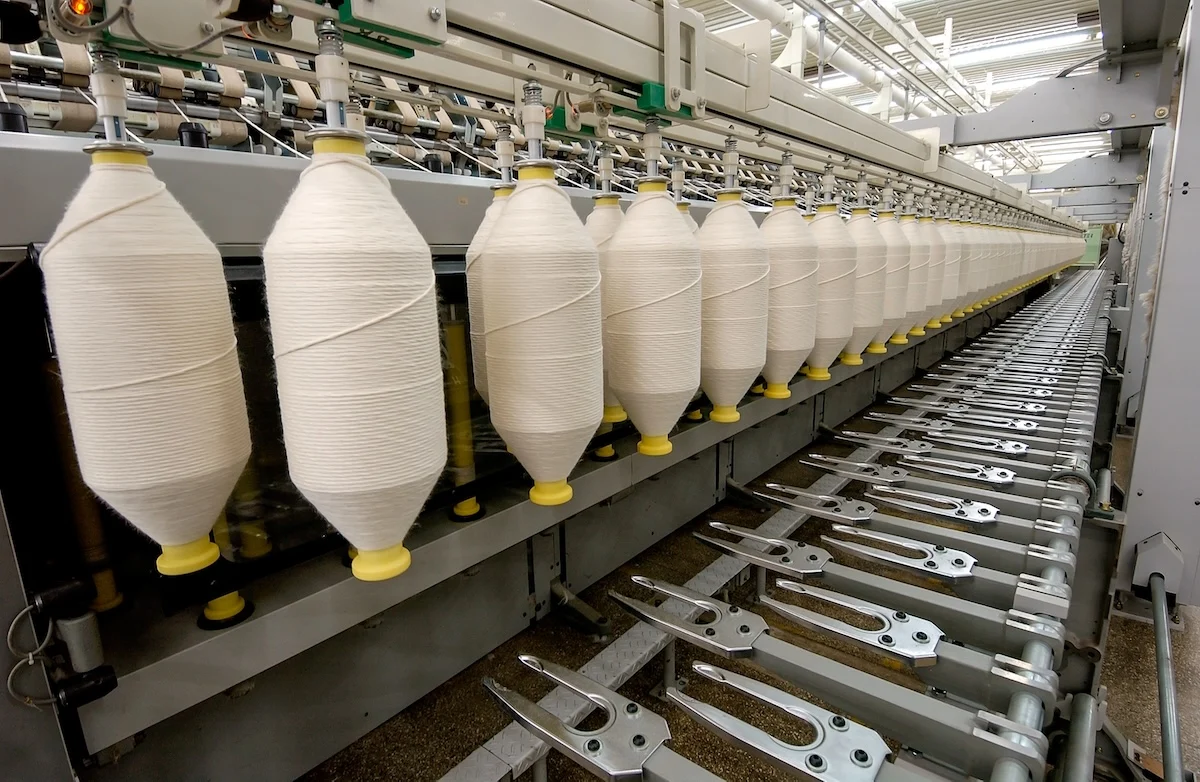
The modern global apparel industry faces a foundational economic paradox that has long stymied meaningful climate action: no single fashion brand, regardless of its market capitalization or revenue scale, can unilaterally afford to decarbonize the independent tier-one and tier-two supplier factories that simultaneously produce garments for multiple, competing retail houses. Because global apparel supply chains are characterized by shared manufacturing nodes—where a single facility in Bangladesh, Vietnam, or Turkey might fulfill simultaneous orders for Zara, H&M, GAP, and Uniqlo—individual corporate investments in green infrastructure often inadvertently subsidize a competitor’s carbon footprint.
To bypass this classic collective-action problem, a coalition of multilateral development banks, institutional investors, and retail behemoths has mobilized significant capital through a specialized financial vehicle known as the Decarbonization of Textile, Apparel and Footwear Suppliers, or D-TAFS Fund. The initiative has officially secured $232 million in capital commitments toward an ambitious $400 million final target. Managed by Social Investment Management and Advisors (SIMA), the fund is engineered to bridge a persistent financing gap by providing below-market debt instruments, blended finance structures, and technical assistance directly to textile, apparel, and footwear suppliers operating across emerging markets.
The Mechanics of Shared Supply Chain Decarbonization
The structural architecture of the D-TAFS Fund reflects a growing recognition within the fashion industry that Scope 3 emissions—those generated upstream by third-party agricultural producers, yarn spinners, fabric mills, and wet-processing facilities—account for the overwhelming majority of the sector’s total greenhouse gas footprint. For decades, major fashion brands have established ambitious public commitments to achieve net-zero carbon emissions by 2030 or 2050, yet these corporate pledges have frequently collided with the economic realities faced by small and medium-sized enterprises (SMEs) situated at the base of the value chain.
Small and mid-sized suppliers are at the heart of the global brand supply chains, yet they are systematically underserved by traditional commercial banking systems in developing economies, explained Sarvesh Suri of the International Finance Corporation (IFC). The IFC has stepped in as a co-anchor investor in the D-TAFS vehicle, committing a substantial $60 million to the fund. They are joined by Spanish fast-fashion titan Inditex—the parent company of Zara, Pull&Bear, Massimo Dutti, and Bershka—which has contributed a $50 million cornerstone investment.
The rationale behind this pooled capital model is straightforward. Lewis Perkins, president of the Apparel Impact Institute (AII), a key stakeholder and limited partner in the D-TAFS initiative, emphasized the sheer inefficiency of isolated corporate sustainability efforts. It doesn’t make sense for a big brand retailer, even as large as one might be, to try to take on investing in decarbonization for the supply chain they share with 10 of their competitors, Perkins noted.
By centralizing capital into a neutral financial intermediary like SIMA, competing brands can indirectly pool their balance sheet strength to upgrade shared manufacturing infrastructure without running afoul of antitrust regulations or shouldering an unfair share of industry-wide externalities.
A Multi-Layered Financial Ecosystem
The D-TAFS Fund does not operate in a vacuum; it is part of a broader, rapidly expanding ecosystem of climate-finance instruments designed to overhaul the textile sector. The San Francisco-based Apparel Impact Institute has simultaneously spearheaded the capitalization of a separate $250 million Fashion Climate Fund. This initiative is explicitly designed to function as catalytic capital, unlocking an estimated $1.7 billion in commercial debt and equity leverage—translating to approximately $7 of additional financing for every philanthropic or catalytic dollar deployed.
Together, these funds target the adoption of capital-intensive, high-impact technologies that individual suppliers have historically been unable to finance on their balance sheets. These technologies include industrial heat pumps, waterless dyeing systems, biomass boilers, solar photovoltaic rooftop installations, advanced heat-recovery systems, and closed-loop water recycling plants.
Beyond its anchor backers, the D-TAFS Fund has successfully closed commitments from a diverse consortium of global institutional players, including MetLife, the Global Environment Facility (GEF), the Dutch entrepreneurial development bank FMO, France’s development finance institution Proparco, and British International Investment (BII). This blending of commercial institutional capital with concessional development finance is essential to achieving the fund’s dual mandate: generating a modest financial return for risk-adjusted investors while delivering deep, measurable environmental and social impacts across vulnerable developing economies.
Target Geographies and Operational Scope
The deployment strategy for the D-TAFS Fund is explicitly global yet regionally targeted, focusing heavily on manufacturing hubs across Asia, the Middle East, North Africa, and Latin America. These regions house the vast majority of the world’s cut-make-trim (CMT) facilities, cotton ginners, synthetic yarn spinners, and wet-processing textile mills, which collectively consume massive quantities of fossil fuels and water.
Unlike traditional venture capital or private equity funds that take equity stakes in operating companies, D-TAFS will primarily deploy debt capital directly to manufacturers. Furthermore, the fund’s mandate extends beyond factory walls to finance specialized Energy Service Companies (ESCOs) and distributed energy developers that partner directly with apparel suppliers to implement turnkey green energy solutions.
The financial products offered by SIMA are intentionally structured to overcome the high cost of capital that currently paralyzes green investments in emerging markets. In countries where local interest rates can easily exceed double digits, standard commercial loans make long-term capital projects like solar arrays or wastewater treatment facilities financially prohibitive. D-TAFS aims to alter this equation by offering debt on better-than-market terms, combined with extended tenors that align with the long payback periods characteristic of heavy industrial decarbonization projects.
The Critical Role of Technical Assistance and Capacity Building
A recurring failure mode in international green-development finance has been the "capital availability fallacy"—the mistaken assumption that merely making low-cost funds available to a market will automatically result in completed, high-impact infrastructure projects. Industry veterans and fund managers alike emphasize that financial liquidity alone is insufficient to drive systemic industrial transformation.
Availability of capital alone does not build projects, noted Asad Mahmood, managing director at SIMA. Without tailored structuring, engineering oversight, and robust implementation support, factory upgrades can easily languish as paper studies.
To mitigate execution risk, a significant portion of the D-TAFS capital structure is earmarked for technical assistance programs. These programs will provide on-the-ground engineering audits, capacity-building workshops for factory managers, regulatory navigation support, and post-installation monitoring. Many small and medium-sized factory owners in emerging markets lack dedicated environmental, social, and governance (ESG) departments or specialized engineering staff capable of designing, procuring, and commissioning complex industrial energy upgrades. By embedding technical support directly into the financing mechanism, SIMA aims to ensure that borrowed funds translate rapidly into tangible carbon reductions and operational cost savings.
Broader Industry Implications and the Path to 2030
The launch and capitalization of the D-TAFS Fund arrive at a critical inflection point for the global fashion industry. Regulatory pressures are mounting rapidly across major consumer markets, most notably in the European Union, where incoming legislation such as the Corporate Sustainability Due Diligence Directive (CSDDD) and the EU Strategy for Sustainable and Circular Textiles will legally compel major apparel brands to map, monitor, and aggressively reduce emissions throughout their entire value chain. Non-compliance will carry severe financial penalties, market access restrictions, and reputational damage.
Concurrently, institutional investors are increasingly incorporating Scope 3 emissions metrics into their portfolio valuations, penalizing retail brands that fail to demonstrate concrete progress toward decarbonization targets.
However, analysts note that voluntary brand pledges have historically suffered from an implementation gap, often relying on superficial supplier codes of conduct rather than deep capital investments. By institutionalizing supplier finance through vehicles like D-TAFS and the Fashion Climate Fund, the industry is shifting from a paradigm of corporate moral suasion to one of structural economic enablement.
If the D-TAFS Fund successfully reaches its $400 million capitalization goal and executes its deployment strategy effectively over the remainder of the decade, it could serve as a replicable blueprint for other resource-intensive global industries—such as consumer electronics, furniture, and automotive manufacturing—struggling with the complex economics of shared supply chain decarbonization. For an industry historically defined by opaque supply chains, hyper-competition, and externalized environmental costs, the pooling of capital to green shared factories represents a pragmatic, if long-overdue, evolution toward industrial survival.