The modern software development lifecycle has crossed a critical threshold, shifting the primary constraint of engineering output from creation to verification. For decades, the pace of technological advancement was inextricably linked to human capacity. Engineering teams were bound by the physical limitations of manual typing, architectural planning, and sequential debugging. Scaling a digital product required a linear expansion of headcount, as every line of code demanded human cognition to write, review, and maintain. Today, that foundational paradigm has been thoroughly dismantled.
The proliferation of advanced artificial intelligence models, specifically autonomous coding agents, has flooded the global engineering ecosystem with unprecedented volumes of software. Developers no longer act merely as solitary authors of code; instead, they serve as orchestrators, directing fleets of autonomous agents that operate in parallel, twenty-four hours a day, generating patches, automated tests, database migrations, and experimental branches at speeds previously thought impossible.
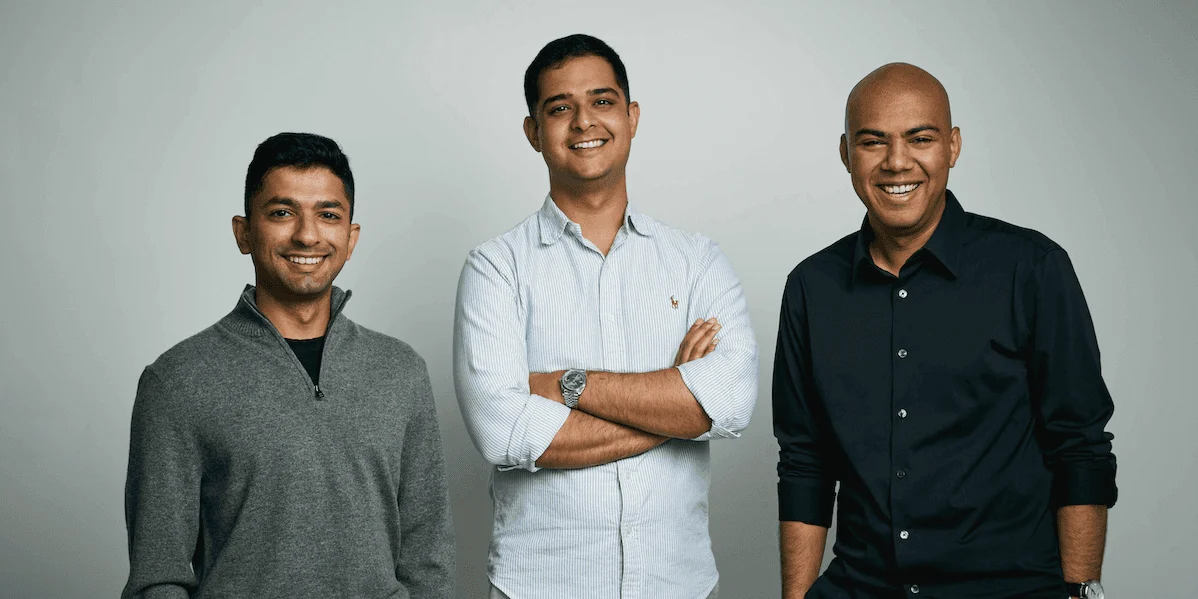
However, this abundance of machine-generated code has exposed a severe infrastructural vulnerability across the technology sector. Writing code is no longer the hard part—trusting it is. As engineering organizations grapple with an exponential surge in output, the foundational systems responsible for testing, validating, and securing this code are buckling under the pressure. Enter Blacksmith, a next-generation infrastructure provider founded by Aditya Jayaprakash, Aayush Shah, and Aditya Maru, which has emerged as a vital bulwark against the looming collapse of continuous integration (CI) pipelines worldwide.
The Escalating Crisis of Continuous Integration
To understand the magnitude of the current engineering bottleneck, one must examine the staggering metrics published by industry leaders. Last month, the engineering organization at Anthropic released a comprehensive technical analysis detailing the operational strain experienced as their internal adoption of agentic coding scaled. Within a single quarter, Anthropic engineers were shipping roughly eight times as much code as they had previously. Concurrently, their internal test suites expanded tenfold to accommodate the new logic.
The downstream effect on continuous integration pipelines—the automated build and test environments that verify every code change prior to production deployment—was catastrophic for legacy systems. Over a six-month period, the volume of CI jobs at Anthropic spiked twenty-five-fold. While Anthropic operates at the bleeding edge of AI adoption, industry analysts note that they are merely an advanced indicator of a curve that every technology enterprise is currently navigating. Anthropic’s official guidance to the broader software industry advises engineering leaders to aggressively prepare for a twenty-fivefold increase in CI workloads within just two quarters.
This unprecedented amplification of workloads collides directly with an immutable rule of software engineering: every line of code, whether written by a human or generated by an algorithm, must be rigorously tested and validated before it can safely interact with live production environments. Furthermore, AI-generated code introduces unique security challenges. Large language models are fully capable of producing sophisticated software solutions, but they are equally prone to generating subtle, highly dangerous security vulnerabilities. Because modern AI models possess deep contextual awareness, the vulnerabilities they accidentally introduce can be remarkably sophisticated, making them exponentially harder for human reviewers to spot without automated assistance.
Consequently, the very systems designed to catch bugs, enforce security policies, and ensure structural integrity are straining precisely when organizations need them most. The bottleneck in software development has definitively migrated from code authorship to code verification.
The Birth and Evolution of Blacksmith
Recognizing this seismic shift long before it became a mainstream crisis, Aditya Jayaprakash, Aayush Shah, and Aditya Maru established Blacksmith in 2024. The co-founders share a deep, long-standing history, having known each other since their undergraduate years at the University of Waterloo. Following their formal education, the trio cultivated a specialized expertise in building hyper-performant, distributed systems at prominent technology firms including Cockroach Labs and Faire.
At the time of Blacksmith’s founding, the generative AI landscape was largely dominated by autocomplete tools and rudimentary coding assistants. However, Jayaprakash, Shah, and Maru foresaw that the industry would inevitably transition toward fully autonomous coding agents. They recognized that as agents began operating in continuous loops—iterating against test suites autonomously until a task was ready for human review—the sheer volume of code and test attempts would multiply by orders of magnitude.
While the rest of the technology sector experienced its awakening regarding CI scaling limits in 2026, Blacksmith had spent years engineering a solution from the bare metal up. The founding team understood that incremental patches to existing CI frameworks would be entirely insufficient for the coming wave of autonomous development. Instead, they architected a specialized infrastructure stack designed specifically to absorb massive demand spikes, optimize resource allocation, and deliver exponential efficiency gains as scale increased.
Product Architecture and Performance Metrics
Blacksmith’s initial market entry focused on a singular, highly acute pain point: accelerating continuous integration pipelines. For engineering teams accustomed to waiting tens of minutes—or even hours—for complex test suites to execute, the integration friction of legacy CI runners had become a major daily drag on productivity.
Blacksmith solved this challenge through radical architectural efficiency. By implementing a remarkably frictionless onboarding process that requires merely a single-line modification to an existing workflow file, engineering teams can transition their workloads to Blacksmith’s infrastructure. The results are immediate and dramatic. Developers utilizing Blacksmith routinely see their CI jobs complete twice as fast while simultaneously reducing their compute costs by an average of 60 percent.
Beneath this straightforward user experience lies a deeply complex, highly optimized infrastructure stack. By engineering their systems to eliminate redundant overhead and maximize hardware utilization, Blacksmith created a platform capable of handling the erratic, high-burst demands characteristic of AI-driven development cycles. As customers scale their usage of autonomous coding agents, Blacksmith’s infrastructure automatically adapts, becoming faster and more cost-effective through economies of scale.
Explosive Market Adoption and Financial Growth
The technology sector’s urgent need for modernized validation infrastructure has translated into unprecedented commercial momentum for Blacksmith. The company has recorded hyper-growth across every key business metric, establishing itself as an indispensable utility for modern software engineering teams.
Over the past year, Blacksmith’s customer base has expanded from approximately 700 companies to over 10,000 global enterprises. This massive influx of users has generated a corresponding surge in platform throughput. In the year 2026 alone, weekly CI jobs processed by Blacksmith skyrocketed eighteenfold, surging from 5 million jobs per week to an astonishing 90 million jobs per week.
This astronomical increase in operational volume has driven proportional financial success. Blacksmith’s Annual Recurring Revenue (ARR) has grown seventeenfold over the same period. Crucially, the platform’s enterprise tier has gained significant traction, with Blacksmith’s largest customers now investing upwards of $1 million annually to secure their CI and validation pipelines. This enterprise commitment underscores the reality that efficient code validation is no longer a peripheral IT concern, but a core strategic asset that dictates corporate engineering velocity and product time-to-market.
Strategic Investment and the Road Ahead
Blacksmith’s remarkable market penetration and visionary technological foundation have attracted elite financial backing. Industry analysts and venture capital firms have increasingly turned their focus toward the "picks and shovels" of the generative AI boom, prioritizing infrastructure providers that enable safe, scalable AI deployment over consumer-facing applications.
Recognizing the critical importance of Blacksmith’s mission, major investment partners recently led the company’s Series C funding round. Investor conviction is driven not only by Blacksmith’s current market traction, but by the exceptional caliber of its founding team. The deep technical background that Jayaprakash, Shah, and Maru forged at Cockroach Labs and Faire instilled in them a rigorous, engineering-first culture. This talent-dense organization continues to expand rapidly across all departments, aggressively recruiting top-tier engineering talent to support its expanding product roadmap.
As the software industry stands on the precipice of a new era, the implications of agentic coding are profound. The world is on the verge of writing and executing far more code than humanity has ever cumulatively produced. In this hyper-accelerated environment, the traditional safeguards of software development risk being completely overwhelmed unless infrastructure evolves in tandem with artificial intelligence.
Blacksmith has positioned itself squarely at the intersection of this historic transition. By building the high-speed validation infrastructure required to operate at agent velocity, the company is ensuring that the software of tomorrow is not only fast to generate, but entirely trustworthy when it reaches the end user. With several major product launches planned for the coming months, Blacksmith is poised to redefine how the global software industry proves the reliability, security, and integrity of machine-generated code.