Cambridge Heavy Industries (CHI), an emerging force in the clean energy sector, officially emerged from stealth mode on October 23, 2026, announcing the successful closure of a $6.2 million seed funding round. The capital infusion is earmarked for the development and construction of a compact, laser-based fusion reactor prototype. By leveraging modular technology that drastically reduces the physical footprint and capital requirements associated with traditional fusion systems, CHI aims to accelerate the timeline for achieving commercially viable fusion energy.
The company, which traces its roots to a spinout from the Massachusetts Institute of Technology (MIT) in 2025, is led by a team of prominent researchers and industry specialists, including CEO Dr. Yun Kai, Raffi Freeman, Professor Keith Nelson, and Dr. Steve Kooi. Their approach represents a significant departure from the multi-billion-dollar, facility-heavy models that have historically dominated the fusion research landscape. Instead, CHI utilizes commercially available lasers to initiate fusion reactions within a compact, benchtop-scale environment.
The Technological Breakthrough in Compact Fusion
At the heart of the Cambridge Heavy Industries value proposition is a radical shift in testing velocity. Conventional fusion research often involves infrastructure that requires years to design, build, and maintain. In contrast, CHI’s modular architecture allows for a rapid "test-fail-fix" development cycle, enabling the company to conduct experiments on a weekly basis.
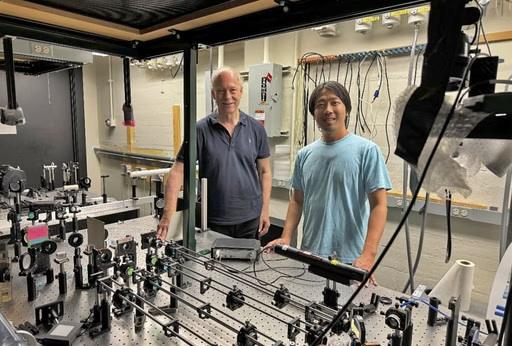
Technically, the company’s progress is rooted in advanced shockwave science. According to the firm, their current testing protocols have demonstrated compression efficiency levels approximately 400 times higher than legacy laser-based fusion methodologies. Perhaps most impressive to industry observers is the efficiency of their prototype; despite occupying the space of only two dinner tables, the system has successfully achieved pressures reaching 350 gigapascals while utilizing only tens of millijoules of energy. This level of output-to-input efficiency is a critical hurdle for any fusion technology attempting to transition from experimental theory to industrial application.
Addressing the Tritium Supply Crisis
While the long-term objective of CHI is to contribute to the global fusion energy grid, the company has identified an immediate, high-value commercial bridge: the production of tritium. Tritium, a radioactive isotope of hydrogen, is essential for current fusion research reactors, acting as a primary fuel source.
The global market for tritium is currently characterized by extreme scarcity and exorbitant costs, with current prices hovering around $33 million per kilogram. This supply-side constraint has become a bottleneck for major fusion projects worldwide, threatening to delay the deployment of next-generation power plants. By pivoting its initial operations toward the production of tritium, Cambridge Heavy Industries is positioning itself to solve a critical supply-chain issue while generating the revenue necessary to sustain its long-term fusion power ambitions.
Beyond fuel production, the company is exploring secondary revenue streams through its neutron sources. These have immediate industrial applications in neutron imaging and material defect engineering—fields where non-destructive testing is paramount for sectors ranging from aerospace to nuclear power plant safety.
Chronology and Organizational Growth
The formation of Cambridge Heavy Industries is the culmination of years of research at MIT’s specialized laboratories.
- 2024 (Pre-Formation): Initial research into high-compression shockwave science begins at MIT, laying the theoretical groundwork for modular laser fusion.
- 2025 (Inception): Dr. Yun Kai, Raffi Freeman, Professor Keith Nelson, and Dr. Steve Kooi officially spin the technology out of the university to form Cambridge Heavy Industries.
- 2026 (Early Year): The company operates in stealth mode, refining its benchtop prototype and securing preliminary patent filings.
- October 23, 2026: The company emerges from stealth with the announcement of $6.2 million in seed funding and plans to expand its Massachusetts facility.
With the new funding, CHI is initiating an aggressive expansion phase. This includes the procurement of high-grade optical components, specialized ultrafast lasers, and advanced neutron diagnostic equipment. Furthermore, the company is actively recruiting top-tier talent in plasma physics and laser engineering to scale its team to meet the demands of its upcoming construction milestones.

Investor Sentiment and Strategic Backing
The seed round was spearheaded by Azolla Ventures, a firm known for its focus on high-impact climate and energy technologies. The inclusion of the Mass Clean Energy Center, the Neta Foundation, and the Rothrock family underscores a growing institutional confidence in "small-scale" fusion solutions.
Matthew Nordan, co-founder and General Partner at Azolla Ventures, emphasized the strategic importance of CHI’s methodology during the funding announcement. "Cambridge Heavy Industries’ technology can be demonstrated on a benchtop and assembled in days using standard optical components," Nordan stated. "The same rapid test/fail/fix model is what brought us modern space and defense technologies; we see it as a promising approach to make fusion viable."
This investor confidence is bolstered by the "lean" nature of the startup. By avoiding the need for massive, custom-built vacuum chambers and high-cost infrastructure, CHI lowers the barrier to entry and reduces the risk associated with each iteration of their technology.
Broader Implications for the Global Energy Transition
The success of Cambridge Heavy Industries carries significant implications for the global energy transition. For decades, fusion energy has been viewed as a "thirty years away" prospect—a moving target characterized by immense complexity. By miniaturizing the technology and focusing on incremental, iterative testing, companies like CHI are attempting to democratize fusion development.
If CHI succeeds in its goal to provide a steady supply of tritium, it will effectively lower the "cost of entry" for other research-heavy fusion firms. Furthermore, the ability to utilize commercially available lasers suggests that the technology is scalable and replicable, potentially avoiding the supply chain bottlenecks that often plague bespoke energy hardware.

However, the road ahead remains complex. While the benchtop prototype has shown promise, transitioning from millijoules of energy to a system capable of net-energy gain requires overcoming substantial physics hurdles. The stability of the plasma, the heat dissipation of the laser optics over extended use, and the regulatory oversight required for handling radioactive isotopes will be significant factors in the company’s trajectory over the next 24 months.
Future Outlook and Industry Positioning
As Cambridge Heavy Industries moves into its next phase, the industry will be watching its Massachusetts facility closely. The ability to successfully demonstrate consistent tritium production will be the primary benchmark for the company’s viability in the coming year.
Dr. Yun Kai remains focused on the immediate operational goals. "Fusion power leaders have a tritium supply problem that could significantly slow down the sector’s growth," Kai noted. "Our technology is in the unique position to solve this challenge. We are appreciative of our investors for their financial and operational support in bringing us to this important milestone."
As the world continues to grapple with the need for clean, base-load power, the fusion sector is experiencing a period of intense innovation. Cambridge Heavy Industries has positioned itself as a critical enabler within this ecosystem. By focusing on the "picks and shovels" of the fusion industry—fuel and rapid diagnostics—they are carving out a niche that may prove to be the most vital component in the transition to a carbon-free future.
The successful closing of this funding round marks the end of their early research phase and the beginning of a rigorous, facility-based development program. For the clean energy sector, the emergence of CHI serves as a reminder that the solution to the world’s most complex energy problems may not always require the largest machines, but rather the most efficient ones.