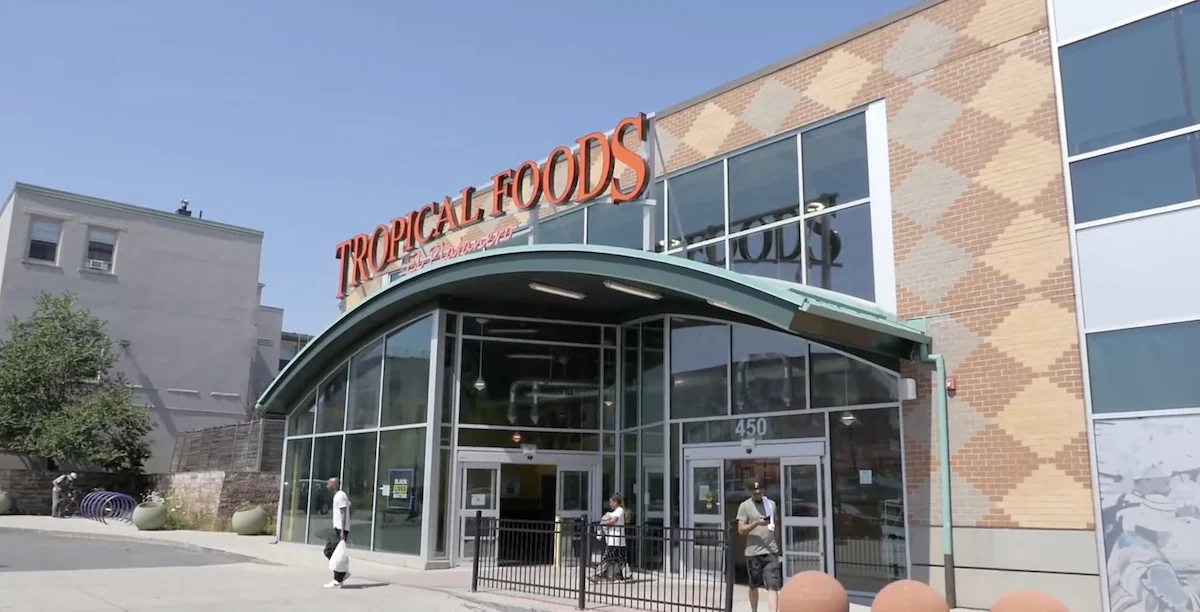
In a landmark shift for urban retail and community wealth-building, approximately 100 workers have officially become the sole owners of Tropical Foods, a staple grocery retailer deeply embedded in Boston’s historic Roxbury neighborhood. For three generations, the 27,000-square-foot supermarket had been owned and operated by the same family, evolving from a modest neighborhood bodega into a sprawling culinary and cultural anchor for the Greater Boston metropolitan area. Today, the enterprise serves more than 13,000 loyal customers every week, offering an expansive selection of specialty items, fresh seafood, an on-site bakery, and a vibrant deli.
The historic ownership transition was made possible through financing provided by Apis & Heritage Capital Partners, a specialized investment firm operating out of its second employee-led buyout fund. By facilitating this transaction, Apis & Heritage has not only secured the operational future of a vital community asset but has also integrated roughly 100 frontline workers into the direct beneficiaries of the store’s daily commercial success. This transaction marks a growing national trend toward employee-owned cooperative structures as a viable alternative to traditional corporate acquisitions or private equity liquidations, particularly for legacy businesses facing generational succession challenges.
Chronology and Ownership History: Five Decades of Resilience
The roots of Tropical Foods stretch back to the mid-1970s, a period of profound social and economic transition for the city of Boston. In 1974, Pastor Medina, an immigrant who had fled Cuba in search of political and economic freedom, established Tropical Foods as a modest corner store. Medina envisioned a retail space that could cater to the culinary traditions of Boston’s burgeoning immigrant populations, specifically those hailing from the Caribbean, Africa, and Latin America. At a time when traditional supermarkets offered homogenous product lines geared toward mainstream American palates, Tropical Foods filled a critical void by stocking plantains, tropical tubers, specialized spices, and fresh cuts of meat and seafood that spoke directly to the heritage of Roxbury’s changing demographics.
As the enterprise grew in popularity and spatial necessity, leadership of the company was passed to Medina’s son-in-law, Ronn Garry Sr. Under Garry Sr.’s stewardship, the store expanded its physical footprint and deepened its community ties, cementing its reputation as a neighborhood institution. In 2006, the mantle of leadership was handed down to the third generation: brothers Ronn Garry Jr. and Randy Garry.
Over the next twenty years, the Garry brothers navigated the complex economic landscape of urban retail, weathering recessions, shifting supply chain dynamics, and the unprecedented disruptions of the COVID-19 pandemic. However, as they contemplated the long-term future of the business, the brothers recognized the imperative of finding a succession path that would preserve the store’s unique identity rather than selling out to a major regional or national supermarket chain.
"As we considered the future of the business, it was important to find a partner who would honor our history, invest in our employees, and continue serving our community," explained Ronn Garry Jr. Following extensive strategic planning, the family partnered with Apis & Heritage Capital Partners to engineer a 100% employee-owned buyout, ensuring that the people who stock the shelves, manage the registers, and serve the public every day would reap the long-term financial rewards of their labor.
Supporting Data and the Financial Architecture of the Buyout
Transitioning a sprawling urban supermarket from private family ownership to a collective worker-owned model requires a sophisticated financial architecture. The transaction at Tropical Foods was supported by a coalition of private investment firms, commercial lenders, and public agencies.
Apis & Heritage Capital Partners spearheaded the financing through its flagship employee-ownership fund, which recently surpassed its $250 million target. The fund is specifically designed to identify profitable, lower-middle-market companies—particularly those owned by people of color or businesses that employ substantial numbers of minority workers—and transition them into worker-owned enterprises. For Apis & Heritage, Tropical Foods represents the quintessential investment target.
"Tropical Foods is exactly the type of company we seek to partner with through our employee ownership strategy," said Todd Leverette of Apis & Heritage Capital Partners in a public statement. "The company has built an exceptional reputation over the past five decades by serving its community, creating jobs, and offering products that reflect the diversity of Greater Boston."
In addition to the private equity backing from Apis & Heritage, the complex real estate transaction required targeted commercial lending. M&T Bank provided essential real estate financing to complete the buyout, ensuring that the physical infrastructure of the supermarket remains stable and secure. Furthermore, the deal received institutional and logistical support from key municipal and state entities, including the Boston Planning & Development Agency (BPDA) and the Massachusetts Department of Transportation (MassDOT), highlighting the public sector’s recognition of Tropical Foods as critical municipal infrastructure.
Real Estate, Revitalization, and the Partnership with Madison Park Development Corp.
Beyond its function as a grocery store, Tropical Foods sits at the center of a much larger urban planning and community development puzzle in Roxbury. The supermarket operates out of a 27,000-square-foot retail space situated on land co-owned by the City of Boston and the Commonwealth of Massachusetts. Tropical Foods maintains a long-term tenant agreement on this strategically vital parcel, which it shares with the Madison Park Development Corporation (MPDC), Roxbury’s premier community development corporation.
The intersection of worker ownership and community land stewardship has unlocked a new phase of urban revitalization for the neighborhood. Madison Park Development Corp. is currently collaborating directly with the newly empowered worker-owners of Tropical Foods on a comprehensive mixed-use development initiative. The ambitious project envisions the creation of approximately 80 units of affordable housing alongside modern ground-floor community space, directly addressing the acute housing affordability crisis gripping the Boston metropolitan area.
By embedding the worker-owned supermarket into a larger mixed-use affordable housing ecosystem, the project serves as a national model for equitable urban development. Residents of the new housing units will have immediate access to fresh, culturally relevant food right downstairs, while the worker-owners of the supermarket will benefit from an expanded, localized customer base. This synergy between housing, cooperative economics, and community development demonstrates how municipal land can be leveraged to benefit working-class residents rather than speculative external developers.
Cultural Significance and Community Impact in Roxbury
To understand the true magnitude of the Tropical Foods buyout, one must examine the cultural and economic fabric of Roxbury. Historically one of Boston’s most diverse and vibrant neighborhoods, Roxbury has faced decades of systemic disinvestment, followed more recently by the pressures of gentrification and displacement. For generations of immigrants from Cape Verde, Haiti, Jamaica, the Dominican Republic, and various West African nations, Tropical Foods has been more than a place to purchase groceries—it has been a cultural sanctuary.
The store’s specialized inventory—ranging from fresh yams and cassava to specific cuts of goat meat, imported Caribbean sodas, and hard-to-find plantain varieties—ensures that immigrant families can maintain their culinary traditions thousands of miles away from their homelands. The employees themselves largely reflect this rich tapestry of diversity, often hailing from the very neighborhoods and cultural backgrounds that the store serves.
By converting these frontline employees into worker-owners, the transaction addresses the systemic racial and economic wealth gap that persists in urban centers. Traditional retail jobs are notoriously low-paying, offering few benefits and virtually no equity accumulation for workers. Under the new employee-ownership model, workers at Tropical Foods gain a direct stake in the enterprise’s financial performance. As the store grows and prospers, the financial gains will be distributed among the workforce, building generational wealth for families that have historically been excluded from traditional avenues of capital accumulation.
Broader Economic Implications and the Rise of Employee-Owned Enterprises
The transition of Tropical Foods is part of a broader, national awakening regarding the economic benefits of employee ownership. Economists and labor experts have increasingly pointed to employee stock ownership plans (ESOPs) and worker cooperatives as powerful tools to combat income inequality, enhance worker productivity, and retain jobs within local communities.
When businesses face ownership transitions—particularly as the "silver tsunami" of aging Baby Boomer business owners reaches retirement age—millions of thriving enterprises risk closure or private equity stripping. Employee-led buyouts offer a third path, one that keeps the business anchored in the community while transferring wealth directly to the workforce.
Furthermore, studies consistently show that employee-owned companies exhibit higher worker retention rates, lower turnover, and greater operational resilience during economic downturns. Workers who have a direct financial stake in their employer are inherently more invested in quality control, customer service, and long-term business sustainability. For Tropical Foods, this means that the institutional knowledge accumulated over decades by its frontline staff will be fully leveraged to drive the company’s future strategy.
Conclusion: A Blueprint for the Future of Urban Retail
As Tropical Foods embarks on this historic new chapter as a 100% employee-owned enterprise, all eyes in the cooperative business community will be fixed on Roxbury. The successful coordination between a pioneering immigrant family, a specialized employee-ownership investment fund, a local community development corporation, and municipal government agencies demonstrates that equitable economic development is not merely an idealistic aspiration, but a practical, executable reality.
For the roughly 100 workers who now hold the keys to Boston’s most beloved ethnic supermarket, Monday morning brings a profound transformation. They are no longer just employees punching a clock; they are co-owners of a five-decade-old institution, stewards of their community’s cultural heritage, and pioneers in the modern movement for economic democracy. Through strategic foresight, institutional backing, and an unwavering commitment to Roxbury, Tropical Foods has proven that the future of urban retail can be built from the ground up—by the people who do the work every single day.