
The modern corporate landscape is undergoing a fundamental architectural shift as industry leaders increasingly challenge the status quo of relying solely on third-party foundation models. This strategic pivot transcends traditional concerns regarding user interfaces, workflow optimization, and go-to-market strategies, focusing squarely on control over the underlying intelligence layer. The debate crystallized recently when Palantir CEO Alex Karp urged enterprises to "own the means of production," a sentiment quickly echoed by Microsoft CEO Satya Nadella. Nadella cautioned that procuring intelligence directly from frontier research laboratories carries a hidden twofold cost: financial expenditure paired with the surrender of proprietary organizational knowledge inadvertently revealed during the interaction.
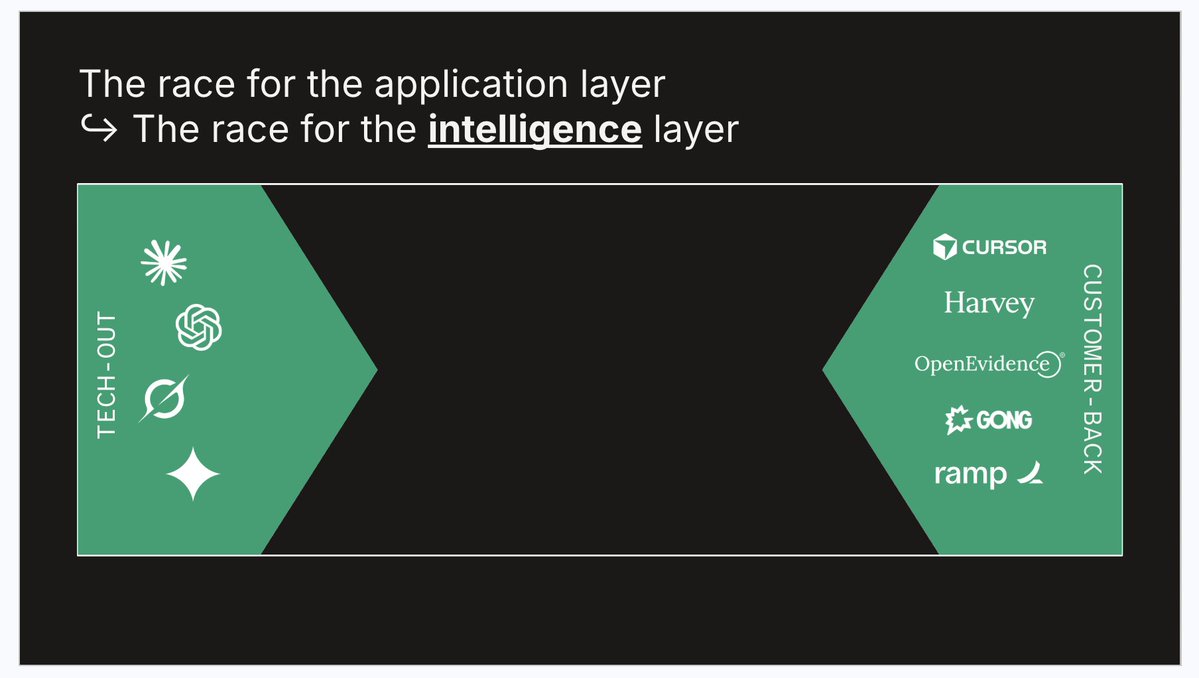
As artificial intelligence integration matures across global markets, a central question dominates boardroom discussions: Who should ultimately own the core intelligence driving enterprise software? While frontier application programming interfaces and off-the-shelf agents remain indispensable for general corporate workloads, an expanding cohort of technology companies is vertically integrating. These organizations are actively cultivating custom artificial intelligence capabilities, fine-tuning model weights, and embedding domain-specific intelligence directly into their proprietary product architectures.

The Catalyst: Evolution of the Open-Weight Stack and Industry Convergence
To examine the momentum behind this strategic pivot, venture capital firm Sequoia recently hosted an exclusive gathering of prominent artificial intelligence founders, researchers, and builders in Silicon Valley. The convening featured comprehensive operational insights from industry-leading startups, including legal technology pioneer Harvey, Mercor, Langchain, Trajectory, and Fireworks AI. Discussions during the event outlined a definitive technical playbook for enterprises seeking autonomy over their artificial intelligence infrastructure.
Two primary industry developments have catalyzed this movement toward self-sufficiency. First, the open-weight frontier has advanced at an unexpected velocity. Historically, fine-tuning open-source models resembled running on a treadmill; engineering teams would invest months customizing a baseline, only for a subsequent release from a frontier lab to render their gains obsolete. Today, advanced open models such as Kimi K3 and GLM 5.2 provide performance baselines that closely mirror proprietary frontier systems, providing a stable foundation for customized development.
Second, the independent post-training ecosystem has matured significantly. Companies like Mercor and Fireworks AI now grant organizations access to comprehensive research-grade workflows—encompassing synthetic data generation, advanced inference, and post-training protocols. Supported by robust evaluation frameworks and harness engineering, these open models frequently outperform generalized frontier architectures within specialized operational domains. Consequently, adopting open weights has evolved from a performance compromise into a critical strategic advantage.

Strategic Drivers: Cost, Speed, Data Sovereignty, and Destiny Control
Adopting a bespoke intelligence model is not a universal mandate; rather, it is a calculated response to specific operational bottlenecks encountered when renting generalized intelligence. Industry analysts and founders have identified four core vectors driving organizations to build rather than buy:
- Cost Optimization: As enterprise AI adoption scales, cumulative inference costs—frequently tracked as Artificial Intelligence Cost of Goods Sold (AI COGS)—escalate rapidly. When API usage fees scale in direct proportion to customer interaction, owning the underlying model provides a predictable mechanism to safeguard operating margins.
- Operational Speed and Latency: In latency-sensitive domains such as automated code generation, real-time code completion, and cybersecurity threat detection, smaller, highly distilled custom models often surpass massive generalized systems. Minimizing millisecond response times is paramount in these environments.
- Proprietary Data Protection: Maintaining strict governance over enterprise feedback loops, rigorous evaluations, and sensitive customer interactions is critical. Processing this proprietary information entirely within internal infrastructure ensures that sensitive domain data never leaks into third-party training pipelines.
- Controlling Strategic Destiny: The historical boundary separating the application layer from the intelligence layer is rapidly dissolving. Foundation labs are increasingly expanding upward into software products, while application developers are pushing downward into core training loops. To retain competitive differentiation, modern software enterprises must secure ownership over the learning loops that dictate how their systems reason.
The Implementation Roadmap: From Zero to One
For organizations electing to establish autonomy over their intelligence infrastructure, a structured execution roadmap is essential. Industry leaders emphasize that this initiative cannot merely be relegated to a general platform engineering team. Instead, it requires dedicated, cross-functional units focused heavily on offense: developing rigorous evaluations, curating domain-specific data, experimenting with open-weights models, and pushing performance boundaries within specific operational niches. Notably, industry leaders like Harvey have successfully spearheaded advanced artificial intelligence research initiatives with highly focused teams numbering fewer than ten core researchers. Furthermore, publishing technical research and transparent performance benchmarks has become a crucial differentiator for enterprises vying to establish market leadership.
1. Establishing Comprehensive Evaluations (Evals)
A foundational principle underscored by industry practitioners is that effective model training is impossible without robust evaluation metrics. Gabe Pereyra of Harvey emphasized this dependency during the Sequoia convening, noting that an evaluation framework is essentially a systematic suite of tasks designed to measure system competence against specific criteria. While evaluations frequently originate from qualitative, founder-led intuition, scaling requires transforming subjective judgment into repeatable, automated testing suites. Harvey demonstrated this approach by constructing its proprietary Legal Agent Benchmark, which incorporates more than 1,200 distinct agent tasks spanning 24 legal practice areas, evaluated against upwards of 75,000 expert-written rubrics. Establishing comprehensive evaluations prior to model selection shifts infrastructure decisions from speculative guesses to empirical certainty.
2. Harness and Context Engineering
Modern AI agent architecture relies on three distinct pillars: the underlying model, the operational context, and the software harness. Harrison Chase, founder of LangChain, defines the primary function of the harness as delivering precise contextual data to the model at the exact moment of execution. The harness governs critical product logic, including multi-model routing, retrieval-augmented generation (RAG), tool invocation, memory management, fallback protocols, and operational tracing. As tasks diverge further from a model’s generalized training distribution, standard off-the-shelf harnesses become increasingly insufficient. A sophisticated custom harness enables enterprises to dynamically route specific tasks to optimal models, standardize evaluations, and maintain complete inspectability over execution traces.
3. Targeted Post-Training Methodologies
Post-training encompasses a diverse array of technical interventions, the selection of which depends entirely on the specific performance deficiency identified. Lin Qiao outlines a clear diagnostic framework: if a model lacks factual knowledge, expensive post-training is unnecessary, as standard retrieval-augmented generation suffices. Conversely, if output formatting or behavioral consistency is flawed, supervised fine-tuning is deployed. Addressing nuanced product preferences requires preference-tuning, while optimizing performance for highly specialized domain tasks necessitates reinforcement learning (RL). When models prove excessively slow or resource-intensive, distillation techniques reduce latency and cost while preserving functional competence.
4. Implementing Continuous Online Learning
Deploying an intelligent system is merely the initial phase; long-term viability requires continuous improvement in production environments. Arjun Karanam of LangChain highlights a persistent limitation of foundational models: despite possessing vast generalized intelligence, every active session functions as the model’s initial day on the job. Without organizational experience, intelligence alone cannot compensate for domain familiarity. Modern AI agents bridge this gap by logging production trajectories—capturing the exact context observed, tools invoked, outputs generated, and subsequent user modifications or corrections. Utilizing orchestration infrastructure such as LangSmith allows enterprises to convert failed task trajectories directly into new evaluation benchmarks, feed missing information back into system memory, and iteratively refine harness logic.

Market Implications and Broader Industry Outlook
Embracing deep architectural ownership of artificial intelligence infrastructure introduces significant complexity, effectively opening a strategic Pandora’s box for enterprise software providers. The traditional closed-model paradigm offers a high performance floor by leveraging out-of-the-box foundation models combined with standard application harnesses and simple prompt engineering. However, this approach inherently caps long-term performance ceilings and leaves organizations vulnerable to external pricing shifts and architectural deprecation.
Conversely, vertical integration of the intelligence stack demands substantial engineering commitment and introduces initial operational hurdles. Yet, this investment unlocks an unprecedented performance ceiling. While global technology labs will undoubtedly continue developing increasingly powerful frontier foundation models—resources that enterprises should continue to leverage strategically—the most competitive product companies are concurrently cultivating specialized, domain-obsessed models tailored precisely to their operational workflows.
As this strategic movement accelerates, the broader technology ecosystem stands to benefit from increased diversity, reduced vendor lock-in, and enhanced market resilience. The ongoing democratization of open-weight models and independent post-training tooling ensures that enterprise individuality and domain expertise will define the next era of artificial intelligence innovation.