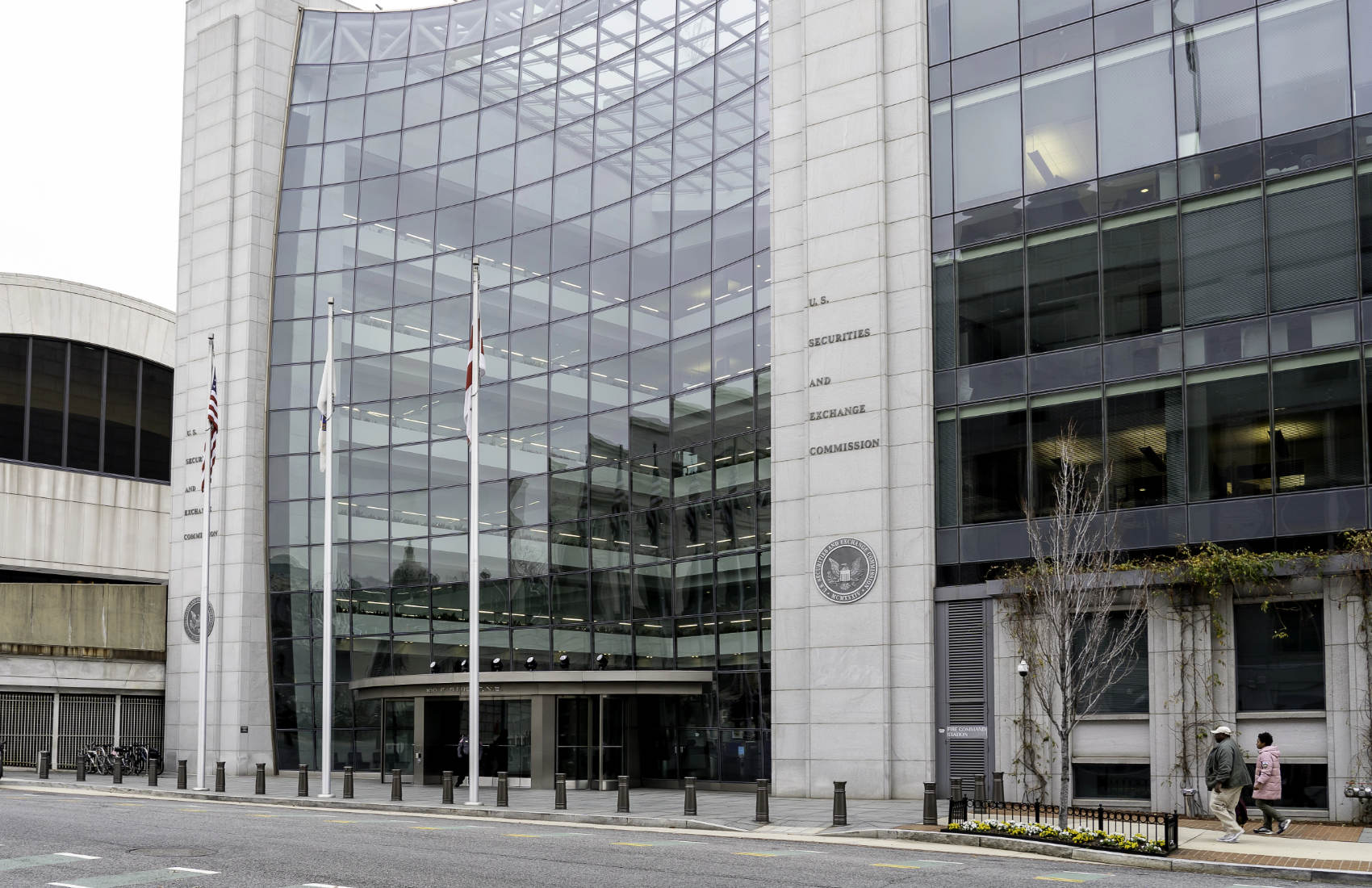
The United States Securities and Exchange Commission has officially unveiled the terms of a highly anticipated regulatory innovation exemption, granting a five-year breathing room for specific tokenized stocks—namely exchange-listed National Market System (NMS) equities—to be traded using automated market makers. This pivotal regulatory maneuver permits these decentralized trading venues to operate without registering as traditional national securities exchanges, while simultaneously exempting liquidity providers from the rigorous obligations typically mandated for registered dealers. The announcement, which includes a formal request for public comment, marks a substantial shift in how federal regulators are beginning to accommodate decentralized finance (DeFi) primitives within the perimeter of traditional capital markets.
Background and Context of the Regulatory Shift
For years, the intersection of distributed ledger technology and mainstream financial securities has been fraught with regulatory ambiguity. Traditional market structures in the United States are governed by laws drafted decades before the advent of blockchain technology, specifically the Securities Exchange Act of 1934. Under these legacy frameworks, any entity that brings together buyers and sellers of securities must generally register as a national securities exchange, or operate as an alternative trading system (ATS) compliant with Regulation ATS. Similarly, entities providing continuous liquidity by buying and selling securities for their own account are typically classified as dealers, triggering extensive compliance, capital adequacy, and reporting mandates.
Automated market makers, which rely on smart contracts and liquidity pools rather than traditional order books and human market makers, have long struggled to fit into these statutory definitions. Because AMMs are hosted on public, permissionless blockchains, enforcing traditional institutional gatekeeping has proven technologically incompatible with decentralized architectures. Market participants, fintech innovators, and legal scholars have spent years speculating on whether the SEC would craft a bespoke regulatory sandbox or innovation exemption to foster blockchain-based securities settlement and trading. Today’s order answers that speculation, offering a structured, albeit heavily restricted, pathway for tokenized traditional equities to interact with permissionless infrastructure.
Chronology of Events Leading to the Exemption
The journey toward this regulatory milestone has been marked by escalating industry adoption, technological experimentation, and notable public friction. Over the past several years, tokenization has moved from a theoretical use case championed by niche blockchain startups to a core strategic focus for major financial institutions, asset managers, and specialized fintech firms seeking to capitalize on instantaneous settlement, lower operational friction, and global accessibility.
As tokenized equities gained traction, regulatory scrutiny intensified. The debate was further inflamed by high-profile public controversies, most notably a recent high-stakes dispute between AMC Entertainment CEO Adam Aron and retail brokerage giant Robinhood concerning synthetic stocks and tokenized debt instruments. In that controversy, questions arose regarding whether tokens properly represented underlying corporate equity on a strict one-to-one basis or merely acted as derivative debt instruments mimicking the stock’s performance.
This tension directly influenced the design of the SEC’s new exemption. Recognizing the systemic risks of fragmented or inadequately backed synthetic assets, the Commission established strict parameters to ensure that only fully backed instruments qualify, thereby addressing the vulnerabilities exposed by the AMC-Robinhood spat and safeguarding investor protection without outright stifling innovation.
Core Terms, Restrictions, and Technical Parameters of the SEC Order
While the five-year exemption offers a significant reprieve for qualifying tokenized NMS stocks, the SEC has instituted a rigorous framework of guardrails and limitations designed to mitigate systemic risk, prevent market manipulation, and maintain regulatory oversight.
First and foremost, the exemption explicitly excludes synthetic tokens, derivative debt instruments, or third-party wrappers that do not provide direct, unencumbered rights to the underlying equity. To qualify for the exemption, a token must be backed one-for-one by the actual stock and must confer full shareholder rights—including voting rights, dividend entitlements, and corporate governance participation—to the token holder.
Furthermore, the order does not restrict issuance solely to stock issuers. Tokens issued by the Depository Trust Company (DTC), regulated custodians, or licensed broker-dealers are permitted to qualify, provided they successfully convey full shareholder rights. However, a critical protective mechanism has been embedded into the rule: the underlying stock issuer retains the absolute right to object. AMM venues utilizing third-party tokens must formally notify the stock issuer 30 days prior to commencing trading activities. If the issuer objects, the token is barred from utilizing the exemption on that venue.
In addition to structural and governance prerequisites, the SEC has imposed quantitative limits on trading volumes and the specific number of stock symbols eligible for trading under the exemption. While the AMM protocols themselves must reside on public, permissionless blockchains to preserve the transparent and immutable nature of decentralized networks, the actual trading interactions within those pools must occur in a permissioned fashion, ensuring that participants satisfy fundamental compliance checks, such as anti-money laundering (AML) and know-your-customer (KYC) verifications.
Implications for the Broader Financial and Crypto Ecosystems
The issuance of this five-year innovation exemption carries profound implications for both traditional financial markets and the burgeoning real-world asset (RWA) tokenization sector. By carving out a temporary regulatory sanctuary for AMM-based equity trading, the SEC is effectively establishing a controlled testing ground to observe how decentralized liquidity protocols perform when integrated with federally regulated financial instruments.
For fintech innovators and decentralized finance developers, the order provides a vital legal bridge. It reduces the immediate threat of enforcement actions that have historically driven blockchain innovation offshore, allowing American developers to build and test compliant hybrid systems that bridge public ledgers with traditional capital markets. For institutional investors and traditional custodians, the clarity regarding third-party token issuance and shareholder rights opens new avenues for collateral mobility, streamlined settlement cycles, and innovative financial product design.
However, challenges remain. The strict limitations on trading volumes and eligible stock symbols mean that widespread adoption will occur incrementally rather than overnight. Furthermore, the requirement for formal notification and the potential for issuer objections could create friction for platforms attempting to tokenize large baskets of equities without securing explicit upstream cooperation.
As the public comment period opens, market participants, legal experts, and technological architects will closely scrutinize the practical workability of the SEC’s parameters. Whether this five-year trial period ultimately serves as the foundation for a permanent overhaul of securities trading rules or remains a localized experiment will depend heavily on the data, compliance metrics, and market stability observed over the coming years.