Mazama Energy, a Texas-based pioneer in the field of next-generation geothermal technology, has successfully closed a $135 million Series B funding round. This significant capital injection underscores a broader, accelerating trend in the global energy transition: the pivot toward “superhot rock” geothermal energy as a reliable, carbon-free alternative to fossil fuels. As grid planners and utility providers grapple with the limitations of intermittent renewable sources like wind and solar, the promise of 24/7 baseload power generated from the Earth’s own heat has moved from the realm of experimental science to a viable commercial frontier.
The Series B round was spearheaded by Centaurus Capital and Doerr Capital, with strategic participation from major industry players including ConocoPhillips and Shell Ventures. The inclusion of these energy incumbents, alongside repeat investors such as Khosla Ventures and Gates Frontier, signals a growing consensus among traditional energy companies that deep-drilling geothermal solutions are essential for a diversified, sustainable energy portfolio.
The Technological Leap: From Experimental to Commercial
Mazama Energy specializes in Enhanced Geothermal Systems (EGS), a methodology that overcomes the geographic limitations of traditional geothermal plants. Conventional geothermal power typically relies on naturally occurring reservoirs of steam or hot water near the Earth’s surface. EGS, by contrast, involves drilling into hot, dry rock formations and injecting fluid to create a heat-exchange reservoir.
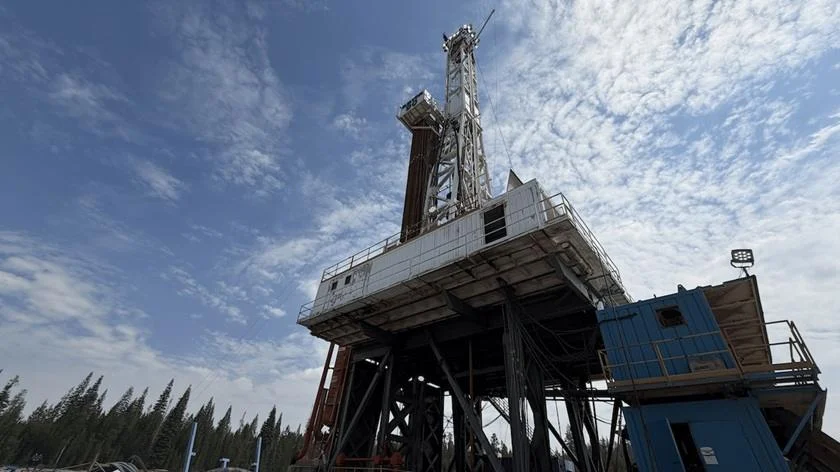
Mazama distinguishes itself by targeting “superhot” rock, defined as temperatures exceeding 375°C (roughly 700°F). In 2025, the company achieved a critical milestone at its project site in Newberry, Oregon, establishing the record for the hottest EGS ever engineered at 629°F (331°C). By moving toward the 750°F (400°C) threshold, Mazama aims to unlock the physics of supercritical water—a state of matter that carries significantly more energy than conventional steam, enabling up to 10 times the power output of a standard 390°F (200°C) well.
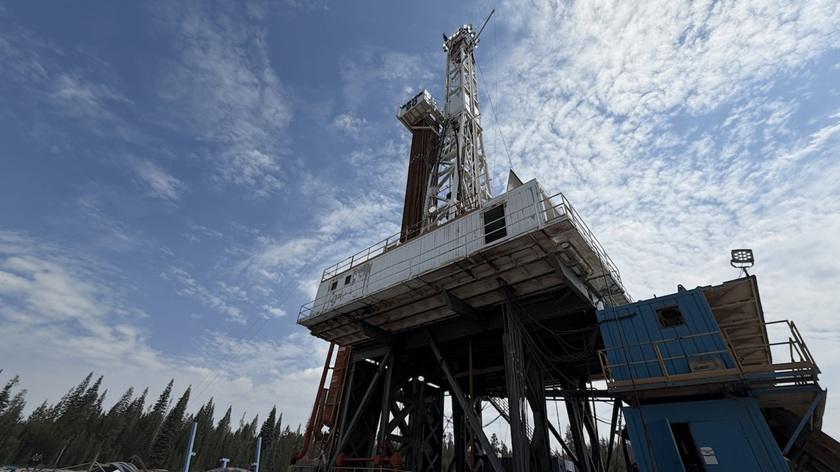
The efficiency gains are not merely theoretical. Mazama’s engineering approach allows for a drastically reduced physical footprint. According to the company’s internal modeling, its refined drilling and heat-harvesting processes require 75% less water and 80% fewer wells than traditional geothermal installations, addressing two of the primary environmental and cost-related hurdles that have historically hindered the sector.
A Chronology of Progress
The trajectory of Mazama Energy reflects a rapid maturation of the geothermal sector over the last twenty-four months:
- Early 2025: Mazama Energy successfully tests its first high-temperature well at the Newberry site, reaching 629°F. This proves that high-temperature drilling, reservoir creation, and heat harvesting can be integrated into a single, functional system.
- Mid-2025: The company begins preliminary site evaluations for international expansion, targeting regions with favorable volcanic or tectonic activity.
- Late 2025 to Early 2026: Mazama initiates “Project Athena,” a deep-drilling venture aimed at reaching the 750°F (400°C) benchmark. This project serves as the technical precursor to the company’s current commercial scaling efforts.
- September 2026: The $135 million Series B round is finalized, providing the necessary liquidity to fund "Project Ceres," an initiative backed by the U.S. Department of Energy (DOE).
- 2027 (Projected): Completion of Project Ceres, which intends to demonstrate power generation at 15 MWe (megawatts electrical) per well.
Market Context: Why Geothermal is Resurgent
The surge in capital toward geothermal firms like Mazama and Fervo Energy—the latter having recently completed a landmark $1.9 billion IPO—is driven by the "trilemma" of modern power generation: the need for energy to be clean, affordable, and, above all, reliable.
As the global economy electrifies, grid stability has become a primary concern. Traditional renewables like solar and wind require massive investment in battery storage and long-distance transmission infrastructure to mitigate their inherent intermittency. Geothermal energy, however, provides a baseload profile similar to coal or natural gas plants but with near-zero emissions.
Furthermore, the geothermal sector is uniquely positioned to capitalize on the “brain drain” and technical expertise from the oil and gas industry. Much of the drilling technology utilized by companies like Mazama was pioneered in the Permian Basin and other shale plays. As oil and gas firms seek to pivot toward low-carbon technologies, the ability to repurpose existing drilling rigs and subterranean expertise makes geothermal an attractive hedge against the declining long-term demand for hydrocarbons.

Official Perspectives on the Investment
The backing from a diverse group of investors suggests that Mazama’s technology is viewed as a foundational pillar of the next energy economy. John Doerr, Chairman of Doerr Capital and Kleiner Perkins, highlighted the urgency of the moment, stating, "The world needs vastly more electricity, and we need to produce it cleanly and affordably. Superhot geothermal has the potential to be a major new source of 24/7 clean power, delivering dramatically more energy with less land, water, and infrastructure."
Sriram Vasantharajan, CEO of Mazama Energy, emphasized the integration of their systems as the key to moving beyond the prototype stage. "At Newberry, we have demonstrated the critical pieces together: extreme-temperature drilling, reservoir creation, and heat harvesting, at temperatures no other engineered geothermal system has achieved," Vasantharajan noted. "We are now driving that integrated system toward greater speed, efficiency, and scale. That is the foundation for commercial superhot power."
Broader Implications for Global Energy Infrastructure
The implications of successfully scaling superhot geothermal extend well beyond the United States. If Mazama’s target of 10 GWe (gigawatts electrical) of resource potential at Newberry—and similar potential at future global sites—is realized, the company could play a pivotal role in the decarbonization of industrial processes that currently require high-grade process heat.
However, challenges remain. The cost of drilling at extreme depths and temperatures is notoriously high, and the geological risks associated with EGS (including induced seismicity and reservoir longevity) require rigorous regulatory oversight and advanced diagnostic modeling. Mazama’s focus on horizontal drilling and specialized casing technologies is a direct response to these technical risks.
From an economic standpoint, the ability to generate power closer to demand centers—thereby bypassing the permitting bottlenecks associated with new, long-distance transmission lines—provides geothermal with a significant competitive advantage over remote wind and solar farms. If the 2027 demonstration of Project Ceres proves successful, the industry expects a rapid expansion in both utility contracts and state-level policy support, as public utility commissions increasingly look for alternatives to legacy baseload plants that are nearing retirement.

Conclusion: A Pivotal Era for Deep Heat
The $135 million funding of Mazama Energy is a definitive marker of a maturing industry. By effectively bridging the gap between oil-and-gas drilling techniques and renewable energy production, Mazama is addressing one of the most stubborn problems in the energy transition: how to replace the consistent, high-capacity power of thermal plants without the associated carbon footprint.
As the company moves forward with Project Ceres and evaluates new domestic and international sites, the eyes of the energy sector will remain fixed on the Newberry site. The transition to a clean-energy future will likely rely on a mix of technologies, but the resurgence of geothermal—and specifically the rise of "superhot" systems—suggests that the most reliable, long-term solution may have been beneath our feet all along. With the backing of venture capital, the Department of Energy, and fossil-fuel majors, Mazama has moved from the laboratory to the front lines of the global energy shift.