
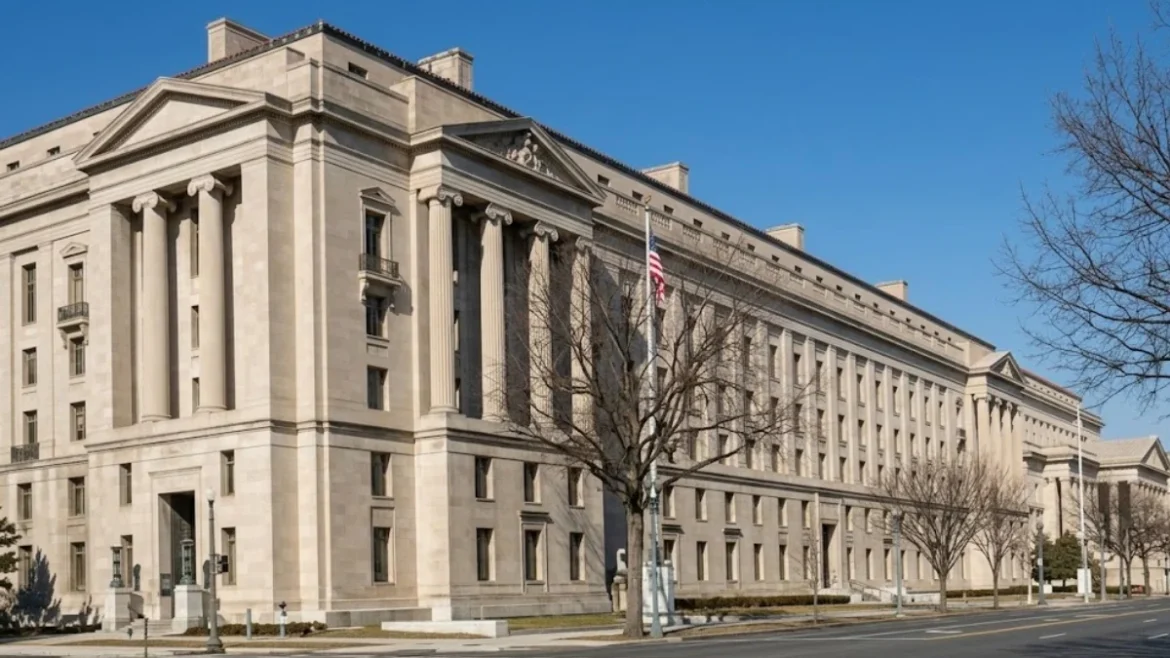
In a landmark international asset recovery operation, the United States Department of Justice has successfully returned approximately $2.5 million in illicit corruption proceeds to the Republic of The Gambia. The funds stem from the liquidation of a luxury residential property in Potomac, Maryland, which was purchased by former Gambian President Yahya Jammeh and his wife, Zineb Jammeh, using misappropriated public funds and bribes. The multi-million-dollar return marks a significant milestone in ongoing global efforts to combat transnational kleptocracy, strip corrupt foreign officials of ill-gotten gains, and channel recovered wealth back to the populations harmed by state-level embezzlement and abuse of power.
The asset return is the culmination of a protracted civil forfeiture action, designated as United States v. Real Property Located in Potomac, MD, Commonly Known as 9908 Bentcross Drive. Federal investigators established that the sprawling Maryland estate served as a primary U.S. repository for millions of dollars plundered from the Gambian treasury and extracted from private businesses operating under coercive state monopolies. Through close collaboration between U.S. law enforcement agencies and the government of The Gambia, authorities dismantled the complex web of financial maneuvers used to obscure the ownership of the property, ultimately converting the luxury asset into liquid capital earmarked for the victims of the Jammeh regime.
Background and Context of the Jammeh Regime
To fully understand the magnitude of the recent asset repatriation, it is essential to examine the 22-year authoritarian rule of Yahya Jammeh, who seized power in a bloodless military coup in July 1994. Throughout his tenure, Jammeh presided over a government characterized by widespread human rights abuses, systematic suppression of political opposition, and pervasive financial corruption. While a significant portion of international scrutiny focused on political repression and extrajudicial killings, financial investigations later revealed an equally devastating systematic looting of the small West African nation’s economy.
During his presidency, Jammeh established strict control over key sectors of the Gambian economy, including telecommunications, agriculture, energy, and international trade. Businesses seeking operating licenses, preferential treatment, or monopoly rights were routinely required to pay exorbitant bribes directly to the president or funnel funds through state-controlled entities under his personal command. Concurrently, public funds earmarked for infrastructure, healthcare, and education were systematically diverted into private accounts.
When Jammeh was defeated in the democratic presidential election of December 2016 by current President Adama Barrow, and subsequently forced into exile in January 2017, an audit of state accounts revealed a staggering financial deficit. The outgoing regime had allegedly drained tens of millions of dollars from state coffers and public enterprises, leaving the Gambian economy crippled. The seizure and subsequent liquidation of foreign-held assets, such as the Potomac mansion, represent vital steps in a broader international campaign to recover these stolen resources and restore economic stability to the country.
Chronology of the Investigation and Legal Proceedings
The path from Jammeh’s ouster to the repatriation of the $2.5 million in Potomac real estate proceeds involved a meticulous, multi-year international investigation spearheaded by specialized units within United States law enforcement.
The investigative genesis dates back to the establishment of the Homeland Security Investigations (HSI) Illicit Proceeds and Foreign Corruption Group in Miami, founded in 2003 specifically to target foreign officials attempting to launder stolen state funds through the U.S. financial infrastructure. Over the past two decades, this specialized group has successfully identified, frozen, and seized over $500 million in illicitly acquired assets globally.
Following Jammeh’s departure from power, HSI’s Miami group—working in tandem with HSI Baltimore, the HSI Attaché Office in Dakar, and Gambian authorities—began tracing the flow of misappropriated funds leaving West Africa. Investigators discovered that Yahya and Zineb Jammeh utilized a sophisticated network of shell companies, offshore accounts, and third-party intermediaries to channel millions of dollars into the United States real estate market.
In July 2020, the U.S. Department of Justice filed a civil forfeiture complaint against the property located at 9908 Bentcross Drive in Potomac, Maryland. The legal action asserted that the multi-million-dollar estate was purchased directly with the proceeds of foreign public corruption and wire fraud, rendering it subject to seizure under U.S. federal law.
Following years of litigation, the property was successfully forfeited and liquidated. The legal process culminated in an asset-sharing and repatriation agreement between the United States and The Gambia. This agreement formally secured the transfer of the net proceeds—totaling $2,507,911.73—back to the West African nation for the direct benefit of Jammeh’s victims.
Mechanisms of Compensation and the Gambian Legal Framework
A critical component of the Department of Justice’s asset return policy is ensuring that repatriated funds are utilized transparently and for their intended purpose: compensating the direct victims of state-sponsored corruption. Under the terms of the agreement forged between Washington and Banjul, the returned funds will be administered in strict accordance with the Gambian Victims Reparations Act of 2023.
The Victims Reparations Act was established by the Gambian legislature to provide financial restitution, medical assistance, and social support to individuals who suffered human rights violations, financial ruin, or abuse of office during the Jammeh regime. By tying the distribution of the liquidated Potomac mansion proceeds to this domestic legislative framework, the international community ensures that accountability mechanisms respect local sovereignty while maintaining rigorous transparency standards.
Officials from both nations emphasized that the distribution process will be closely monitored to prevent secondary misappropriation. Civil society organizations in The Gambia have long advocated for the establishment of transparent trust funds to manage recovered assets, ensuring that victims of arbitrary detention, forced disappearances, and economic plunder receive meaningful redress.
Official Statements and Enforcement Perspectives
The successful conclusion of the asset recovery case drew high-level praise from key U.S. law enforcement and prosecutorial officials, highlighting the vital role of international partnerships in modern financial crime investigations.
Assistant Attorney General A. Tysen Duva of the Justice Department’s Criminal Division underscored the broader significance of the cooperation framework during the announcement of the fund transfer. “This case is an important example of international cooperation to hold accountable those who use our financial system to attempt to hide illicit criminal proceeds,” Duva stated. “Returning these funds forfeited from the former leader to compensate his victims demonstrates our commitment to recover funds taken in violation of the rule of law and to return them for the benefit of victims in a lawful process.”
Echoing these sentiments, Acting Executive Associate Director John A. of Homeland Security Investigations emphasized the operational resolve of federal agencies in safeguarding domestic financial networks. “Homeland Security Investigations remains committed to protecting the integrity of the U.S. financial system by ensuring that corrupt foreign officials cannot use the United States to hide, move, or enjoy the proceeds of bribery, embezzlement, and abuse of office,” he noted.

HSI representatives further reiterated that the return of approximately $2.5 million to The Gambia showcases the tangible impact of dedicated illicit finance investigations. The operation relied heavily on trial attorneys Steven Parker and Kaycee Sullivan of the Criminal Division’s Money Laundering, Narcotics and Forfeiture Section (MNF), alongside critical diplomatic and logistical backing from the Justice Department’s Office of International Affairs, the U.S. Department of State, and the U.S. Department of the Treasury.
Broader Impact and Implications for Global Anti-Corruption Efforts
The repatriation of the Jammeh regime’s corruption proceeds carries significant implications for the global fight against transnational kleptocracy and money laundering. As corrupt leaders increasingly seek to launder stolen wealth through stable Western real estate markets, luxury assets, and complex shell company networks, the ability of foreign governments to reclaim sovereign wealth serves as a powerful deterrent.
For The Gambia, the financial return—while only a fraction of the total wealth plundered during the 22-year dictatorship—represents both symbolic justice and vital material support for vulnerable citizens. The case proves that international borders and sophisticated asset-hiding schemes do not provide permanent sanctuary for misappropriated public funds when investigative agencies coordinate across jurisdictions.
Furthermore, the operation highlights the evolving mandate of the Justice Department’s Money Laundering, Narcotics and Forfeiture Section and its International Unit. Beyond prosecuting domestic drug cartels and financial fraudsters, these units play a crucial role in dismantling cross-border corruption networks that threaten the stability of the global financial system. By systematically taking the profit out of foreign official corruption, U.S. and international authorities continue to establish robust legal precedents for future asset recovery initiatives worldwide.
