
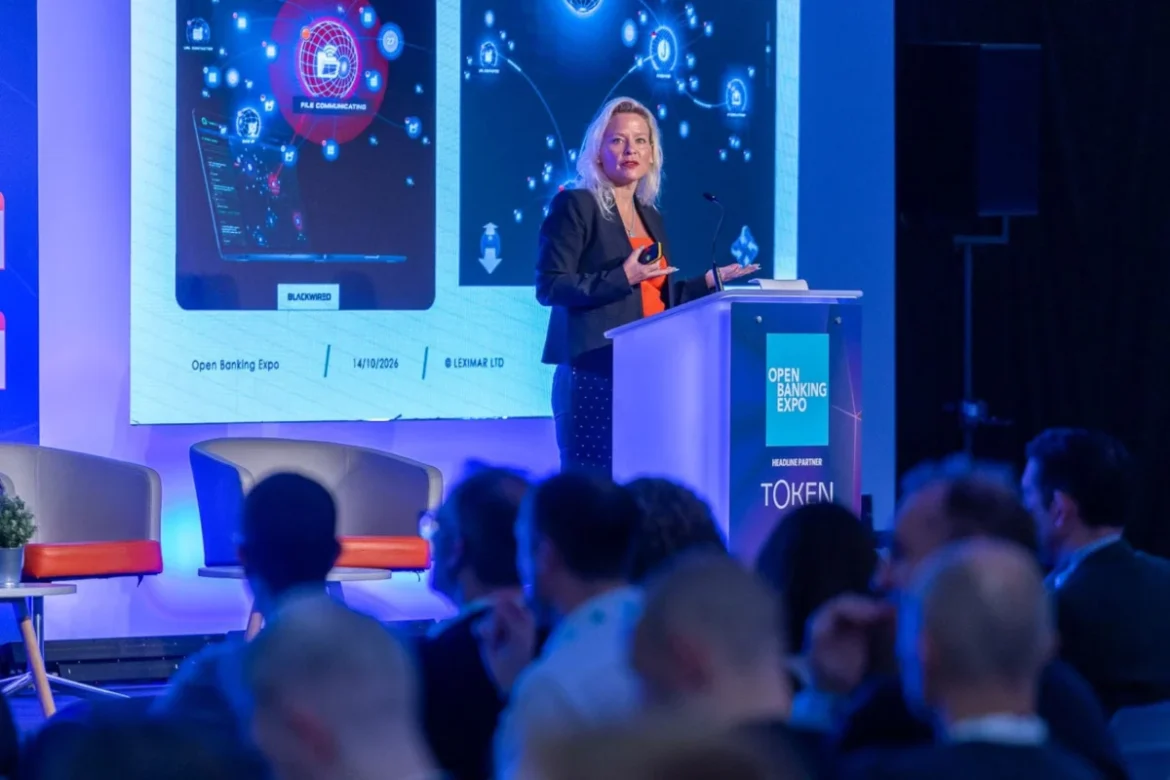
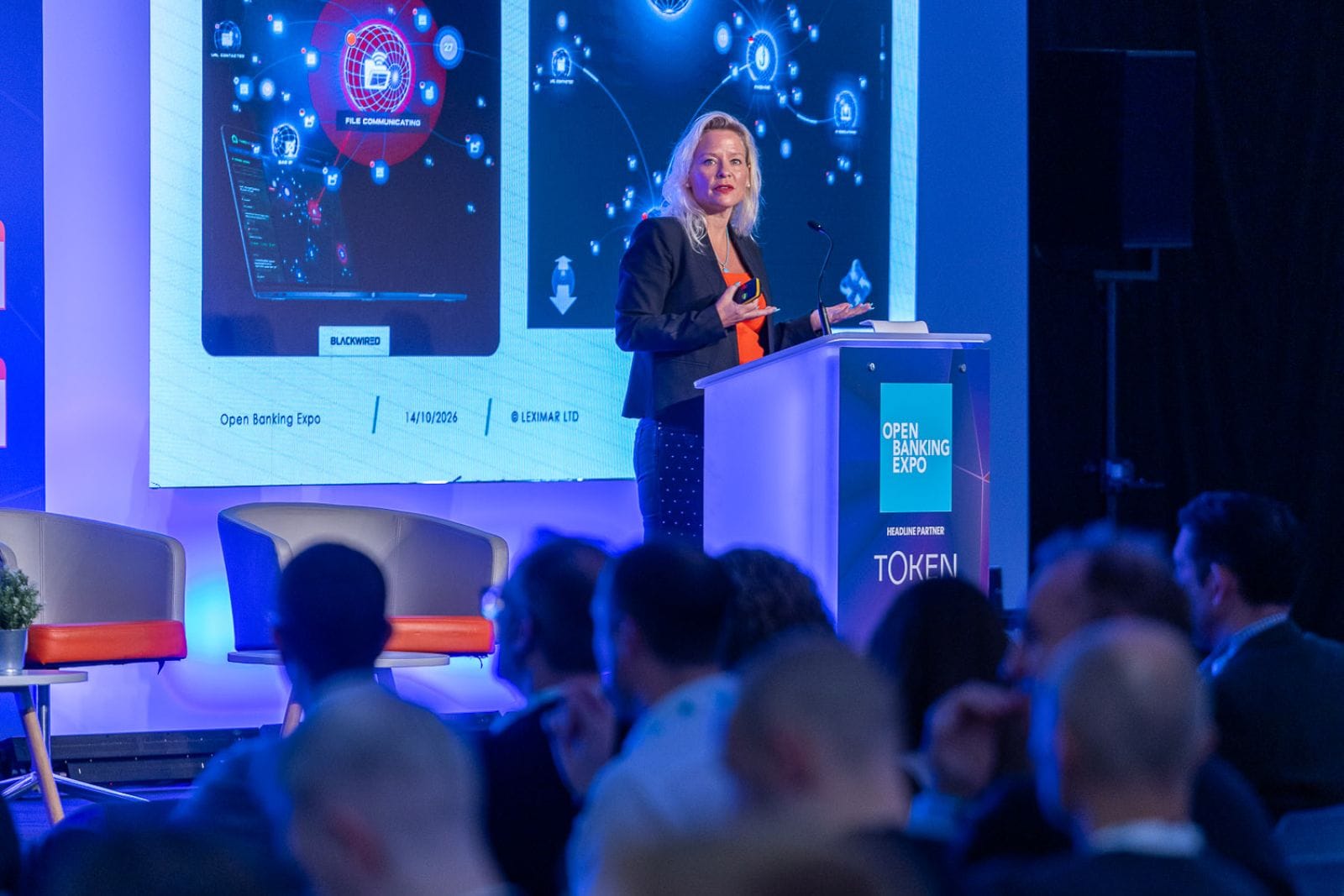
Financial institutions, payment service providers, and fintech enterprises are facing an unprecedented paradigm shift as autonomous artificial intelligence systems begin to command the financial transactions landscape. Speaking on the second day of the Open Banking Expo UK & Europe 2026 in London, Dr. Ruth Wandhöfer, fintech professor and chief executive officer of Leximar, delivered a sobering opening keynote that challenged established assumptions regarding customer loyalty, fraud prevention, and transaction security. According to Wandhöfer, the rapid proliferation of autonomous AI agents—capable of independently evaluating financial needs, selecting optimal payment methods, and executing purchases without direct human intervention—will profoundly redefine where value resides in the global payments ecosystem.
The core argument presented during the high-profile industry gathering centers on the emergence of a "post-payment world." In this evolving architecture, traditional payment processing is relegated to a silent, nearly invisible background function embedded within broader, intelligent financial services. As software agents take the wheel, institutions that have historically competed on transaction speeds, proprietary rails, and user-interface dominance may find their strategic advantages eroding. The critical battlefield for future market share, Wandhöfer cautioned, will not be the mechanism of payment itself, but the intelligence layer that dictates when, why, and how money moves.
Background Context and the Evolution of Open Banking
To fully grasp the magnitude of the shift outlined at the Open Banking Expo UK & Europe 2026, one must examine the trajectory of financial technology over the past decade. The introduction of the second Payment Services Directive (PSD2) in Europe and the subsequent growth of open banking laid the technical foundation for API-driven financial data sharing. Initially, these regulatory frameworks were designed to empower human consumers, allowing them to securely share their bank account data with third-party providers to secure better loans, manage household budgets, and initiate account-to-account (A2A) payments.
Over successive years, open banking matured from a regulatory compliance burden into a vibrant ecosystem encompassing millions of active users across the UK and the European continent. However, the foundational design assumption of these frameworks remained resolutely human-centric. Security protocols, consent mandates, and user interfaces were built around the expectation that a flesh-and-blood individual would actively authenticate every transaction via biometric scans, multi-factor authentication codes, or mobile banking application approvals.
The advent of agentic AI disrupts this foundational premise entirely. Software agents do not possess traditional human biometrics, nor do they browse banking applications in the manner anticipated by legacy compliance officers. Instead, they operate continuously in the background, executing micro-decisions based on complex machine learning models, pre-set algorithmic budgets, and real-time market data. This leap from human-executed transactions to machine-executed commerce represents the next frontier of Open Finance, threatening to bypass traditional retail banking channels entirely.
Traditional Authentication and Cybersecurity Face an Existential Crisis
One of the most pressing concerns highlighted during the London keynote is the profound inadequacy of current security frameworks when confronted with autonomous machine actors. Existing regulatory standards—such as Strong Customer Authentication (SCA) mandates implemented under European and UK regulatory regimes—were formulated specifically to mitigate fraud perpetrated against human users.
Because AI agents operate independently, banks and security architects must completely overhaul their approach to identity verification and authorization. Wandhöfer emphasized the necessity for machine-readable consent policy frameworks. In a multi-agent ecosystem, a human user might grant a software agent delegated financial authority—such as the power to automatically switch energy suppliers, optimize investment portfolios, or procure routine business supplies within specific financial boundaries. Defining, monitoring, and revoking this delegated authority requires technical standards that currently exist only in nascent stages across the industry.
Furthermore, the integration of AI agents introduces a host of sophisticated cybersecurity vulnerabilities. Chief among these is the threat of "prompt injection," a phenomenon where malicious actors manipulate an AI agent’s underlying instructions, tricking it into executing unauthorized, fraudulent, or damaging financial transactions. Traditional fraud detection engines, which rely heavily on behavioral telemetry—such as device typing cadence, geolocation data, and typical user spending habits—will struggle to flag anomalies in high-speed, automated software interactions.
To combat these emerging risks, financial institutions must develop cryptographic mechanisms to verify an AI agent’s provenance, confirm its ongoing legal authorization to act on behalf of a human or corporate principal, and maintain an immutable, auditable trail of every automated decision. As Wandhöfer succinctly reminded delegates, "Trust is good. Evidence is better."
The Battle for the Customer Relationship and the Decision Layer
Beyond regulatory and cybersecurity hurdles, the rise of agentic AI threatens to disintermediate traditional financial institutions from their end-users. For decades, retail banks have cultivated customer relationships through proprietary mobile applications, branch networks, and brand recognition. These touchpoints have served as lucrative gateways for cross-selling high-margin products such as mortgages, insurance, and personal loans.
However, if a consumer’s primary interface is an intelligent personal assistant—whether provided by a big tech conglomerate, an independent fintech, or an advanced software utility—that AI agent will naturally assume the role of financial advisor and purchasing gatekeeper. The agent will analyze market offerings, negotiate terms, and execute payments seamlessly in the background. In such a scenario, the underlying bank is reduced to a "dumb pipe" providing commoditized ledger and payment execution services while losing direct contact with the end consumer.
"What if the biggest threat to your payments business is not another payments business?" Wandhöfer asked the audience, driving home the reality that non-financial technology companies and specialized AI developers are well-positioned to capture the lucrative decision layer. For open banking providers, this means that securing mere API access to bank accounts no longer guarantees long-term value capture. The true economic value will concentrate in the hands of whoever controls the algorithms that diagnose needs and orchestrate financial behavior.
A Four-Pillar Architecture for the Future Financial Ecosystem
Navigating this turbulent transition requires a fundamental redesign of financial architecture. Industry experts suggest that the future landscape will consolidate around four mutually reinforcing pillars:
- AI Agents: Autonomous software entities operating as digital proxies for individuals and enterprises, capable of complex reasoning, procurement, and asset management.
- Digital Money: The integration of central bank digital currencies (CBDCs), regulated stablecoins, and tokenized commercial bank money designed for programmatic, high-speed, machine-to-machine settlement.
- Tokenisation: The representation of real-world assets, liabilities, and legal contracts on distributed or secure digital ledgers, enabling instant verification and transferability.
- Trust and Regulation: Robust legal frameworks, machine-readable consent protocols, and rigorous identity verification standards that govern liability and accountability in automated environments.
Industry Reaction and Strategic Implications
Reaction from the broader financial technology community underscores a growing consensus that traditional institutions must evolve rapidly or risk marginalization. Payment network operators, legacy clearing houses, and tier-one banks are already establishing internal research labs to investigate programmable money and agentic workflows. However, the pace of regulatory adaptation remains a critical bottleneck.
Regulators in the UK and Europe are currently grappling with how to apply existing consumer protection laws to autonomous transactions where fault is difficult to attribute. If an AI agent makes a flawed financial decision resulting in substantial consumer loss, questions of liability—stretching from the software developer and the AI model provider to the hosting platform and the executing bank—remain legally ambiguous.
Moreover, fragmented data standards and legacy IT infrastructure continue to plague many traditional financial institutions, making it difficult for them to interoperate seamlessly with fast-moving AI applications. Fintech innovators, unburdened by legacy technology debt, are moving aggressively to capture the whitespace between open banking data feeds and intelligent automation.
Conclusion: Who Will Control the Orchestration Layer?
As the Open Banking Expo UK & Europe 2026 demonstrated, the financial services industry stands at a definitive crossroads. The initial wave of open banking successfully democratized access to financial data and payment initiation rails, creating an interconnected ecosystem of banks and fintechs. Yet, the next phase of competition will be dictated not by infrastructure, but by intelligence.
Financial institutions must look beyond incremental improvements in transaction speed and app design. They are challenged to fundamentally rethink their business models to determine whether they will successfully capture the emerging decision layer or be relegated to invisible background utilities. As autonomous software agents increasingly take command of purchasing decisions, the future belongs to those organizations capable of establishing trust, verifying machine intent, and orchestrating the new era of automated finance.
