
The modern corporate landscape is defined by an increasingly complex web of regulatory requirements, where the ability to demonstrate security and compliance has shifted from a competitive advantage to a fundamental prerequisite for doing business. For compliance officers and security teams, the traditional approach to maintaining these standards—characterized by manual data collection, spreadsheet-based tracking, and a reactive posture toward audits—has become unsustainable. As organizations scale, the administrative burden of gathering evidence, verifying access controls, and chasing internal stakeholders to complete security questionnaires often consumes months of high-value human capital. This systemic inefficiency has paved the way for the rise of automated compliance platforms, with Vanta emerging as a dominant force in the sector through its evolution into what it terms an Agentic Trust Platform.
The Paradigm Shift in Regulatory Compliance
Historically, the path to achieving certifications such as SOC 2 or ISO 27001 was a grueling manual process. Compliance teams were forced to rely on "point-in-time" snapshots, where evidence was collected specifically for an annual audit. This method was inherently flawed; it created a "compliance gap" where an organization might be compliant during the audit window but fall out of alignment shortly thereafter due to configuration changes or employee turnover.
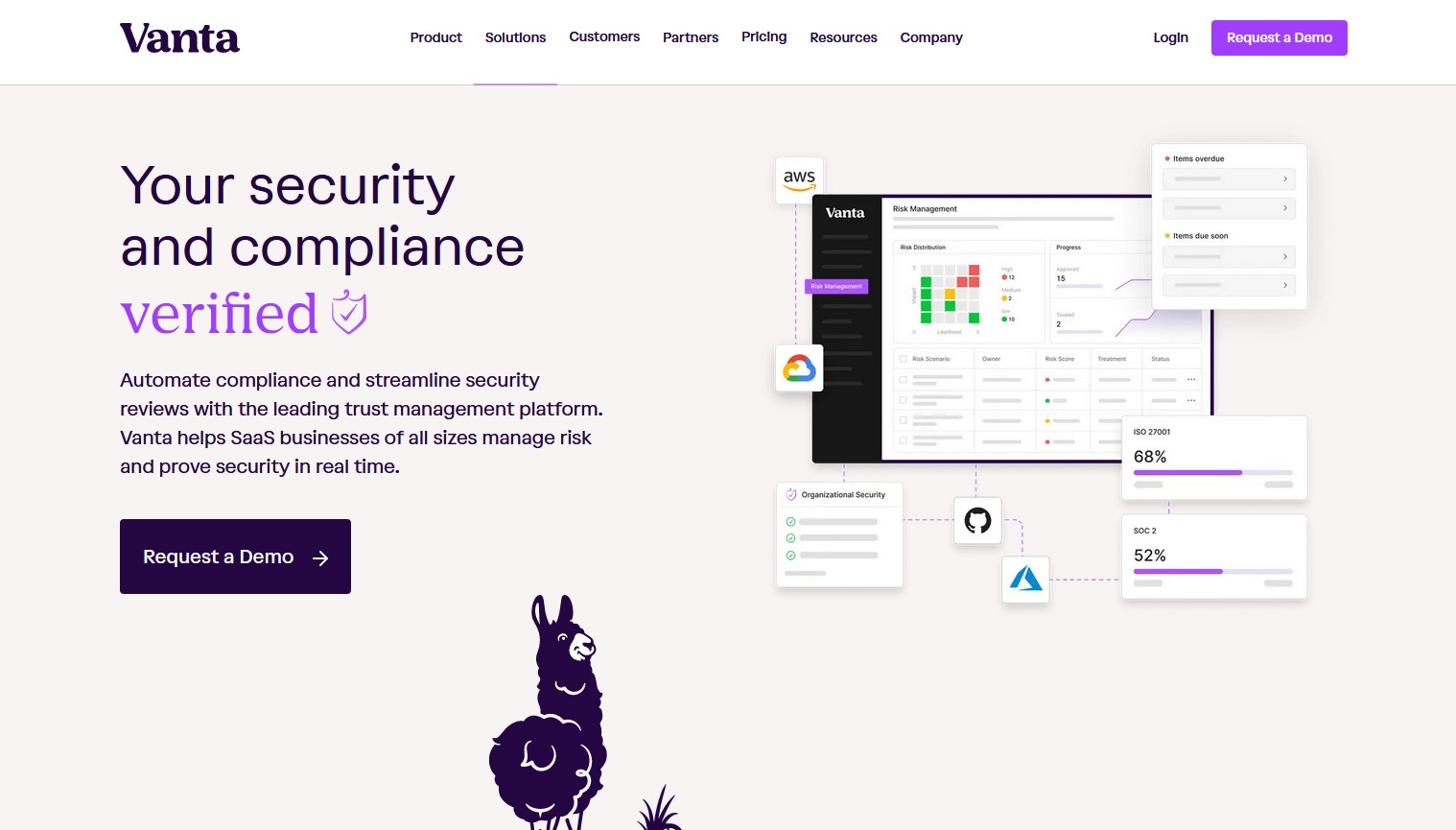
The emergence of automated compliance management has addressed this by introducing continuous monitoring. By integrating directly with a company’s tech stack—including cloud providers like AWS and Azure, version control systems like GitHub, and human resources platforms—automation tools provide a real-time view of an organization’s security posture. Vanta, which initially launched as a specialized tool for SOC 2 automation, has significantly broadened its scope to address the entire lifecycle of risk, security, and trust management.
Chronology of Innovation: From SOC 2 to Agentic Trust
Vanta’s trajectory reflects the broader evolution of the Governance, Risk, and Compliance (GRC) market. Founded in 2018, the company recognized that the "Security Questionnaire" was the primary bottleneck in the B2B sales cycle. Small to mid-sized startups were losing enterprise deals because they lacked the formal documentation required by procurement teams.
Between 2018 and 2023, Vanta expanded its framework library to include HIPAA, GDPR, and ISO 27001, moving beyond simple evidence collection to include policy templates and automated task management. By 2024, the platform had scaled to serve over 15,000 businesses. The most recent phase of its development, marked by the release of the Vanta AI Agent 2.0 and the integration of advanced risk modeling, signals a shift toward "agentic" systems. These are systems that do not merely report issues but actively participate in the remediation process, drafting responses and suggesting technical fixes to maintain compliance autonomously.
Core Capabilities and Technical Infrastructure
The effectiveness of Vanta’s platform is rooted in its ability to centralize disparate data streams into a single source of truth. The platform currently supports over 400 integrations, allowing it to pull data from identity providers, infrastructure services, and communication tools.
1. AI-Driven Remediation and Evidence Collection
The Vanta AI Agent 2.0 represents the platform’s flagship advancement in automation. Unlike traditional software that requires manual input for every check, the AI agent works in the background to validate audit evidence. According to internal performance data, organizations utilizing these AI-driven features have reported a 129% increase in team productivity. Perhaps more significantly for sales-led organizations, the AI agent has been credited with accelerating security reviews by up to 81%, allowing deals to move through the procurement pipeline with significantly less friction.
2. The Risk Graph and Interconnected Security
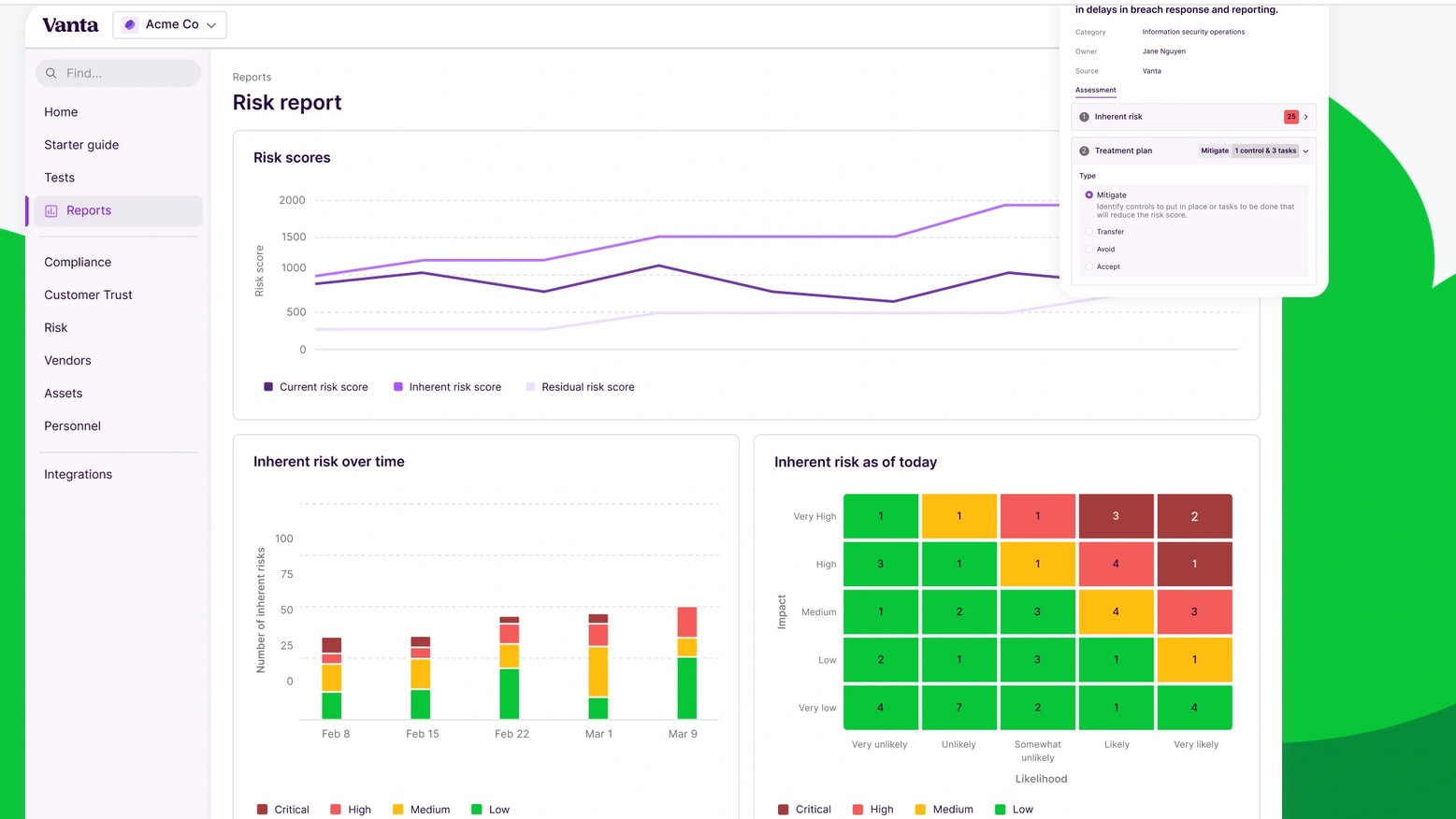
One of the more sophisticated additions to the platform is the Risk Graph. In a complex enterprise environment, security risks are rarely isolated. A misconfiguration in a cloud bucket may be linked to a gap in vendor management or an outdated access control policy. The Risk Graph visualizes these relationships, providing security leaders with a map of how risks propagate across the organization. This allows for a more strategic allocation of resources, focusing on "high-impact" vulnerabilities that affect multiple compliance frameworks simultaneously.
3. Multi-Entity and Global Management
For larger enterprises and conglomerates, the Organizations Center and Multiple Risk Registers provide a necessary layer of hierarchy. Large companies often operate across different geographies with varying legal requirements (e.g., CCPA in California vs. GDPR in Europe). Vanta’s architecture allows these organizations to connect multiple workspaces into a unified view. This "single pane of glass" enables corporate leadership to monitor the compliance posture of subsidiaries or separate product lines without interfering with their day-to-day operations.
Expanding the Scope: Privacy and Vendor Risk
As data privacy laws become more stringent globally, the intersection of security and privacy has become a critical focal point. In early 2026, Vanta introduced enhanced privacy automation features designed to handle the specific rigors of GDPR and other data protection regimes.
Privacy Automation and Data Mapping
Managing Records of Processing Activities (ROPAs) and conducting Data Protection Impact Assessments (DPIAs) are traditionally manual, legal-heavy processes. Vanta’s privacy suite automates the creation of data inventories, mapping how personal data flows through an organization’s systems. By housing privacy and security data in the same ecosystem, the platform ensures that a change in security controls is immediately reflected in the organization’s privacy impact documentation.
The Vendor Ecosystem
Modern businesses are heavily dependent on third-party SaaS vendors, each of whom represents a potential security vulnerability. Vanta’s Vendor Risk Management (VRM) module automates the onboarding and continuous monitoring of these third parties. The platform uses AI to analyze vendor security reports and can even automate the offboarding process, ensuring that access to sensitive systems is revoked the moment a contract ends.
Supporting Data: The Economic Case for Automation
The financial implications of non-compliance and manual management are substantial. Research into the GRC market suggests that the cost of an audit can be reduced by up to 50% through automation. Furthermore, the "cost of non-compliance"—including fines, lost deals, and reputational damage—is estimated to be nearly three times the cost of maintaining a robust compliance program.
Vanta’s data indicates that for a typical mid-sized company, the platform can reduce the time spent on manual evidence collection from hundreds of hours to just a few dozen. This efficiency is particularly vital in the current economic climate, where security teams are being asked to "do more with less." By automating the repetitive tasks of compliance, organizations can redirect their security talent toward more complex threat-hunting and strategic risk management initiatives.
Market Implications and Stakeholder Reactions
Industry analysts view the move toward agentic platforms as a turning point for the RegTech (Regulatory Technology) industry. Chief Information Security Officers (CISOs) have generally welcomed the shift, noting that continuous monitoring provides a more accurate reflection of risk than traditional audits.
However, some auditors have expressed a need for caution, emphasizing that while automation can collect evidence, the "human in the loop" remains essential for interpreting complex regulatory nuances. Vanta has addressed this by creating "Controlled Audit Views," which allow external auditors to access the specific data they need within the platform without compromising the privacy of the rest of the organization’s data. This creates a more transparent and collaborative relationship between the company and its auditors.
Broader Impact on the Business Landscape
The democratization of compliance through tools like Vanta has a profound impact on market entry. In the past, the high cost and complexity of SOC 2 or ISO 27001 served as a barrier to entry for startups looking to sell to the Fortune 500. By lowering this barrier, automation platforms are fostering a more competitive and secure business ecosystem.
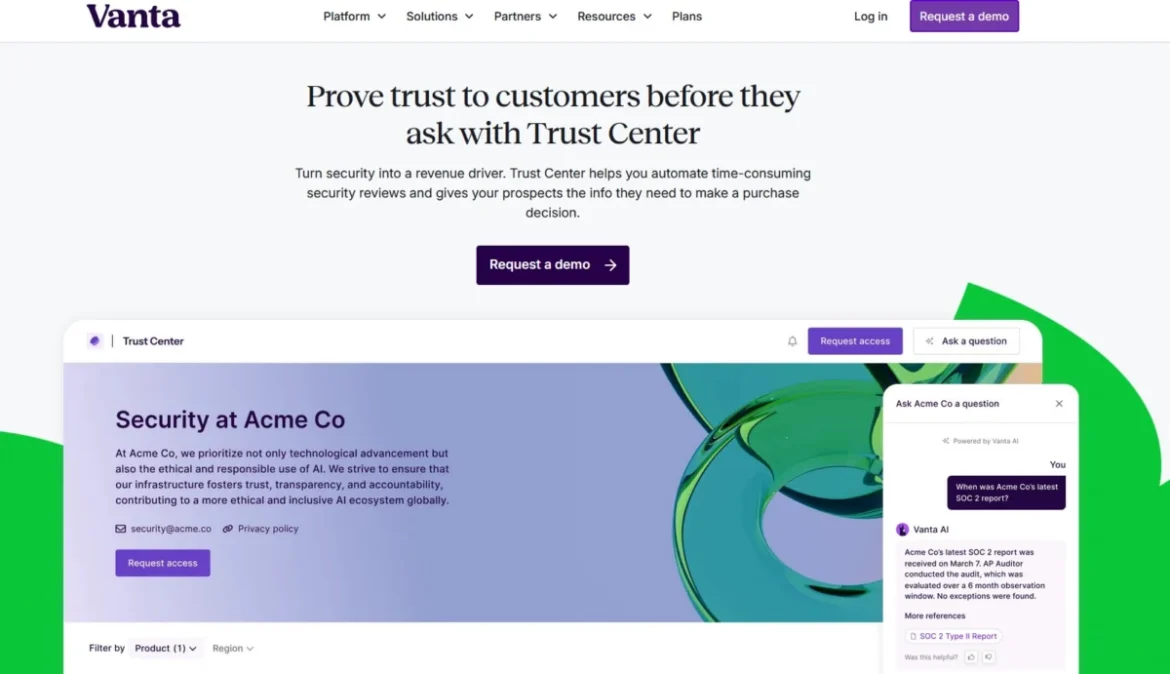
Moreover, the "Trust Center" feature is changing how companies communicate their security posture to the public. Rather than hiding security documentation behind non-disclosure agreements (NDAs) and manual email chains, companies can now provide a real-time, public-facing dashboard of their compliance status. This transparency builds trust with customers and can significantly shorten the "trust building" phase of a business relationship.
Conclusion and Future Outlook
Vanta’s evolution from a niche SOC 2 tool into a comprehensive Agentic Trust Platform reflects a broader trend toward the automation of corporate governance. As the platform continues to integrate more advanced AI capabilities and expand its framework coverage to include emerging regulations like the NIST AI Risk Management Framework, its role in the enterprise stack is likely to become even more central.
For organizations navigating the complexities of the modern regulatory environment, the choice is no longer between compliance and non-compliance, but between manual stagnation and automated agility. While the transition to an automated platform requires an initial investment in time and resources, the long-term benefits of reduced risk, accelerated sales, and improved operational efficiency position Vanta as a critical infrastructure component for the security-conscious enterprise. The future of compliance is not a static checklist, but a continuous, automated, and transparent demonstration of trust.
