

Twelve, a pioneering cleantech firm specializing in carbon transformation, has officially secured a credit facility of up to $45 million to bolster the operational capacity of its flagship AirPlant One facility in Moses Lake, Washington. This significant financial milestone marks a pivotal transition for the California-based company, moving from the capital-intensive construction phase into a fully commercialized operational state. The funding, led by Endurance Capital and Nomura, will be utilized to refinance the existing construction facility while providing the necessary capital to scale up hydrogen production capabilities at the site, which serves as a critical hub for the production of synthetic, CO2-derived fuels.
The Genesis and Technological Foundation of Twelve
Founded in 2015, Twelve emerged from the intersection of advanced chemical engineering and urgent climate action mandates. The company’s core innovation lies in its proprietary power-to-liquid technology, which utilizes carbon dioxide, water, and renewable electricity to produce high-value chemicals and fuels. By effectively recycling CO2—often captured from industrial sources or direct air capture—and combining it with hydrogen produced via electrolysis, Twelve creates a circular carbon economy.
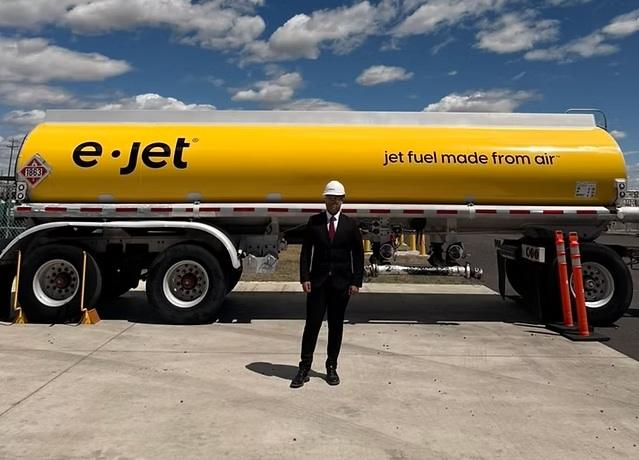
The process is remarkably efficient compared to traditional fossil fuel extraction and refining. By leveraging renewable energy—specifically the hydropower that powers the Moses Lake facility—the company ensures that the entire lifecycle of its products remains near-carbon neutral. The primary output, E-Jet fuel, is a sustainable aviation fuel (SAF) designed to be a "drop-in" replacement for conventional jet fuel. According to independent lifecycle assessments, the use of this synthetic fuel can reduce greenhouse gas emissions by as much as 90% compared to standard kerosene-based aviation fuels. Beyond aviation, the facility produces E-Naphtha, a synthetic feedstock that serves as a carbon-negative alternative for the manufacturing of plastics, textiles, and other essential consumer goods.
Chronology of Development: From Concept to Commercialization
The journey toward AirPlant One was characterized by rigorous research and development, followed by a strategic scale-up plan.
- 2015: Twelve is established, focusing on carbon transformation catalysts.
- 2020–2022: The company secures multiple rounds of venture capital, signaling growing investor confidence in carbon-to-value technologies.
- 2023: Planning for the Moses Lake facility begins, selected for its access to abundant, low-cost renewable energy and proximity to industrial partners.
- 2024: Construction of AirPlant One officially commences. The facility is envisioned as the first of its kind in the United States to produce commercial quantities of E-Jet fuel.
- 2026 (Early Q3): AirPlant One reaches mechanical completion and begins producing on-spec aviation fuel and naphtha.
- September 2026: Twelve announces the $45 million credit facility to refinance the construction debt and pivot toward expansion, specifically targeting an increase in hydrogen production capacity.
Financial Architecture and Strategic Investment
The $45 million credit facility represents a sophisticated financial structure tailored to the unique risks and rewards of cleantech deployment. By partnering with established financial institutions like Nomura and Endurance Capital, Twelve has signaled to the broader market that its technology is no longer in the "pilot" or "demonstration" stage but is a bankable industrial asset.
Refinancing construction debt with operational credit facilities is a standard but critical maneuver in the industrial sector. It allows a company to free up balance sheet liquidity, which can then be redeployed into capital expenditure (CapEx) projects—in this case, increasing the scale of the facility’s electrolyzers. Scaling hydrogen production is the primary bottleneck for many power-to-liquid facilities; by securing this financing, Twelve is directly addressing the supply chain requirements necessary to meet the burgeoning demand from airlines looking to fulfill their Net Zero commitments.
Official Perspectives and Industry Implications
Nicholas Flanders, the Co-Founder and CEO of Twelve, emphasized that the recent financing serves as a validation of the company’s long-term business model. "We built AirPlant One to prove that power-to-liquid technology works at commercial scale, and it’s now a fully operating plant producing on-spec aviation fuel and naphtha," Flanders stated. "This financing reflects that shift, from construction phase to operating asset, and gives us the capital to expand our capabilities at the site. Scaling additional hydrogen production represents the next phase of growth."

The financial partners involved in the deal highlighted the importance of supporting technology that has successfully moved beyond the lab. Alain Halimi, Managing Director at IPB Nomura, noted, "Twelve has proven power-to-liquid works at commercial scale; this financing is about funding what’s next. We’re pleased to partner with Endurance Capital to back Twelve as it scales the technology that’s decarbonizing aviation fuel."
The Macro-Economic Context: Decarbonizing the "Hard-to-Abate" Sectors
The aviation industry is notoriously difficult to decarbonize due to the high energy density requirements of long-haul flight, which current battery technology cannot support. Consequently, SAFs are widely viewed by policymakers and industry experts as the most viable path to reducing the sector’s carbon footprint over the next two to three decades.
The Twelve model fits neatly into the "Green Premium" reduction strategy. As the cost of renewable energy continues to drop and carbon pricing mechanisms (such as those found in the EU or various U.S. state-level programs) become more stringent, the cost-competitiveness of synthetic fuels compared to traditional jet fuel is expected to narrow. By producing synthetic building blocks for plastics (E-Naphtha), Twelve also diversifies its revenue streams, protecting itself against the volatility of the jet fuel market and capturing value from the broader demand for sustainable materials.
Future Outlook: Scaling the Carbon Economy
The success of AirPlant One and the subsequent securing of the $45 million facility serve as a bellwether for the carbon transformation industry. If Twelve can continue to demonstrate operational efficiency and profitability at the Moses Lake site, it will likely pave the way for larger, multi-site expansions across the United States and abroad.

However, the path forward is not without challenges. The primary obstacle remains the cost of production. Synthetic fuels are still significantly more expensive than fossil fuels, necessitating long-term offtake agreements with major airlines and government incentives, such as the Sustainable Aviation Fuel (SAF) tax credits provided under various climate legislation frameworks. The ability of Twelve to secure this private financing suggests that institutional investors are beginning to perceive these risks as manageable, provided the technology remains reliable.
Summary of Operational Impact
The expansion of hydrogen production at AirPlant One is a strategic move to optimize the efficiency of the facility’s power-to-liquid cycle. By increasing hydrogen output, Twelve can maximize the utilization of its electrolyzers, thereby increasing the total volume of E-Jet fuel and E-Naphtha produced per unit of electricity consumed. This scale-up is essential for achieving the economies of scale required to reach price parity with conventional petroleum-based fuels.
As the global transition to a low-carbon economy accelerates, the role of companies like Twelve will become increasingly central to industrial strategy. The conversion of CO2 into essential commodities transforms a global pollutant into a valuable feedstock, effectively decoupling economic growth from emissions. With this $45 million injection of capital, Twelve has signaled that it is prepared to move beyond the validation phase and into a period of aggressive industrial growth, setting a new precedent for how the aviation and chemical industries might evolve in a post-carbon world.
By refining its financial footing and expanding its production footprint, Twelve is positioning itself as a core player in the infrastructure of the future. The next several years will be critical as the company seeks to prove that its synthetic fuels can meet the rigorous quality and safety standards of the aviation industry while simultaneously scaling to meet the massive demand for low-carbon aviation fuel. The recent credit facility acts as the bridge between this nascent technology and the robust, scalable industrial future that the climate-conscious market demands.
