The global financial landscape is rapidly approaching a paradigm shift in market infrastructure as Citadel Securities, a premier market maker, successfully completed a live test of the Depository Trust & Clearing Corporation’s (DTCC) upcoming Tokenization Service. Executed on July 15, 2026, the pilot leveraged the institutional-grade digital asset infrastructure provided by Fireblocks to successfully tokenize U.S. Treasury securities on the Canton Network. This high-profile collaboration represents a pivotal milestone for the DTCC, which is preparing for the full-scale commercial launch of its tokenization platform in October 2026. By bridging the gap between legacy settlement processes and distributed ledger technology (DLT), this initiative aims to redefine how collateral is managed, transferred, and utilized across the most liquid markets in the world.
The Mechanics of the July 15 Pilot
The successful test demonstrated the practical viability of moving beyond traditional paper-based or centralized database clearing. During the simulation, Citadel Securities utilized Fireblocks to mint tokenized versions of U.S. Treasuries, which were subsequently transferred to prominent institutional counterparties, including BNP Paribas and Société Générale.
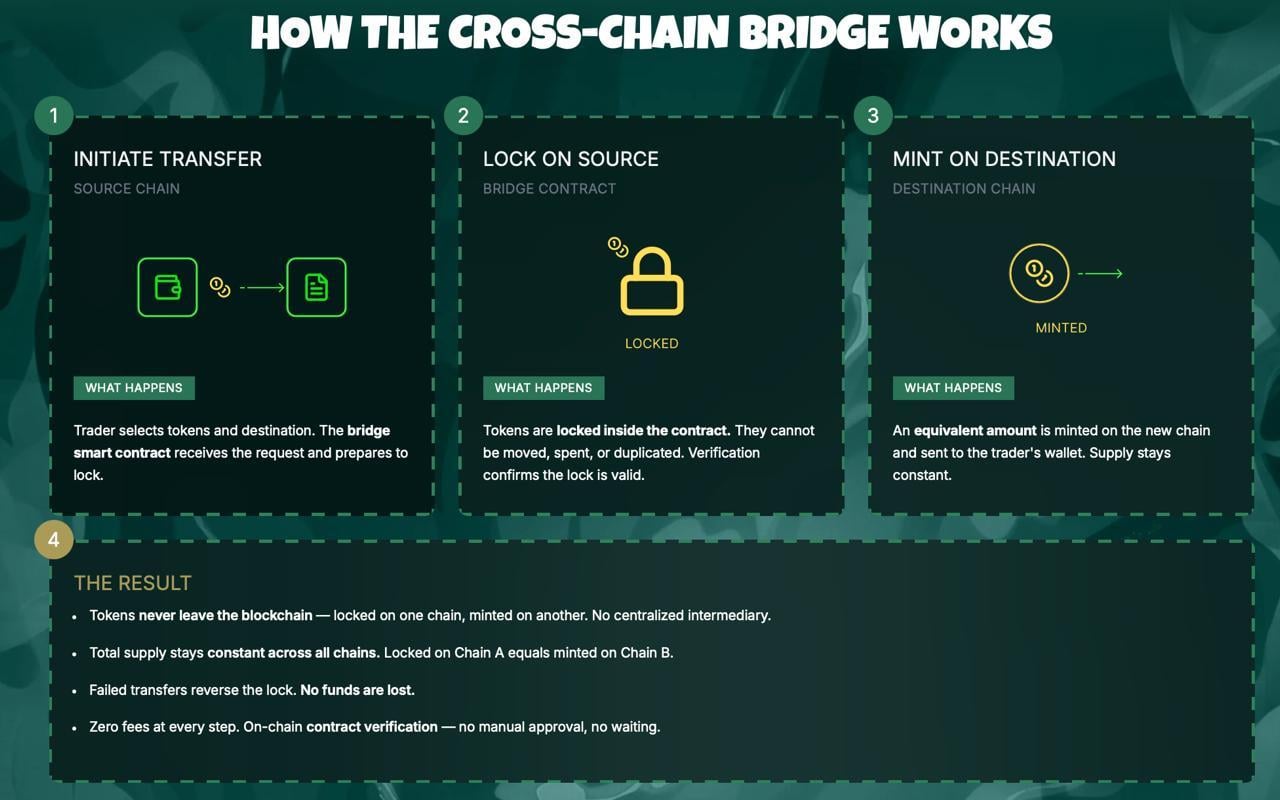
The primary objective of this exercise was to validate the interoperability of tokenized assets within the Canton Network—a privacy-enabled, interoperable blockchain ecosystem. The assets were not merely moved as static tokens; they were deployed as active collateral on the Chicago Mercantile Exchange (CME). This end-to-end functionality showcased the potential for "atomic" settlements, where the transfer of ownership and the pledging of collateral occur simultaneously, drastically reducing the counterparty risks and operational delays inherent in the T+1 settlement cycle currently mandated in the U.S. markets.
Chronology of the DTCC Tokenization Initiative
The journey toward this October 2026 launch has been characterized by iterative testing and extensive industry consultation. The trajectory of this project highlights a methodical approach to institutional adoption:
- May 2026: The DTCC formally announces the development of its Tokenization Service, opening the door for over 50 major financial institutions to provide feedback, conduct due diligence, and participate in initial sandbox testing.
- Early 2026: Fireblocks expands its technical capabilities to support custody and native token transfers specifically tailored for the Canton Network, setting the stage for future integration with market utility providers.
- July 15, 2026: Citadel Securities conducts the live test, marking one of the most significant real-world applications of the technology to date.
- October 2026: Projected full-scale launch of the DTCC Tokenization Service, initially focusing on U.S. Treasury securities, Russell 1000 Index constituents, and major market ETFs.
The Role of Fireblocks in Institutional Infrastructure
For Citadel Securities, the integration of Fireblocks was not merely a technical choice but a strategic imperative. The platform provided the necessary "pipes" to connect institutional workflows with the Canton Network. According to Dan Doherty, a representative for Citadel Securities, the platform successfully streamlined the complex requirements of wallet onboarding, real-time balance reporting, and the stringent security protocols required for high-frequency trading environments.
Fireblocks provided a multi-layered security architecture that included granular governance features. In an institutional context, "governance" refers to the ability to define who can initiate a transfer, who must approve it, and what policy constraints are placed on the assets. By using Fireblocks’ MPC (Multi-Party Computation) technology, Citadel Securities ensured that even when interacting with blockchain networks, the firm maintained strict compliance with its internal risk management policies and regulatory requirements. This functionality is essential for firms that must balance the speed of DeFi-style operations with the rigorous compliance standards of traditional financial services.
Strategic Implications for Global Liquidity
The implications of the DTCC’s move toward tokenization are profound. Currently, collateral management—the process of pledging assets to secure loans or trading positions—is often hindered by fragmented systems, manual reconciliation, and lengthy settlement windows. By digitizing these assets, the DTCC intends to unlock several key benefits:
- Capital Efficiency: Tokenized assets allow for more precise collateral utilization. Instead of assets being "locked" in custodial silos, they can be moved instantly to where liquidity is most needed, reducing the need for excessive liquidity buffers.
- 24/7 Mobility: Traditional markets operate within banking hours and holiday schedules. Tokenized assets on a blockchain can be transferred at any time, facilitating a 24/7 global market that reflects the realities of digital commerce.
- Real-Time Settlement: By reducing the time between a trade and its final settlement, firms significantly reduce their exposure to market volatility and default risks.
Data from early pilot participants suggests that the transition to tokenized securities could eventually lower systemic capital requirements by a double-digit percentage for large-scale market participants. By minimizing the "dead time" where capital sits idle during the settlement process, firms can optimize their balance sheets to support more active trading and investment.
Expert Analysis: A Shift in Market Infrastructure
Financial analysts observing the trend note that the DTCC is essentially modernizing the "plumbing" of the financial system. By opting for a permissioned, regulated environment like the Canton Network rather than an open public blockchain, the DTCC is ensuring that the transition to tokenization does not compromise investor protections or regulatory oversight.
"The success of the Citadel-Fireblocks test is a clear signal that the world’s largest market makers are prepared to move past the conceptual phase of blockchain technology," noted a lead fintech strategist familiar with the project. "They aren’t just experimenting; they are preparing their back-office systems for a future where the underlying ledger for securities is no longer a static database, but an active, programmable chain."
However, challenges remain. Widespread adoption will require a degree of standardization that currently does not exist across all global exchanges. The DTCC’s future plans to integrate with other networks, such as Stellar, indicate that the organization is cognizant of the need for cross-chain interoperability. Success will likely depend on how effectively the DTCC can scale these services without creating new forms of technical debt or cyber-vulnerability.
Future Outlook: Beyond October 2026
As the October 2026 launch date approaches, the industry is watching to see how many of the 50-plus firms that provided input will move to adopt the service as early adopters. The initial focus on U.S. Treasuries is a strategic choice—it is the world’s most liquid market and serves as the bedrock for global collateral. If the tokenization of Treasuries proves as seamless as the July 15 test suggests, the expansion into broader equity markets and ETFs will likely proceed with significant momentum.
For Citadel Securities, the test serves as a validation of their forward-looking strategy. As the firm continues to navigate an increasingly complex global regulatory environment, the ability to leverage programmable, tokenized assets will be a significant competitive advantage. For the broader financial sector, the message is clear: the integration of blockchain technology into traditional finance is no longer a matter of "if," but "how" and "how quickly." The partnership between the DTCC, Fireblocks, and institutional powerhouses like Citadel marks the beginning of a long-term evolution in market infrastructure that will likely define the financial landscape for decades to come.