
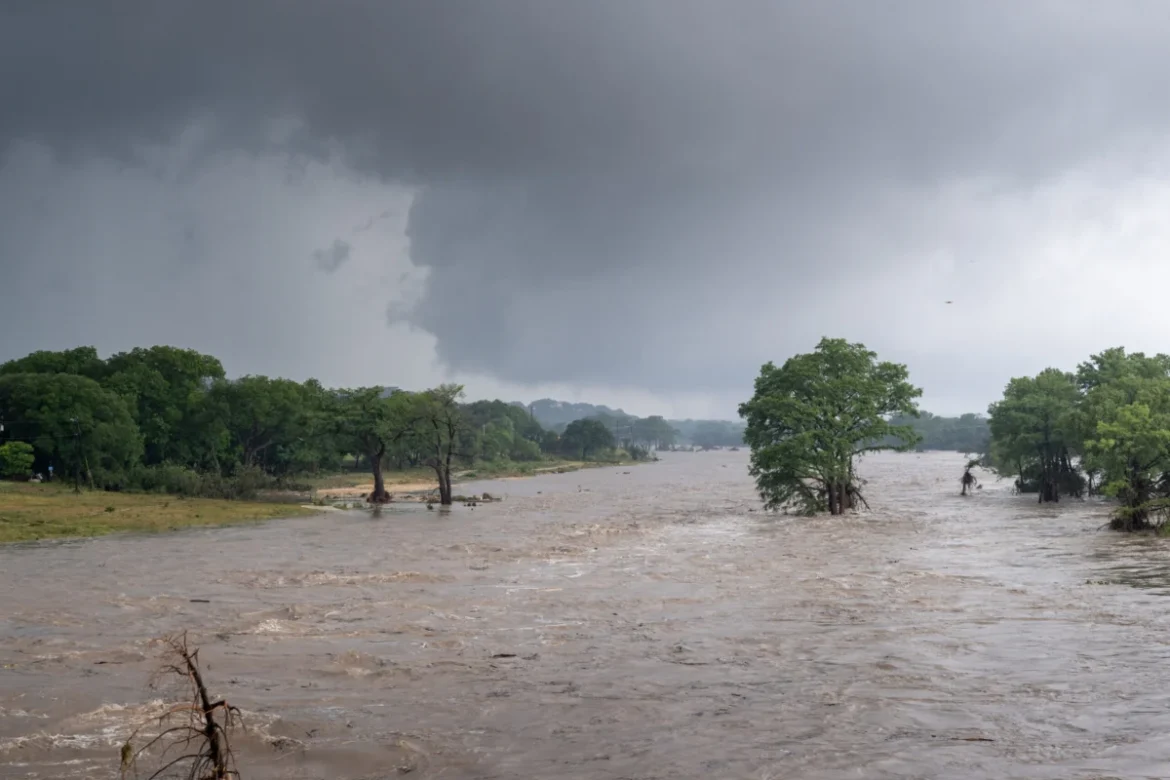
The United States is currently navigating a period of unprecedented environmental volatility as a convergence of disparate natural disasters creates a phenomenon experts describe as "compound events." Over the past week, the nation has witnessed a harrowing tableau of climate-driven crises: thick plumes of Canadian wildfire smoke have descended upon the Midwest and Northeast, plunging major metropolitan areas into a localized twilight; extreme, record-breaking heat waves have gripped the Atlantic seaboard; and catastrophic flooding has once again decimated communities in central Texas. While each of these events would be taxing in isolation, their simultaneous occurrence is exposing deep structural vulnerabilities in the American emergency management system, exacerbated by recent and significant budgetary contractions at the federal level.
As the atmosphere continues to respond to anthropogenic climate change, the frequency of these overlapping calamities is projected to rise. However, the capacity of the United States to respond to this "new normal" is being called into question. Analysts and emergency management professionals warn that the Trump administration’s strategic pivots and funding cuts to the Federal Emergency Management Agency (FEMA) have left the country less prepared than in previous decades. The current situation represents a critical inflection point where the accelerating pace of environmental degradation meets a diminished federal safety net, forcing state and local governments to shoulder an increasingly unsustainable burden.
The Rise of Compound and Sequential Disasters
In the lexicon of modern climatology, a "compound event" refers to the occurrence of multiple hazards that happen either simultaneously or in such rapid succession that the impacted region has no opportunity to recover between strikes. John Abatzoglou, a prominent climatologist at the University of California at Merced, notes that the synergy between these disasters creates a "multiplier effect" on human health and infrastructure. For instance, the current climate-charged "super El Niño" has altered atmospheric currents, facilitating the conditions for extreme precipitation in some regions while fostering the desiccating heat and wind patterns conducive to wildfires in others.
The danger of these events lies in their unpredictability and the way they strain the "logic" of emergency response. When a single disaster hits, resources are funneled to a specific point of need. When three or four disasters occur across different time zones and climate regions, the national reserve of equipment, personnel, and funding is stretched to a breaking point. "If you increase one type of extreme, the odds are that you’re going to get hit with another extreme that results in a larger impact," Abatzoglou explained. This cascading failure of environmental stability is no longer a theoretical projection; it is the current reality of the 2026 disaster season.
The Fiscal Strain: FEMA and the Federal Safety Net
The American disaster response complex has historically relied on a robustly funded federal core to supplement state efforts. However, recent policy shifts have fundamentally altered this dynamic. According to Jeffrey Schlegelmilch, faculty director of the National Center for Disaster Preparedness at Columbia University, the Federal Emergency Management Agency has undergone a series of cuts that have eroded its foundational capabilities. "We are not as well prepared as we were a few years ago," Schlegelmilch stated, highlighting a shift in federal priorities that has seen a reduction in long-term mitigation and preparedness grants.
The Trump administration’s approach to FEMA has emphasized a "state-led, federally supported" model that critics argue is a euphemism for federal withdrawal. By cutting the very programs designed to build resilience before a disaster strikes—such as pre-disaster mitigation funding—the administration has left local municipalities to fend for themselves. Samantha Penta, an associate professor at the University at Albany specializing in emergency preparedness, noted that this scale-back creates "a lot of pressure" on local jurisdictions. When federal resources are scarce, the hierarchy of response—which traditionally moves from local to state to federal—becomes a bottleneck, as states find themselves competing for a dwindling pool of federal disaster relief funds.
Case Study: The New York Smoke and Heat Paradox
The tactical difficulty of compound events is perhaps most visible in the current crisis affecting New York and the broader Northeast. The region is currently experiencing a "double-threat" scenario: a severe heat wave and dangerous air quality levels caused by drifting wildfire smoke. This creates a public health paradox that traditional emergency protocols are ill-equipped to handle.
Under normal heat-wave conditions, city officials encourage residents, particularly those in low-income areas without air conditioning, to visit public "cooling centers," splash pads, or parks to lower their core body temperature. However, the presence of hazardous particulate matter (PM2.5) from Canadian wildfires makes being outdoors a significant health risk. "There’s increased demand for emergency services and when the responders are on site, they often are dealing with more complicated cases and they’re staying longer," said Michael Jerrett, a professor of environmental health sciences at the University of California at Los Angeles.
The medical community is seeing a surge in "mixed-symptom" admissions, where patients present with both heat exhaustion and acute respiratory distress. This simultaneous demand on the healthcare infrastructure prevents the efficient triaging of patients, leading to longer wait times and higher mortality rates among vulnerable populations, such as the elderly and those with pre-existing asthma or cardiovascular disease.
The Cycle of Unfinished Recovery in Texas
While the Northeast grapples with air quality and heat, central Texas provides a sobering example of "sequential disasters." The region is currently facing catastrophic flooding along the Guadalupe River, a waterway that is still reeling from heavy rains last year that resulted in more than 100 fatalities.
The concept of "disaster fatigue" applies not only to the psychology of the residents but to the physical infrastructure itself. Levees, drainage systems, and soil stability have not been fully restored since the previous year’s floods. When new rains hit, the environment has no "buffer" left. Josh Morton, president of the International Association of Emergency Managers, explained that this creates an accelerated path to crisis. "Every disaster starts out with a local response," Morton said. "Now once local resources are overwhelmed, that’s whenever we turn to the state."
In Texas, the local resources are not just overwhelmed; they are exhausted. Personnel who have been working on recovery for twelve months are now forced back into active rescue mode, leading to high rates of burnout and operational errors. Furthermore, the financial reserves of these local counties have been depleted by the 2024-2025 recovery efforts, making them entirely dependent on federal aid that is now slower to arrive and more restricted in its application.
A Chronology of Recent Atmospheric Extremes
The current crisis did not emerge in a vacuum. A timeline of the last several weeks illustrates the rapid-fire nature of these events:
- June 15-20: A massive heat dome settles over the Eastern United States, with temperatures in cities like Philadelphia and Washington D.C. exceeding 100 degrees Fahrenheit for five consecutive days.
- June 21: Lightning strikes in dry regions of Quebec and Ontario ignite dozens of wildfires. Due to a shift in the jet stream, the smoke is funneled directly into the U.S. Midwest.
- June 23: The Air Quality Index (AQI) in Chicago and Detroit reaches "Hazardous" levels, prompting the cancellation of outdoor events and flights.
- June 24-26: A stalled low-pressure system over the Gulf of Mexico draws moisture into Central Texas, dumping 12 inches of rain on the Guadalupe River basin in less than 48 hours.
- June 27: FEMA reports that its Disaster Relief Fund is nearing "critical" levels, leading to the prioritization of "life-saving" operations over long-term recovery for earlier disasters.
Data and Economic Implications
The economic toll of these compound events is staggering. According to preliminary data from insurance industry analysts and NOAA, the cost of weather-related disasters in the U.S. for the first half of 2026 has already exceeded $85 billion. This follows the disastrous 2024 season, which saw Hurricanes Helene and Milton cause a combined $120 billion in damages within a three-week window.
The "disaster gap"—the difference between the cost of damages and the available federal and private insurance funds—is widening. Recent cuts to FEMA’s "Building Resilient Infrastructure and Communities" (BRIC) program have reduced the amount of money available for hardening power grids and improving flood defenses. Experts argue that for every $1 cut from preparedness, the federal government eventually spends $6 to $10 in emergency response and recovery. By reducing the "upfront" investment in resilience, the current administration may be inadvertently creating a much larger long-term deficit.
Broader Impact and the Future of Resilience
The implications of these compound disasters extend beyond immediate physical damage. There is a growing "insurance crisis" in states like Texas, Florida, and California, where private insurers are withdrawing from markets due to the impossibility of calculating risk in an era of compound events. This leaves homeowners and small businesses dependent on state-backed "insurers of last resort," which are often underfunded.
The path forward, according to emergency management experts, requires a fundamental shift in how the nation views disaster funding. Jeffrey Schlegelmilch argues that the U.S. must "wean local and state governments off of relying so much on federal help" by investing heavily in local resilience. However, this transition requires initial federal capital that is currently being withheld.
As the 2026 disaster season continues, the strain on the American emergency apparatus is likely to intensify. The overlapping crises in the Northeast, the Midwest, and the South serve as a warning: the traditional "one disaster at a time" model of emergency management is obsolete. Without a robust, well-funded federal partner and a renewed focus on climate resilience, the "compound event" may become a permanent state of emergency for the American public. The ability of the nation to withstand the next "super El Niño" or the next wave of "back-to-back" hurricanes will depend entirely on whether the lessons of this week’s catastrophes are translated into systemic policy changes.
