
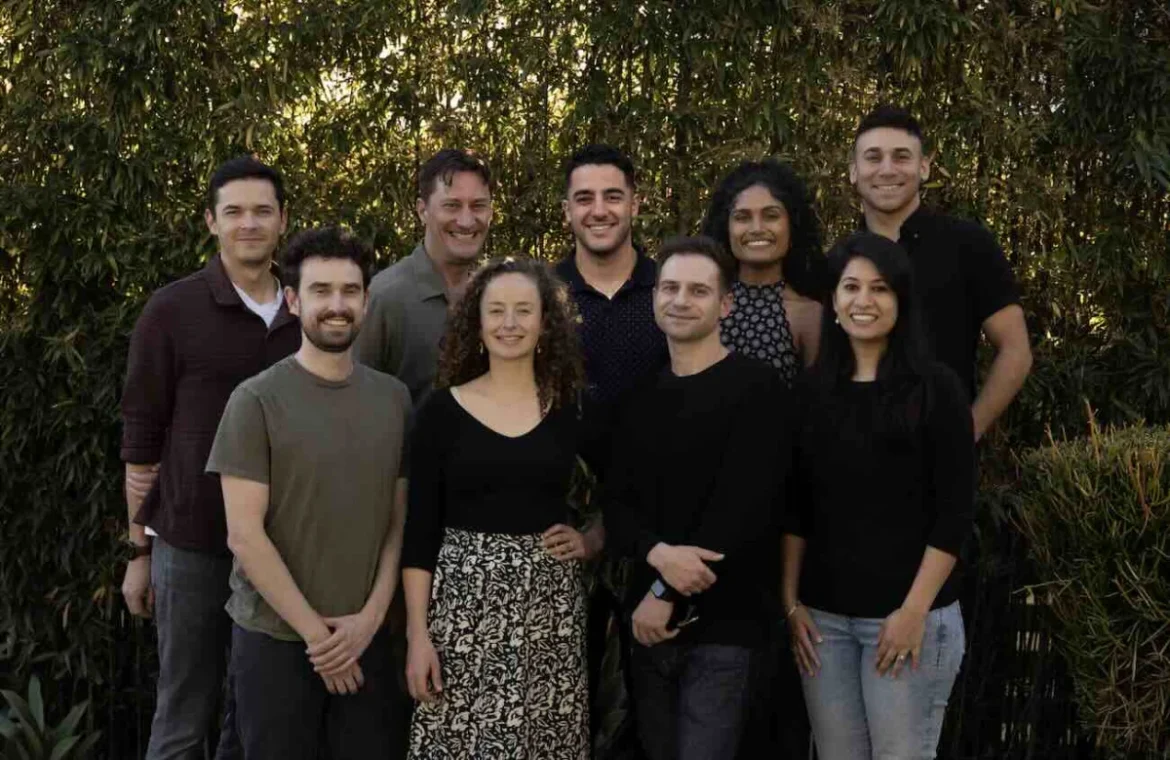
The modern global economy faces an existential paradox: while aggregate wealth reaches unprecedented heights, wealth concentration has ballooned to levels that render the disparities of the Gilded Age look comparatively egalitarian. Traditional venture capital and corporate investment frameworks have long prioritized hyper-scale and personal financial payouts for founders and shareholders, frequently externalizing the true social and ecological costs onto local communities. As traditional Main Streets, localized agricultural networks, and community banking institutions find themselves increasingly hollowed out by corporate consolidation, a growing cohort of investors, philanthropists, and creators is seeking structural alternatives. Enter World Within, a nonprofit organization founded in 2024 that operates at the nexus of impact investing and cinematic storytelling, pioneering a blueprint to redirect capital toward community-owned businesses and amplify their narratives on a global stage.
Main Facts and Organizational Framework
Launched in 2024, World Within was established by Iranian-American investor and social entrepreneur Rostam Zafari—formerly the chief investment officer at family office Sage Hill Investors—alongside writer and producer Dylan Mulick and investor Emma Ratcliffe. The organization proceeds from a fundamental thesis: transitioning toward a more equitable economic future requires a dual overhaul of both capital flows and cultural narratives.
To operationalize this vision, World Within implements a two-pronged solution. On the financial front, the World Within Community Ownership Fund—a donor-advised fund housed at ImpactAssets—channels tax-deductible capital from philanthropists and impact investors directly into community-owned enterprises and regional infrastructure projects. Rather than traditional grant-making, which offers finite capital infusions with limited accountability loops, World Within deploys patient capital into businesses structured around localized ownership. Once these investments yield returns, the capital is recycled to fund subsequent community-driven enterprises.
Prominent portfolio investments include the Old Salt Co-Op, which has successfully stewarded over 50,000 acres of regeneratively managed grasslands, and Warsaw Federal, a federally chartered mutual savings institution headquartered in Cincinnati, Ohio, that provides vital financial access to historically underserved urban communities.
Complementing its financial engine is World Within Studios, a media production arm that harnesses the power of film, television, and audio programming to support the businesses, communities, and socio-economic frameworks backed by the fund. By producing high-end media content, the organization seeks to bridge the chasm between dense financial mechanisms and public consciousness, ensuring that decentralized economic models receive the cultural visibility historically reserved for extractive corporate conglomerates.
Chronology of Growth and Strategic Milestones
The trajectory of World Within reflects a carefully orchestrated strategy blending financial deployment with digital-first media distribution.
The foundational concepts for the organization coalesced in the years preceding its formal 2024 launch, driven by Zafari’s observations of deepening wealth inequality and economic consolidation. Recognizing that standard financial vehicles were fundamentally misaligned with the needs of localized, decentralized businesses, the founders set out to build an institutional framework capable of funding and publicizing structural alternatives.
By late 2025, World Within Studios achieved a significant media milestone by launching its flagship 10-episode YouTube documentary series, How to Change the World, on October 10, 2025. Produced in collaboration with Religion of Sports—the Los Angeles-based media studio founded in 2017 by athletic icons Tom Brady and Michael Strahan alongside Gotham Chopra—the series challenged traditional founder narratives by spotlighting leaders whose primary metric of success is societal contribution rather than personal wealth accumulation. Executive producers on the project included a high-profile roster of industry veterans: Zafari, Mulick, Chopra, billionaire entrepreneur Mark Cuban, award-winning film producer Geralyn Dreyfous, and Religion of Sports Executive Vice President Victor Buhler.
Concurrently, World Within established a companion podcast series hosted by Zafari, featuring long-form interviews with prominent systemic thinkers and change-makers. Guests included Brian Boland (co-founder of The Delta Fund and Unlock Ownership), veteran sports film producer Mike Tollin, best-selling author and historian Rutger Bregman, and philanthropist Kat Taylor.
Within weeks of its autumn 2025 debut, the organization’s YouTube channel rapidly expanded, surpassing 55,000 subscribers and generating over 2.5 million combined views. This organic digital traction validated the founders’ deliberate decision to bypass traditional network gatekeepers and leverage self-distribution models.
Supporting Data, Case Studies, and Project Profiles
The efficacy of World Within’s investment-storytelling nexus is demonstrated through its portfolio case studies, which feature prominently across its media properties.
The inaugural episode of How to Change the World, released in September 2025, chronicled Coral Vita, a Bahamas-based for-profit ecological enterprise founded in 2015 by Sam Teicher and Gator Halpern. Starting with a modest $1,000 university grant from Yale, the founders launched their inaugural commercial coral farm in 2019. Their innovative approach—capable of growing resilient coral species up to 50 times faster than natural rates—earned them the prestigious 2021 Earthshot Prize in the "Revive Our Oceans" category. By 2025, Coral Vita secured an $8 million Series A funding round led by Builders Vision, with participation from Katapult Ocean, iAlumbra, Aureolis Ventures, Colorado Coral, and Rising Tide, enabling large-scale restoration initiatives across the Bahamas, Saudi Arabia, and the United Arab Emirates.
Another notable portfolio and media subject is the SAGE Development Authority, a 100% Native-led public power authority established by the Standing Rock Sioux Tribe in the wake of widespread environmental protests against the Dakota Access Pipeline. SAGE bridges Indigenous land stewardship with advanced renewable energy infrastructure to achieve regional energy independence and foster localized economic sovereignty. Following early support from the Honnold Foundation, SAGE announced a multi-year partnership centered on the Anpetu Wi Wind Farm—a projected 235 MW facility poised to become the first tribally owned and operated utility-scale wind farm in the United States, projected to generate upwards of $100 million over 25 years for reinvestment into tribal community projects.
Beyond its flagship docu-series, World Within Studios has cultivated an extensive portfolio of acclaimed independent cinema. Notable productions include Makayla’s Voice: A Letter to the World, a documentary short exploring a teenager with severe autism utilizing a letter board to communicate, which won Best Documentary Short at the Tribeca Festival and secured an Academy Award shortlist placement. Shuffle, an intimate investigative feature exploring the multi-billion-dollar addiction treatment industry, claimed the Grand Jury Award at the SXSW Film & TV Festival and earned a Humanitas Prize nomination. Additionally, The Voice of Hind Rajab, detailing the harrowing efforts of Palestine Red Crescent Society volunteers attempting to rescue a young girl in conflict-torn Gaza, garnered nominations for both Academy Awards and Golden Globes.
Official Responses and Industry Perspectives
The mission-driven framework championed by World Within has drawn enthusiastic endorsements from prominent figures across sports, finance, and entertainment.
Billionaire entrepreneur and investor Mark Cuban, widely known for his tenure on the ABC reality series Shark Tank—where he deployed approximately $20 million across more than 85 competitive business deals—has emerged as a vocal advocate for World Within’s community-centric methodology. Contrasting World Within’s approach with the high-stakes, competitive environment of traditional venture showcases, Cuban emphasized the value of long-term structural problem-solving.
"Rostam and Dylan built something different: a series that skips the crash-and-burn stories and instead follows entrepreneurs who are actually solving problems and building something that lasts in their communities," Cuban stated in a press release accompanying the launch of the docu-series. "World Within isn’t just filming that work. They’re funding it. That’s the kind of entrepreneurship I want more people to see."
Co-founder Rostam Zafari has consistently underscored the necessity of shifting cultural paradigms alongside financial infrastructure. "The traditional entrepreneur story rewards scale and personal payout, often without asking what the true cost is on people and communities," Zafari noted. By deploying patient capital and coupling financial instruments with high-production-value journalism, the organization aims to make cooperative, decentralized business models culturally legible and financially viable.
Producer Dylan Mulick echoed this sentiment, highlighting the deliberate stylistic choices driving the studio’s output. "We are following individuals who are sacrificing personal gain to solve huge problems, some of which may never be solved, against extraordinary headwinds," Mulick observed. "By blending investigative journalism with a premium, stylized cinematic aesthetic, we are presenting these narratives not as passive interest pieces, but as dynamic blueprints for systemic change."
Broader Impact and Strategic Implications
The emergence of organizations like World Within signals a structural maturation within the impact investing sector. Historically, impact-driven enterprises and funds have excelled at identifying environmental and social market failures but have frequently struggled with narrative reach, remaining siloed within academic case studies, specialized impact reports, and professional conferences. By utilizing digital-first distribution and cinematic storytelling, World Within is effectively bypassing traditional distribution bottlenecks in the media industry while simultaneously validating decentralized economic alternatives for a mass audience.
The strategic decision to rely on open platforms like YouTube—amassing millions of views without surrendering editorial control to traditional network buyers—demonstrates a viable alternative model for independent impact media. Furthermore, upcoming content pipelines, including an upcoming feature documentary chronicling AFC Wimbledon—an English professional football club entirely owned and operated by its fans—alongside planned companion series such as How We Make Our Stuff and How To Invest In Communities, indicate an institutional commitment to long-term movement building.
As economic inequality persists as a defining global challenge, models that decentralize ownership, retain capital within vulnerable regions, and harness modern media to shift cultural values offer a compelling counter-narrative to corporate extraction. By proving that community-owned enterprises can successfully scale, secure institutional capital, and capture public imagination, World Within provides a tangible roadmap for the future of democratic economic participation.
