
The modern clean energy transition faces a fundamental paradox: while solar and wind generation have become exceptionally cheap and abundant, the electrical grid remains structurally unequipped to store intermittent power for multi-day periods. Traditional lithium-ion battery systems excel at short-duration storage, typically lasting four to six hours, making them ideal for electric vehicles and brief peak-load shaving. However, they remain economically and chemically unsuited for the prolonged periods of low renewable generation often referred to in the utility sector as the "dunkelflaute"—dark, windless weeks that can cripple green grids. Enter Form Energy, a long-duration energy storage pioneer that has spent nearly a decade developing an iron-air battery system engineered to store electricity for 100 hours at a cost competitive with traditional fossil fuel peaker plants.
The Genesis of a Grid-Scale Revolution
Founded on first-principles physics, Form Energy assembled what industry insiders frequently describe as the "battery Avengers." Chief Executive Officer Mateo Jaramillo, who previously spearheaded Tesla’s stationary energy storage division, united legendary MIT materials scientist Yet-Ming Chiang as Chief Scientist and Billy Woodford as Chief Technology Officer. The foundational premise of the company relied on the simplest and most abundant materials available on Earth: iron and air.
By leveraging iron—which is exceptionally cheap, globally abundant, and chemically stable—alongside atmospheric oxygen, the founding team engineered a reversible rusting process. During discharge, the battery oxidizes iron to release electricity; during charge, an electrical current reverses the process, turning the rust back into clean iron. This elegant chemistry bypasses the soaring costs, geopolitical supply chain vulnerabilities, and material scarcity associated with lithium, cobalt, and nickel.
The technical audacity of the project demanded rigorous independent verification. Early institutional backers and venture investors routinely enlisted academic consultants, including prominent Harvard materials science professors, to validate the thermodynamic and electrochemical viability of the iron-air chemistry. Following exhaustive multi-month technical audits, the academic consensus returned a unanimous endorsement, signaling that the physics underpinning Form Energy’s vision were sound.
Navigating Production Hell and Industrial Revival
The path from laboratory benchtop to commercial manufacturing represents one of the most perilous trials in industrial history—a crucible commonly designated by hardware entrepreneurs as "production hell." Following in the operational footsteps of industrial disruptors like Tesla and SpaceX, Form Energy committed itself to the arduous task of American reindustrialization.
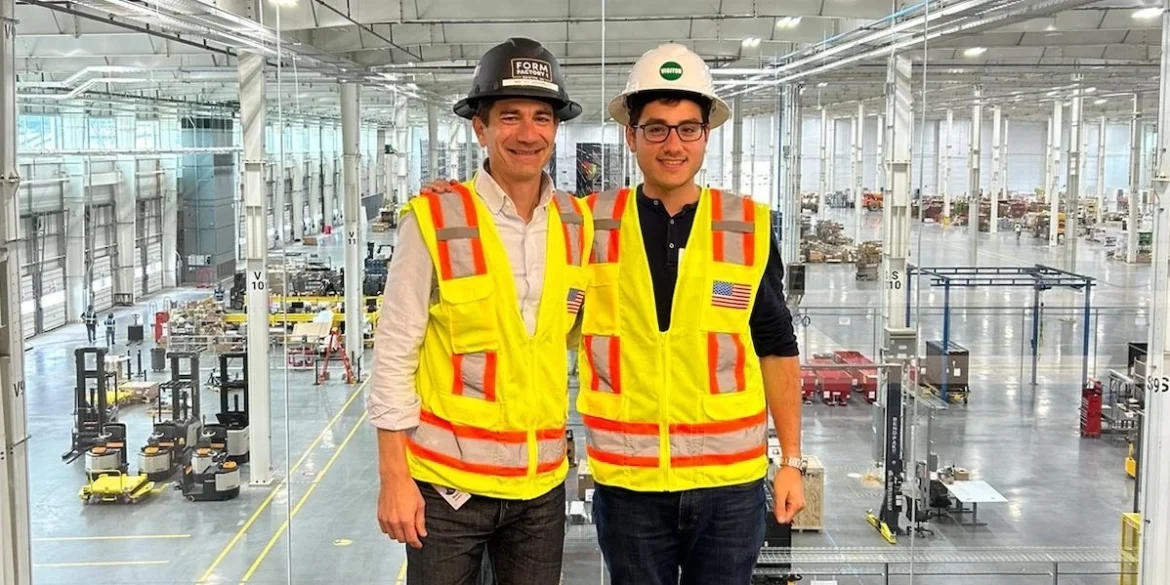
In mid-2023, the enterprise commenced construction on its first high-volume manufacturing facility, strategically sited on the grounds of a shuttered steel mill in Weirton, West Virginia. This geographic choice carried profound symbolic and economic weight. Rather than outsourcing manufacturing to established Asian battery hubs, Form Energy chose to build a domestic supply chain in a historic heartland community, breathing new economic life into an abandoned industrial brownfield and creating more than 400 specialized manufacturing jobs.
The transition from blueprint to automated mass production, however, proved formidable. CEO Mateo Jaramillo relocated his family from San Francisco to Western Pennsylvania, establishing a daily presence near the Weirton plant to navigate the engineering bottlenecks, supply chain friction, and calibration challenges typical of first-of-a-kind gigafactories. This hands-on, live-it-and-breathe-it leadership style eventually broke the impasse, paving the way for commercial-scale output.
The Artificial Intelligence Catalyst and Utility Adoption
While Form Energy spent years patiently cultivating deep, collaborative relationships with regional utility providers and energy regulators, macroeconomic and technological forces converged to dramatically accelerate market demand. The explosive rise of generative artificial intelligence and the proliferation of hyperscale data centers triggered an unprecedented surge in electricity consumption across the United States.
Data center operators, bound by strict corporate sustainability mandates and constrained by local grid capacity, suddenly found that reliable, round-the-clock baseload power was an existential necessity rather than a corporate luxury. The grid upgrade cycle transformed overnight from a long-term modernization objective into an urgent national security and economic imperative.
This market pivot culminated in a landmark milestone: a massive, billion-dollar commercial deployment agreement with a major hyperscale buyer, widely reported to involve tech giant Google. This commercial validation confirmed that Form Energy had achieved its foundational objective—delivering a multi-day energy storage system capable of directly undercutting and replacing fossil-fuel-fired gas peaker plants.
Strategic Capital Infusion and the Sequoia Partnership
The convergence of technological validation, commercial traction, and macroeconomic tailwinds caught the attention of Silicon Valley venture capital firm Sequoia Capital. Initial due diligence on the enterprise had begun years prior, sustained by venture partners who tracked the company through exhaustive private market evaluations.
By late 2024, following the successful navigation of production milestones, Sequoia partners re-engaged with leadership. Although Form Energy had already closed its substantial Series G financing round, the firm’s investment committee was so captivated by Jaramillo’s operational clarity and execution-driven mindset that they negotiated an entry. While initial internal proposals contemplated a $50 million investment stake, the partnership ultimately doubled the commitment to $100 million following a formal pitch presentation at Sequoia’s headquarters.
Market Implications and the Terawatt Horizon
The broader implications of Form Energy’s commercial scaling extend far beyond private venture returns. The United States electricity grid currently operates on a paradigm designed for twentieth-century fossil fuel generation. Integrating hundreds of gigawatts of intermittent wind and solar power requires massive, structural balancing capabilities.
According to energy market analysts, the total addressable market for long-duration energy storage represents a terawatt-scale opportunity over the coming decades. Without multi-day storage solutions capable of bridging seasonal and weather-induced generation gaps, the long-term scaling potential of artificial intelligence, advanced manufacturing, and electric transportation faces a hard physical ceiling.
As Form Energy transitions from early pioneering deployments to nationwide grid integration, the enterprise stands at the intersection of American industrial revival and clean energy innovation. Much like the foundational decades experienced by SpaceX in aerospace or Nvidia in semiconductors, the grueling groundwork laid over the past ten years has positioned the company to underpin the next generation of global power infrastructure.
