
Since the 1989 debut of the cultural phenomenon comic strip Dilbert, the archetype of the corporate IT professional has remained largely frozen in time. Characterized by bureaucratic red tape, form-filling, access-granting, and endless ticket triage, the traditional role has long been viewed as a reactionary bottleneck rather than a driver of core innovation. Despite tectonic shifts in the global technology landscape over the past three decades, the foundational mechanics of enterprise IT support have stubbornly persisted.
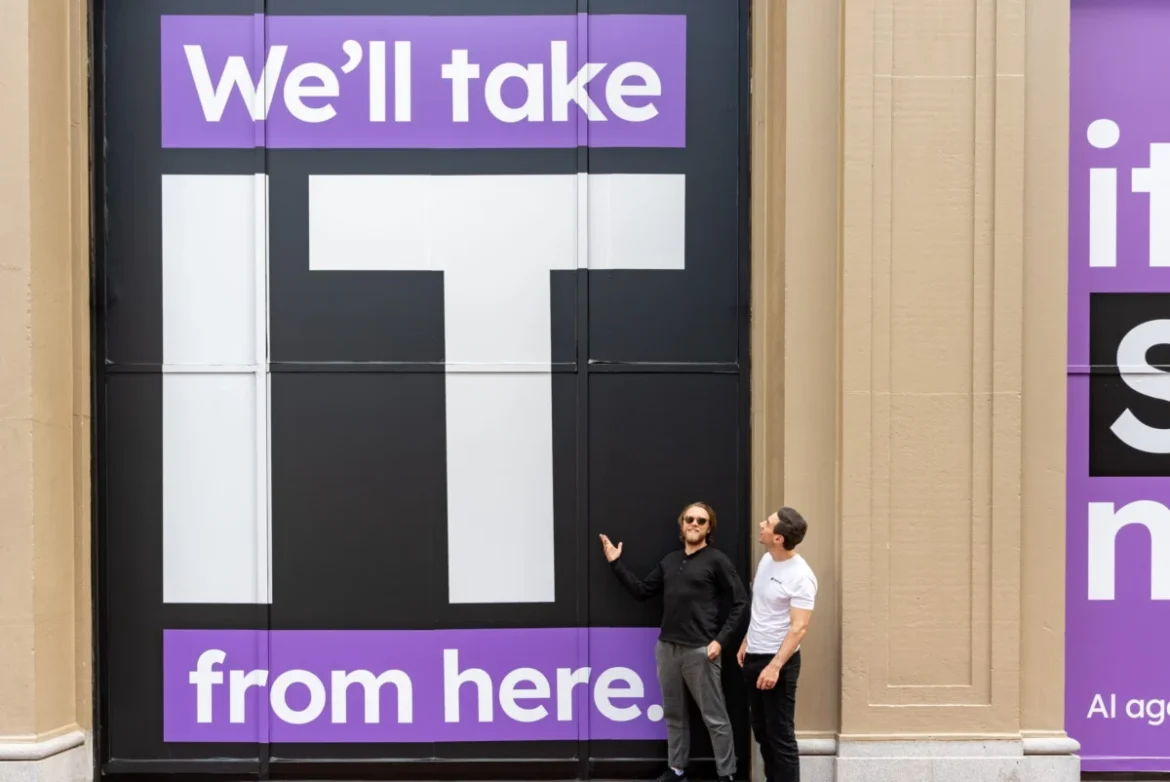
Enter Jake Stauch and his co-founder Alex McLeod. Through their automated service management platform, Serval, the duo is attempting to dismantle this decades-old paradigm. By harnessing the capabilities of modern agentic artificial intelligence, Serval aims to transition IT professionals from beleaguered ticket-takers into enterprise builders, tool architects, and essential data guardians.
Yet, the genesis of Serval was forged not in immediate triumph, but in the crucible of a grueling, seven-year entrepreneurial failure that nearly broke its founder.
From Neuroscience to Stalled Momentum: The Long Road to Product-Market Fit
Stauch’s path to redefining enterprise software was shaped by a childhood defined by relentless ambition. Raised by a mother who excelled as a world-class billiards player and magazine founder, and a father whose career relied on sales hustle and interpersonal relationships, Stauch internalized the belief that absolute dedication could yield mastery over any discipline. Whether excelling in standardized testing, diving deep into literature, or majoring in biology at Duke University, Stauch approached his pursuits with uncompromising intensity.
During his junior year at Duke, Stauch joined a newly formed entrepreneurship house that required residents to actively build their own startups as a condition of stay. By the summer before his senior year, he secured a $5,000 grant to explore measuring advertising efficacy through brain scans, founding a company initially called NeuroSpire. He soon took a leave of absence from Duke to pursue the venture full-time, pivoting the business into NeuroPlus—a hardware and software company designing custom video games and headsets to improve focus in children diagnosed with ADHD.
Backed by angel investments and driven by a mission to capture a share of the pharmaceutical market, Stauch poured seven years of his life into the enterprise. However, the startup ultimately collided with a harsh reality of the venture ecosystem: a narrow, unsustainable product-market fit. With acquisition costs skyrocketing and a target demographic restricted to affluent parents whose children experienced adverse reactions to traditional medications, growth stalled.

Following a failed acquisition bid by Bose in late 2018, Stauch was forced to wind down the company, leaving him grappling with significant personal debt and the psychological weight of a prolonged failure. For a practitioner accustomed to believing that sheer willpower could surmount any obstacle, the collapse of NeuroPlus demanded a period of profound reevaluation.
Finding Footing in Silicon Valley: The Verkada Chapter
Seeking stability after the closure of NeuroPlus, Stauch transitioned into product management, a traditional landing spot for failed founders lacking a full-time engineering background. After rigorous self-study and interview preparation, he found himself navigating the recruitment pipeline at major tech giants, including Facebook’s virtual reality division.
However, corporate interviews quickly highlighted a mismatch between Stauch’s founder-driven instincts and the bureaucratic realities of middle management at scale. A pivotal pivot occurred when he visited Verkada, a physical security company headquartered in the San Francisco Bay Area. Drawn to the high-energy, fast-paced environment, Stauch accepted a product role, eventually spending four years managing product verticals and sharpening his operational acumen within a hyper-growth, revenue-generating enterprise.
It was during his tenure at Verkada that Stauch met Alex McLeod, an accomplished startup chief technology officer. By late 2023, as Verkada began shuttering the product vertical Stauch oversaw, and with his first child on the way, Stauch realized he was ready to return to company building. Sharing a vision for solving systemic inefficiencies observed across enterprise technology departments, Stauch and McLeod began laying the groundwork for a new venture.
The Birth of Serval and the Rise of Agentic AI
From their years serving enterprise clients in the physical security space, Stauch and McLeod had identified a glaring operational disconnect. Internal IT teams across organizations of all sizes frequently articulated grand visions for automating routine tasks—such as password resets, access provisioning, and device troubleshooting—yet rarely possessed the engineering bandwidth to build them. The prevailing sentiment among IT staff was consistently the same: the friction of building workflows in legacy automation tools outweighed the effort of executing tasks manually.
By early 2024, the rapid maturation of generative and agentic artificial intelligence provided the missing technical puzzle piece. Stauch and McLeod recognized that AI agents could eliminate the administrative overhead of workflow creation, making the construction of automated processes faster and more intuitive than manual execution.
Securing early backing from prominent venture capital firms—including First Round Capital, General Catalyst, and Sequoia Capital—the co-founders officially launched Serval. The company’s moniker paid homage to Stauch’s academic background in zoology and his new professional frontier in service management.

Chronology of Growth: From Design Partners to Enterprise Traction
- December 2023: Co-founders Jake Stauch and Alex McLeod formally align on launching an IT automation platform, coinciding with the birth of Stauch’s first child.
- Early 2024: Serval secures early-stage venture funding following seed term sheets from top-tier institutional investors.
- Mid-to-Late 2024: The company expands its engineering team and signs early design partners, including Ramp and Perplexity, to test nascent iterations of the platform.
- April 2025: Ramp concludes its design partnership due to early product immaturity, prompting a strategic evaluation by Serval’s leadership.
- May 2025: Serval closes Perplexity as its first official paying customer after rapidly engineering custom features tailored to enterprise requirements.
- Early 2026: A broader cultural and enterprise embrace of agentic AI—catalyzed by tools like Claude Code and Cowork—dramatically accelerates market familiarity with natural language workflow automation, fueling a surge in inbound demand for Serval.
Analyzing the Impact: Reshaping Enterprise Workflows
Serval’s core platform addresses a fundamental drain on corporate productivity: the manual triage of IT service desks. In a traditional corporate environment, a routine request for software access submitted via team communication channels like Slack is routed to an IT professional facing a mounting backlog of support tickets.
With Serval integrated into enterprise systems, an AI agent intercepts the request, evaluates it against pre-approved security protocols, and instantly provisions access without human intervention. This shift drastically reduces ticket resolution times and slashes operational friction.
Industry analysts note that Serval arrives at a critical juncture in enterprise software. While legacy service management giants like ServiceNow have long dominated the system-of-record landscape, newer entrants are leveraging agentic AI to challenge traditional architectures from the ground up. According to Sequoia partner Anas Biad, Serval’s ambition extends far beyond a surface-level chatbot integration, positioning itself as a foundational system of record and automation for enterprise IT.
Broader Implications for the Workforce
As Serval expands its footprint into Fortune 500 organizations, its founders are casting their vision beyond IT departments. The long-term trajectory of the platform targets manual workflows across human resources, finance, and other enterprise verticals.
For Stauch, the ultimate validation of his entrepreneurial journey is no longer defined by avoiding failure, but by building a resilient organization capable of navigating rapid technological change. By lifting the administrative burden off technical personnel, Serval aims to liberate the modern workforce, allowing IT professionals to transition from reactive support staff into the central AI powerhouses of their organizations.
