The landscape of venture capital is undergoing a seismic shift as the initial wave of generative AI enthusiasm matures into a more tactical, utility-driven phase. Leading this transition is Sandhya Venkatachalam, a veteran operator-turned-investor who spent the formative years of her career navigating the data center hardware and communication software sectors before transitioning to institutional venture capital. Her journey, which includes high-stakes roles at companies like Skype and Social Capital, has culminated in the launch of Axiom Partners, a $52 million venture fund explicitly designed to bridge the gap between advanced artificial intelligence and the industrial "real world."
A Proven Track Record in Tech Evolution
Venkatachalam’s professional trajectory offers a roadmap of the technological milestones that paved the way for today’s AI boom. Early in her career, she held a pivotal product leadership role at a data center hardware firm, which was successfully acquired by Cisco. She later joined Skype, serving as a product executive during the platform’s hyper-growth phase before its acquisition by Microsoft. These experiences provided her with a foundational understanding of the complexities inherent in scaling data-heavy infrastructure.
Her transition into venture capital was marked by a tenure as a general partner at Social Capital, where she was an early advocate for AI-centric hardware. Most notably, she led institutional investments in Groq, the AI chipmaker now recognized as a critical player in the high-speed inference space. Her time at Khosla Ventures further refined her investment philosophy, emphasizing a move away from the traditional, pedigree-obsessed model of Silicon Valley toward a focus on pragmatic, outcome-oriented innovation.
Axiom Partners: A New Model for AI Investment
The establishment of Axiom Partners represents a departure from standard venture structures. With $52 million in committed capital, the fund is specifically focused on industries often overlooked by the "Big Tech" venture crowd—sectors such as construction, heavy industrial operations, and insurance.
What sets Axiom apart is its internal architecture. Venkatachalam has populated the firm with a cohort of active AI practitioners—engineers, product managers, and developers who are currently building and deploying AI in the field. These individuals serve as part-time partners, maintaining their primary roles in the industry to ensure that Axiom’s investment thesis remains tethered to real-world technical realities. This "operator-first" model ensures that the fund is not merely betting on pitch decks, but on technology that has been stress-tested by the same individuals who are evaluating it.
Furthermore, the firm utilizes a proprietary internal tool dubbed the "Axiom Brain." This system is designed to synthesize vast amounts of market data, identify emerging patterns in AI deployment, and accelerate the diligence process. In a market where speed is often synonymous with success, this automated layer provides the firm with a distinct competitive advantage.
Defining AI for the Real World
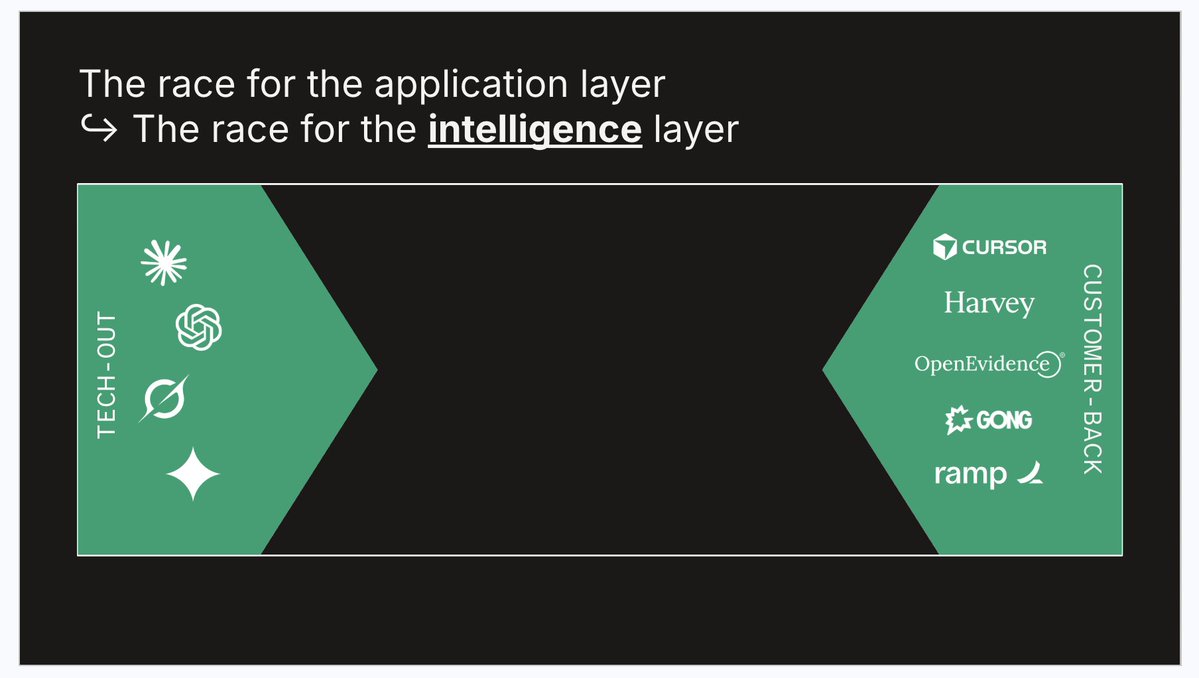
A central pillar of the Axiom thesis is the distinction between "software as a tool" and "AI as a digital worker." According to Venkatachalam, the current market is saturated with software wrappers that offer marginal efficiency gains. In contrast, Axiom prioritizes startups that are designed to automate complex, high-value tasks—effectively replacing or augmenting labor roles rather than just providing a dashboard.
This focus manifests in the fund’s rigorous diligence process. Even at the design-partner stage, Axiom evaluates whether a company’s product is capable of commanding significant budget allocation from potential customers. The firm targets contract values in the high six figures, arguing that if an AI solution is truly replacing a manual labor process, it should be priced accordingly. This approach contrasts sharply with the low-cost, high-volume subscription models typical of SaaS companies.

The Durability of "Last Mile" AI
A frequent criticism of the current AI boom is the lack of defensibility among startups building on top of foundation models. As large language models become commoditized, the ability to maintain a competitive edge becomes increasingly difficult. Venkatachalam addresses this by focusing on "last mile" integration.
In industrial sectors, the value of an AI solution is derived from its deep integration with existing operational workflows. A startup that understands the proprietary data, sensory inputs, and mechanical constraints of a construction site or a manufacturing plant creates a moat that is difficult for generalist AI companies to cross. By training on unique, non-public data and solving specific, high-stakes problems, these companies become deeply embedded in the customer’s business, making them significantly more durable in the face of competition.
Reflecting on the Groq Investment
The success of her early investment in Groq remains a foundational element of Venkatachalam’s strategy. In 2016, the investment landscape was vastly different, and inference—the process of running a trained model—was not yet a recognized investment category. By identifying the need for specialized infrastructure before it was obvious, Venkatachalam demonstrated the value of patience and conviction.
This experience taught her that being "early" requires a tolerance for market ambiguity. She notes that at the time of the Groq investment, the necessity for specialized inference chips was not yet a consensus view. Today, she applies the same logic to the application layer of AI: identifying which workflows will be transformed before the market reach its saturation point.
Risk Management and Portfolio Strategy
Axiom Partners operates with a clear-eyed understanding of the venture asset class. With a fund size of $52 million and an intent to make approximately 35 investments, the firm acknowledges that failure is a statistical inevitability. Venkatachalam estimates that roughly half of the companies in the portfolio may fail to achieve the desired exit trajectory.
However, the firm’s strategy is built around the "power law" of venture capital, where a single outlier success can provide returns for the entire fund. By investing early and backing companies that target massive, underserved markets, Axiom positions itself to capture significant upside while accepting the inherent risks of pioneering new categories.
Broader Implications for the AI Ecosystem
The rise of firms like Axiom Partners signals a maturing phase in the AI investment cycle. As the "gold rush" for foundation models and chatbots cools, the focus is shifting toward practical utility. The implications for the broader tech sector are clear:
- Sector Specialization: Venture capital is moving toward "verticalized AI," where companies are valued based on their expertise in specific industrial domains rather than their general intelligence capabilities.
- Labor-Budget Capture: The success of AI companies will increasingly be measured by their ability to capture enterprise labor budgets, moving beyond IT spending to operational spending.
- The Rise of Operator-Investors: The traditional "finance-first" investor model is facing competition from practitioners who use their day-to-day work to inform investment decisions, creating a more sophisticated and technical standard for due diligence.
As Sandhya Venkatachalam continues to deploy capital, her approach serves as a litmus test for the industry. If Axiom Partners succeeds in identifying and scaling the next generation of industrial AI, it will likely accelerate a broader transition where the most valuable companies are not those that create the most clever chatbots, but those that solve the most complex, high-value problems in the physical world.