
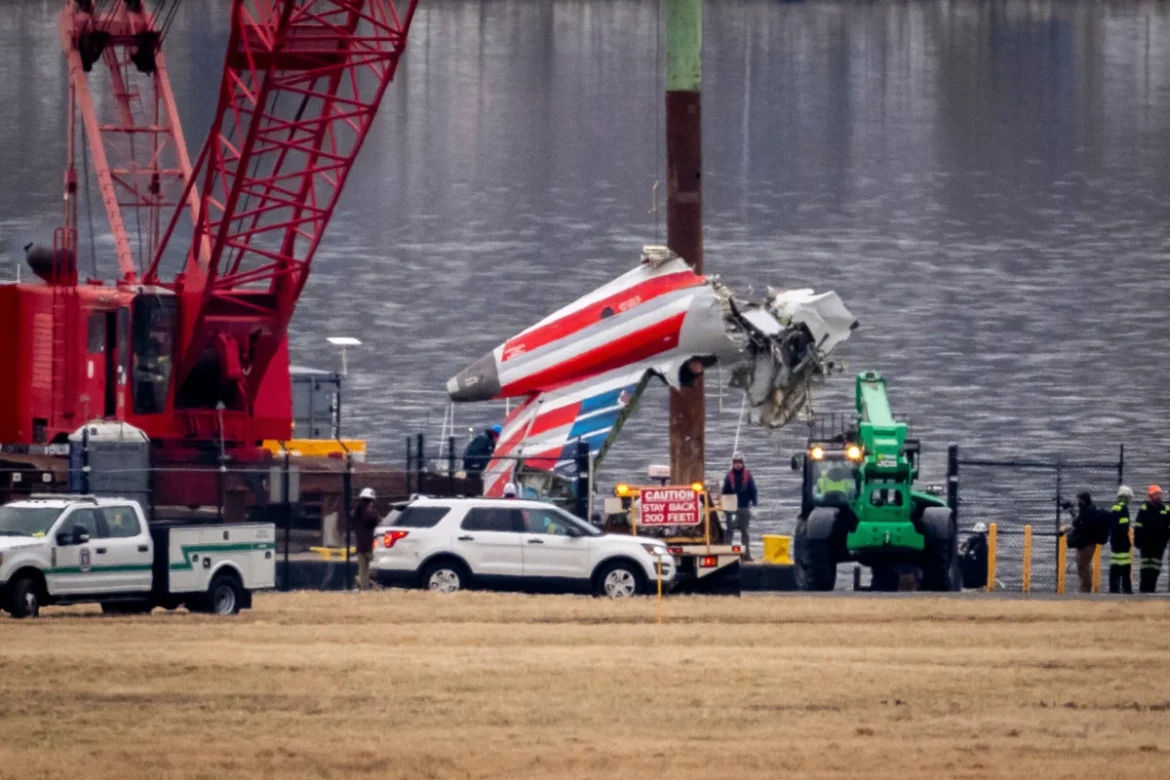
In a decisive move to overhaul national aviation safety protocols, the U.S. House of Representatives on Tuesday approved the Alert Act, a legislative package designed to prevent midair collisions through the mandatory implementation of advanced tracking technology. The bill comes as a direct response to the catastrophic midair collision that occurred on January 29, 2025, when an American Airlines passenger jet and a U.S. Army Black Hawk helicopter collided over the Potomac River near Washington, D.C. While the House vote represents a significant milestone in the legislative process, the bill now faces a skeptical Senate and the scrutiny of victims’ families, who argue that the current language remains insufficient to prevent future disasters.
The legislation, formally known as the Aviation Loss Evaluation and Reporting Transparency (Alert) Act, was sponsored by Representative Sam Graves (R-MO), Chairman of the House Transportation and Infrastructure Committee, and Representative Rick Larsen (D-WA). It passed with an overwhelming 396-10 majority, meeting the two-thirds threshold required for expedited passage under a suspension of the rules. Despite this bipartisan momentum, the road ahead in the Senate remains complicated, as key lawmakers and safety advocates call for more stringent timelines and the elimination of loopholes regarding military flight operations.
The Tragedy of January 29, 2025: Context and Background
The impetus for the Alert Act stems from one of the darkest days in recent American aviation history. On the morning of January 29, 2025, an American Airlines flight originating from Wichita, Kansas, was on its final approach to Ronald Reagan National Airport (DCA). Simultaneously, a U.S. Army Black Hawk helicopter was conducting a routine training mission within the same congested airspace.
The two aircraft collided at a high altitude before plunging into the icy waters of the Potomac River. All 67 people on board both aircraft perished, making it the deadliest aviation accident on U.S. soil since 2001. The tragedy sent shockwaves through the nation, particularly within the athletic community, as the passenger manifest included 28 prominent members of the U.S. figure skating community traveling to a national event.
Subsequent investigations by the National Transportation Safety Board (NTSB) revealed a harrowing series of systemic failures. The board determined that the primary cause of the crash was the lack of situational awareness between the two pilots, exacerbated by air traffic control’s reliance on outdated "see and avoid" protocols. Crucially, the investigation highlighted that the Black Hawk helicopter was not broadcasting its position via modern tracking systems, a standard practice for military aircraft on "stealth" training missions that the NTSB now argues should be restricted in civilian corridors.
Technical Foundations: The Role of ADS-B Systems
At the heart of the legislative debate is a technology known as Automatic Dependent Surveillance-Broadcast (ADS-B). While most commercial aircraft are currently equipped with "ADS-B Out," which broadcasts their location to ground stations and other aircraft, many are not equipped with "ADS-B In." The "In" component allows pilots to see a real-time digital map of all surrounding traffic on their cockpit displays, providing them with the same level of situational awareness as air traffic controllers.
The NTSB has been advocating for the universal adoption of ADS-B In technology since 2008. NTSB Chairwoman Jennifer Homendy has been a vocal proponent of the technology, stating repeatedly that if both the American Airlines jet and the Army Black Hawk had been equipped with functional ADS-B In systems, the collision would have been entirely preventable. The Alert Act, as passed by the House, mandates the installation of these systems across a broader range of aircraft operating in busy Class B and Class C airspaces.
However, the House bill also includes a requirement for the next generation of collision avoidance systems to be installed alongside ADS-B In. This provision has drawn concern from the Air Line Pilots Association (ALPA). The union argues that linking the two systems could inadvertently delay safety improvements, as the new collision avoidance software has not yet been fully certified for commercial use.
Legislative Friction: House vs. Senate
While the House celebrated the passage of the Alert Act, the Senate is pursuing a different path. Senators Ted Cruz (R-TX) and Maria Cantwell (D-WA) have been developing the ROTOR Act, a separate piece of legislation that proponents claim offers more rigorous oversight and faster implementation deadlines.
Senator Cruz took to social media prior to the House vote to warn his colleagues that the Alert Act "lacks the critical improvements our aviation system needs." The Senate’s primary grievances with the House bill center on two issues: the timeline for FAA implementation and the lack of a "hard" requirement for military aircraft to broadcast their locations during non-sensitive training flights.
The families of the 67 victims have also entered the fray, forming a powerful advocacy group to lobby for the strongest possible protections. In a statement released on Tuesday, the group emphasized that the "flying public should not have to wait longer than necessary" for these reforms. They expressed specific concern that the House bill’s current language might allow the military to continue flying "dark" during routine maneuvers over densely populated areas, a practice they believe contributed directly to the deaths of their loved ones.
Chronology of Events and Safety Warnings
To understand the gravity of the current legislative battle, it is necessary to look at the timeline of warnings that preceded the January 2025 crash:
- 2008: The NTSB first issues a formal recommendation for the FAA to require ADS-B In technology for all aircraft operating in high-traffic areas.
- 2010-2020: The FAA implements the "ADS-B Out" mandate, but stops short of requiring "ADS-B In," citing costs and technical integration challenges for smaller aircraft and the military.
- 2023: Multiple "near-miss" incidents at Reagan National Airport and JFK International Airport prompt a series of safety summits.
- January 29, 2025: The American Airlines-Black Hawk collision occurs.
- June 2025: The NTSB releases its preliminary report, citing "systemic weaknesses" and a "culture of complacency" regarding helicopter routes in the D.C. area.
- Late 2025: The ROTOR Act is introduced in the Senate but fails to gain enough traction for a cross-chamber consensus.
- February 2026: The House amends and passes the Alert Act, sending it to the Senate for a final showdown.
Systemic Issues at Reagan National Airport
The NTSB investigation did not stop at technology; it also took aim at the structural design of the airspace around Reagan National Airport. The board found that a specific helicopter route, which intersected with the approach path for the airport’s secondary runway, had not been reviewed for safety in over a decade.
Representative Suhas Subramanyam, who represents a Northern Virginia district heavily impacted by the crash, highlighted these findings during the House floor debate. "It wasn’t just one issue that led to this crash," Subramanyam noted. "It was a combination of systemic problems—poor route design, over-reliance on pilot visual scanning, and a lack of integrated technology—that made our national airspace unsafe."
The Alert Act seeks to address these concerns by requiring the FAA to conduct a comprehensive review of all low-altitude helicopter routes in major metropolitan areas every two years. This would ensure that as air traffic patterns change, safety margins are maintained.
Analysis of Implications and Future Outlook
The passage of the Alert Act is a testament to the political pressure generated by high-profile aviation disasters. However, the true test of the legislation will lie in its implementation. If the Senate successfully negotiates stricter timelines, the FAA will be forced to accelerate its "NextGen" modernization program, which has been plagued by delays and budget overruns for years.
From an industry perspective, the cost of retrofitting thousands of aircraft with ADS-B In and new collision avoidance systems will be substantial. Smaller regional carriers and general aviation pilots have expressed concerns about the financial burden, though the bill includes provisions for federal grants to offset some of these costs.
For the military, the bill represents a significant shift in doctrine. The U.S. Army’s long-standing policy of allowing helicopters to fly without broadcasting locations for "operational security" is now being weighed against the safety of the civilian population. The Lilleys, whose son served as the co-pilot on the ill-fated American Airlines flight, have become the faces of this push for transparency. They argue that the "risks in today’s operating environment" require a total rethink of how military and civilian aircraft share the sky.
As the Alert Act moves to the Senate, the eyes of the aviation world remain fixed on Washington. The 67 lives lost on that icy January morning have become a catalyst for change, but whether that change will be sufficient to prevent the next midair collision remains a subject of intense debate among lawmakers, safety experts, and the families left behind. The coming weeks of negotiation will determine if the Alert Act is a historic leap forward or a missed opportunity for comprehensive reform.
