
The Amsterdam-based Agri3 Fund, a pivotal vehicle in the global effort to transition toward sustainable food systems, has announced a new capital infusion of $2.4 million from the SDG Impact Finance Initiative (SIFI). This fresh commitment marks a significant milestone for the fund as it continues to mobilize private capital for climate-smart agriculture and the protection of critical forest ecosystems in emerging markets. The funding from SIFI, a Swiss public-private partnership dedicated to accelerating the UN Sustainable Development Goals (SDGs), reinforces the growing international consensus on the efficacy of blended finance models in addressing the dual crises of food security and climate change.
The Agri3 Fund was conceptualized as a solution to the persistent financing gap facing smallholder farmers and agri-businesses in developing nations. While agriculture remains a primary driver of economic activity in these regions, it is also a major contributor to deforestation and greenhouse gas emissions. Conversely, farmers are among the most vulnerable to the impacts of a warming planet. By providing risk guarantees, credit enhancements, and technical assistance, Agri3 enables commercial financial institutions to extend credit to borrowers who would otherwise be deemed too risky under traditional lending criteria.
The Genesis and Evolution of the Agri3 Fund
The foundations of the Agri3 Fund were laid during the World Economic Forum in Davos in 2020. Launched as a collaborative effort between Rabobank and the United Nations Environment Programme (UNEP), the fund set an ambitious target to mobilize $1 billion in private capital for sustainable land use and forest restoration. The initiative was anchored by a combined $80 million commitment, with the Dutch government and Rabobank each contributing $40 million.
This partnership represented a unique alignment of interests: Rabobank brought its extensive expertise in global food and agriculture financing, while the UNEP provided the environmental framework and oversight necessary to ensure the fund’s activities aligned with international climate goals. The primary objective was to de-risk investments in "forest-positive" agriculture, incentivizing banks to lend to projects that prioritize soil health, water conservation, and the preservation of high-conservation-value forests.
Since its inception, Agri3 has systematically expanded its capital base. In 2023, the fund secured $13.5 million from the Global Environment Facility (GEF), a multilateral family of funds dedicated to confronting biodiversity loss and climate change. This was followed by a substantial $35 million commitment in first-loss capital from FMO, the Dutch entrepreneurial development bank. The inclusion of first-loss capital is a critical component of the blended finance structure, as it acts as a "buffer" that absorbs initial losses, thereby protecting more senior investors and making the fund more attractive to institutional private capital.
Strengthening the Blended Finance Model
The recent $2.4 million contribution from SIFI serves as more than just a financial boost; it is a strategic endorsement of Agri3’s operational model. Ineke Keers, a representative for Agri3, emphasized the importance of this partnership, noting that SIFI’s commitment acts as a strong signal of confidence in the transformative potential of sustainable agriculture.
SIFI’s involvement is particularly noteworthy due to its origin as a Swiss initiative that brings together the State Secretariat for Economic Affairs (SECO), the Swiss Agency for Development and Cooperation (SDC), the UBS Optimus Foundation, and the Credit Suisse Foundation (now part of UBS). By channeling Swiss expertise in finance and development into Agri3, the initiative strengthens the fund’s ability to reach underserved markets.
The blended finance mechanism used by Agri3 is designed to solve a specific market failure. In many emerging economies, commercial banks are hesitant to lend to smallholder farmers or cooperatives due to a lack of collateral, volatile commodity prices, and the long-term nature of sustainable transitions—such as the years required for a degraded pasture to become productive again. Agri3’s guarantees cover a portion of the potential loss on these loans, effectively lowering the barrier for local banks to participate in the green transition.
Strategic Partnerships and Global Implementations
Agri3’s impact is best understood through its diverse portfolio of projects across Latin America, Africa, and Asia. These initiatives demonstrate how technical assistance combined with financial guarantees can fundamentally alter agricultural practices on the ground.
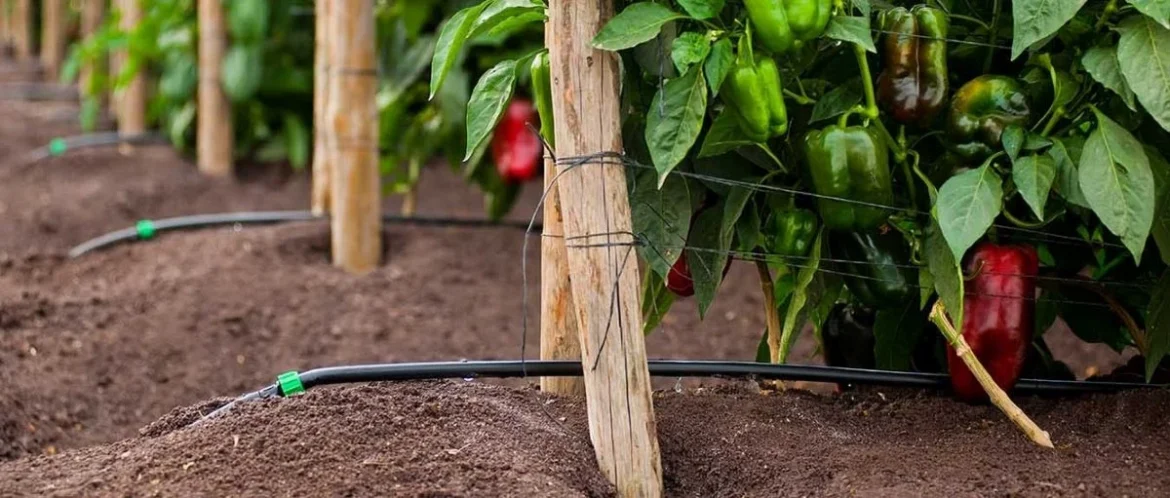
One of the fund’s most prominent recent collaborations involves a partnership with Rivulis, a global leader in micro-irrigation solutions based in Israel and Singapore, and DLL, a global asset finance company owned by Rabobank. Together, they launched a blended finance program aimed at scaling sustainable irrigation practices. The pilot program, based in Peru, focuses on transitioning farmers from traditional flood irrigation to high-efficiency drip systems. This transition not only reduces water consumption by up to 50% but also increases crop yields and reduces the need for chemical fertilizers, which are often leached into groundwater during flooding.
In Brazil, Agri3 has significantly expanded its "Renova Pasto" program in collaboration with Rabobank. Initially launched as a 10-year loan program to help cattle farmers restore degraded pastureland, the initiative has now been broadened to include major cash crops like soy. The restoration of degraded land is a vital strategy for preventing further encroachment into the Amazon and Cerrado biomes. By making existing farmland more productive through sustainable soil management, the program reduces the economic incentive for deforestation.
The fund’s reach also extends to the African continent. In 2024, Agri3 provided a partial guarantee for a $115 million sustainability-linked revolving credit facility for the ETG Group. ETG is a major global player in the agricultural supply chain, and the loan is specifically tied to key performance indicators (KPIs) regarding environmental and social governance. These include training farmers in climate-smart techniques, improving smallholder livelihoods, and implementing rigorous anti-deforestation protocols across ETG’s extensive supply chains in Africa.
The Role of Technical Assistance
A distinguishing feature of the Agri3 Fund is its Technical Assistance (TA) facility. Managed by IDH (The Sustainable Trade Initiative), the TA facility provides the "soft" infrastructure necessary for projects to succeed. This includes conducting environmental and social impact assessments, training local bank staff on how to evaluate sustainable agriculture projects, and providing direct agronomic support to farmers.
The TA facility ensures that the financial guarantees provided by the fund are backed by sound agricultural practices. For instance, if a farmer receives a loan to transition to organic fertilizers, the TA facility might provide the training necessary to ensure the transition does not lead to a temporary drop in yield. This holistic approach reduces the default risk of the loans and ensures that the environmental outcomes—such as carbon sequestration or biodiversity protection—are measurable and verifiable.
Addressing the $1 Billion Ambition
While the $2.4 million from SIFI is a smaller increment compared to the anchor investments, it represents the continued momentum required to reach the fund’s $1 billion target. The urgency of this goal is underscored by the current state of global climate finance. According to various UN reports, trillions of dollars are needed annually to meet the Paris Agreement goals, yet only a fraction of current climate finance is directed toward agriculture and land use, despite the sector’s outsized impact on the environment.
The Agri3 model is increasingly being viewed as a blueprint for how public and private sectors can co-invest. By using public funds (from the Dutch and Swiss governments) to de-risk the environment, the fund makes it possible for private entities (like Rabobank and other commercial lenders) to deploy capital at scale.
Broader Implications and Future Outlook
The expansion of the Agri3 Fund comes at a time when the global agricultural sector is under intense scrutiny. The European Union’s Deforestation Regulation (EUDR) and similar legislative movements worldwide are putting pressure on global supply chains to prove that their products—ranging from beef and soy to cocoa and coffee—are not linked to forest loss. Agri3’s focus on traceability and forest-positive lending positions its partners to stay ahead of these regulatory shifts.
Furthermore, the fund’s emphasis on smallholder farmers addresses a critical social dimension of the climate crisis. Smallholders produce approximately one-third of the world’s food, yet they often lack the financial resilience to survive climate-induced shocks like droughts or floods. By facilitating longer-term loans and sustainable practices, Agri3 helps build "climate resilience," ensuring that these farmers can maintain their livelihoods while contributing to global food security.
Looking ahead, the success of Agri3 will likely encourage the creation of similar regional or commodity-specific funds. The integration of "sustainability-linked" mechanisms—where interest rates are tied to environmental outcomes—is also expected to become a standard feature of agricultural lending.
As the Agri3 Fund continues to deploy its capital, the focus will remain on demonstrating that sustainable agriculture is not just an environmental necessity but a viable and profitable investment class. The support from SIFI, GEF, FMO, and the anchor investors provides the financial runway needed to prove this thesis across diverse geographies and commodities. In the high-stakes race to restore the world’s forests and stabilize the climate, the Amsterdam-based fund stands as a vital bridge between the worlds of high finance and the front lines of global agriculture.
