
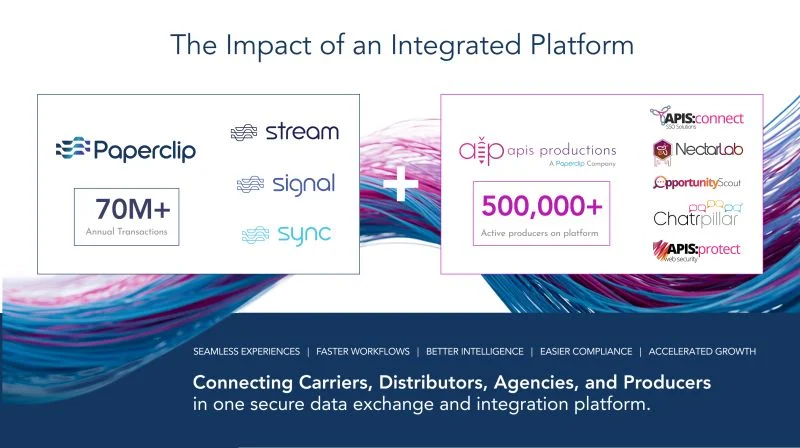
HACKENSACK, N.J. — In a strategic move designed to reshape the landscape of digital insurance distribution and workflow orchestration, Paperclip, Inc. (OTC: PCPJ) formally announced the completion of its acquisition of substantially all operating assets of Apis Productions, LLC on October 21, 2026. The transaction marks a significant milestone for Paperclip, a prominent player in secure data exchange, document intelligence, workflow automation, and enterprise orchestration solutions. By absorbing the specialized capabilities of Apis, Paperclip aims to bridge long-standing operational gaps within the insurance ecosystem, specifically targeting fragmentation among carriers, distributors, brokerage general agencies (BGAs), independent marketing organizations (IMOs), producers, and technology solution providers.
Following the close of the transaction, the acquired entity will operate under the name Apis Technologies, LLC, functioning as a wholly owned subsidiary of Paperclip, Inc. Corporate leadership structured the integration to maintain business continuity, explicitly preserving the established brand identity, customer relationships, and specialized technical skill sets that Apis has cultivated over years of industry service. Peri Lane, the founder and current chief executive officer of Apis Productions, will remain at the helm of the subsidiary, transitioning into the role of President to direct day-to-day operations and guide the company through its next phase of growth.
Strategic Rationale and Core Capabilities
The acquisition brings together two highly complementary operations within the InsurTech sector. Paperclip has historically built its reputation on robust backend capabilities, including secure data exchange, advanced document intelligence, and complex workflow orchestration. These tools help insurance enterprises process, verify, and route critical business information securely across digital channels.
Conversely, Apis Technologies contributes a robust front-end and connective layer to the combined enterprise. The company’s portfolio includes specialized insurance-industry websites and client-facing portals, a seamless connectivity network bridging leading third-party InsurTech platforms, secure hosting and infrastructure security, custom application development, targeted digital marketing, and specialized artificial intelligence (AI) consulting services.
By unifying these front-end engagement tools with Paperclip’s back-end secure data architecture, the combined organization intends to deliver a more unified, frictionless digital experience. Industry analysts note that one of the most persistent bottlenecks in insurance technology is the operational disconnect between client-facing distribution channels and back-office processing systems. The Paperclip-Apis merger is strategically positioned to tackle this friction head-on, offering a continuous technological bridge from initial customer acquisition and portal interaction all the way through document processing, underwriting workflows, and policy administration.
Leadership Perspectives on the Merger
Corporate executives from both organizations have emphasized that customer continuity and cultural alignment remain the highest priorities throughout the integration phase.
Ron Alexander, Chief Executive Officer of Paperclip, underscored the strategic depth of the acquisition in an official statement released following the transaction. “The acquisition of Apis represents an important step in Paperclip’s evolution into a broader, connected insurance technology platform,” Alexander stated. He noted that the integration of Apis’s distribution expertise with Paperclip’s secure data exchange and workflow orchestration tools creates a comprehensive value proposition for the market. “Together, we can serve customers more comprehensively and accelerate our vision for a more connected, secure, and intelligent insurance ecosystem,” Alexander added.
Echoing this sentiment, Peri Lane, President of Apis Technologies, pointed to the mutual benefits for existing clients and the broader insurance community. “This combination creates an exciting opportunity for our customers, our team, and the insurance community we serve,” Lane observed. She emphasized that Paperclip’s shared commitment to practical innovation and strong client relationships will empower the subsidiary to scale its offerings while maintaining the high-touch responsiveness its customer base relies on. “By bringing together Apis’s digital and distribution capabilities with Paperclip’s secure data and platform technologies, we will be able to deliver greater value while preserving the responsiveness and industry focus that our customers expect,” Lane concluded.
Integration Roadmap and Operational Continuity
To mitigate disruption risks, Paperclip has announced a phased integration roadmap. The initial focus centers heavily on ensuring absolute customer and employee continuity, facilitating seamless knowledge transfer between engineering and operational teams, and achieving immediate operational alignment. Existing Apis customers will continue to receive uninterrupted support across all active projects, product lines, and legacy service commitments. Furthermore, Paperclip has confirmed that there are no immediate alterations planned for the existing Apis operating model, allowing clients to experience a seamless transition without abrupt changes to service delivery or account management structures.
As the integration progresses into subsequent phases, leadership plans to systematically introduce Paperclip’s broader suite of document intelligence and workflow orchestration tools to the Apis client base, while simultaneously leveraging Apis’s digital marketing and AI consulting capabilities across Paperclip’s enterprise accounts. Comprehensive resources, including detailed frequently asked questions (FAQs) for stakeholders, have been published via Paperclip’s corporate communications channels to provide transparency throughout the transition.
Background Context and Industry Evolution
The InsurTech landscape has undergone rapid maturation over the past decade, shifting from isolated point solutions toward consolidated, platform-based ecosystems. Historically, insurance carriers and independent distribution networks struggled with legacy technology debt, highly siloed databases, and disconnected software applications. These architectural limitations frequently resulted in prolonged processing cycles, elevated operational costs, and friction-heavy user experiences for producers and policyholders alike.
In recent years, market demand has decisively tilted toward end-to-end orchestration platforms capable of uniting disparate software stacks. Companies like Paperclip have responded by enhancing their capabilities in automated document processing and secure cloud infrastructure. Meanwhile, specialized digital agencies and portal developers like Apis have focused on optimizing the interface between insurance carriers, independent brokers, and consumers. The convergence of these two distinct capability sets reflects a broader macro-trend across financial technology and insurance sectors: the pursuit of integrated, AI-driven ecosystems that eliminate administrative overhead through intelligent automation.
Broader Market Implications and Future Outlook
The completion of this transaction positions Paperclip, Inc. to capture an expanded share of the evolving InsurTech market. By absorbing Apis Technologies, Paperclip not only broadens its technological footprint but also secures deeper, established relationships across the insurance distribution channel—particularly among independent marketing organizations and brokerage general agencies that rely heavily on specialized web portals, custom applications, and integrated connectivity networks.
As insurers face mounting pressure to modernize their digital infrastructure in response to changing consumer expectations and rising operational costs, technology providers that offer unified solutions spanning front-end distribution and back-end workflow orchestration hold a distinct competitive advantage. The success of the Paperclip and Apis integration will likely serve as a benchmark for how legacy technology providers can successfully acquire and incorporate specialized digital agencies to create cohesive, end-to-end enterprise platforms.
While forward-looking statements released by Paperclip outline ambitious growth trajectories and anticipated synergies, executive leadership remains focused on disciplined execution. By prioritizing operational continuity and customer retention during the initial stages of the merger, Paperclip and Apis Technologies have established a stable foundation from which to scale their combined offerings across the broader insurance landscape.
