
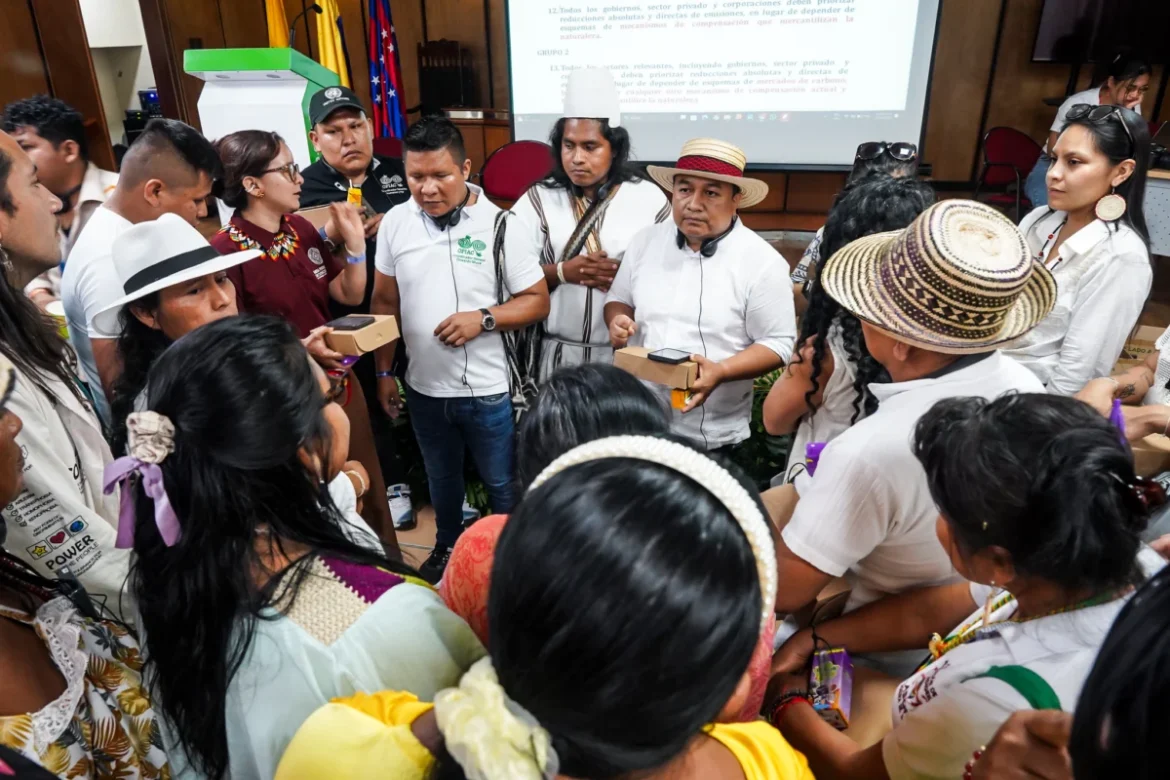
The global effort to address the climate crisis has entered a transformative phase with the emergence of the Santa Marta process, a diplomatic breakthrough designed to bypass the traditional gridlock of United Nations-led negotiations. For decades, the United Nations Framework Convention on Climate Change (UNFCCC) and its annual Conference of the Parties (COP) have served as the primary arena for environmental diplomacy. However, the inherent requirement for consensus among nearly 200 nations has frequently resulted in watered-down agreements that manage the symptoms of climate change—greenhouse gas emissions—while failing to address the primary cause: the production and consumption of coal, oil, and gas. In April, a coalition of 57 nations, representing approximately one-third of the global gross domestic product (GDP), convened in the Colombian port city of Santa Marta for the first-ever conference on Transitioning Away from Fossil Fuels (TAFF). This gathering marked the beginning of a "second track" of climate diplomacy, one characterized by speed, candor, and a focus on the practical mechanics of decommissioning the fossil fuel era.
The Genesis of the Santa Marta Process
The impetus for the Santa Marta conference was born out of frustration during the COP28 summit in Dubai and the subsequent preparations for COP30 in Brazil. While COP28 produced the "Dubai Consensus," which for the first time explicitly mentioned "transitioning away from fossil fuels in energy systems," the roadmap for achieving this goal remained contentious. When attempts to include a concrete fossil-fuel transition roadmap in the official COP30 outcome text were blocked by major oil-producing nations, a subset of ambitious countries decided to create a parallel forum. Co-hosted by Colombia and the Netherlands, the Santa Marta meeting was designed not as a replacement for the UN process, but as a "complementary space" where willing participants could discuss the "how" of the transition rather than debating the "if."
The conference brought together an unprecedented mix of stakeholders, including subnational governments, nongovernmental organizations (NGOs), leading climatologists, trade unions, and Indigenous Peoples. This diverse participation was intended to ensure that the transition strategies discussed were not merely theoretical but grounded in the social and economic realities of the communities most affected by the energy shift. Tzeporah Berman, the British Columbia-based founder and chair of the Fossil Fuel Treaty Initiative, noted that the event was historic because it shifted the focus from managing emissions to addressing the unchecked proliferation of extraction.
A Two-Speed Approach to Climate Diplomacy
The emergence of the Santa Marta process highlights a growing divergence in international climate policy, often described as "two-speed diplomacy." The first speed is the formal UN process, which moves at a deliberate pace to maintain global consensus. While essential for universal buy-in, this speed is often insufficient to meet the urgent timelines dictated by climate science. The second speed, exemplified by Santa Marta, involves "coalitions of the willing"—nations prepared to move faster and more aggressively.
Wesley Morgan, a research associate at the Institute for Climate Risk and Response at the University of New South Wales, emphasizes that this second track offers a breath of fresh air for climate policy. By operating outside the formal veto power of the world’s largest petrostates, the Santa Marta participants were able to engage in creative problem-solving. Notably, the invitee list excluded the United States, Russia, China, India, and Middle Eastern oil giants. This exclusion was strategic; it allowed countries like Norway, Canada, and Brazil—who are themselves oil producers but are seeking transition pathways—to speak openly about the challenges of economic diversification without the discussions being derailed by parties seeking to protect the status quo at all costs.
Strategic Work Streams and the Roadmap to 2027
The Santa Marta conference was not merely a talk shop; it resulted in the creation of three distinct work streams designed to provide actionable intelligence for the global community. These streams focus on the most difficult aspects of the transition:
- Economic Diversification and Macroeconomic Stability: This stream addresses the "petro-dependency" of many developing and middle-income nations. For countries where fossil fuel exports account for a significant portion of the national budget, a rapid phaseout could lead to economic collapse without international support and new industrial strategies.
- Supply and Demand Transformation: This focuses on the synchronized reduction of both the production of fossil fuels and the infrastructure that demands them. It aims to prevent a "supply shock" while ensuring that new investments are funneled into renewable energy rather than stranded fossil fuel assets.
- International Cooperation and Climate Diplomacy: This stream seeks to build the political weight necessary to eventually integrate these "high-ambition" goals back into the formal UN system.
The findings from these work streams were summarized in a final report released on June 23 during London Climate Action Week. This report is expected to serve as a foundational document for the COP31 presidency, as Turkey prepares to host the summit. Furthermore, a second TAFF conference has already been scheduled for 2027, to be co-hosted by Tuvalu and Ireland, ensuring that the momentum generated in Colombia is maintained over the long term.
The Economic and Security Context
The discussions in Santa Marta were heavily influenced by the contemporary geopolitical landscape. The ongoing conflict in the Middle East, the volatility of the Strait of Hormuz, and the energy disruptions caused by the war in Ukraine have redefined fossil fuel phaseout as a matter of national security and economic stability. Participants argued that a transition to decentralized, renewable energy sources would insulate nations from the price shocks and supply chain vulnerabilities inherent in the global oil and gas markets.
Data from the International Energy Agency (IEA) supports this shift, suggesting that global demand for oil and gas is set to peak before 2030. However, the Santa Marta process recognizes that a "natural" market peak is not fast enough to limit global warming to 1.5 degrees Celsius. Therefore, the process emphasizes "managed decline"—a planned, equitable reduction in production that protects workers and prevents the catastrophic economic fallout of a sudden market crash.
Subnational Leadership and the "Ottawa Model"
The Santa Marta process has also empowered subnational actors to take a more prominent role. Organizations such as C40 Cities and the Under2 Coalition, which represents states and regions, have begun prioritizing fossil fuel phaseout within their own jurisdictions. Historically, these groups focused on energy efficiency and renewable energy adoption. Following the Santa Marta conference, they are now developing "handbooks and toolkits" for local governments to actively constrain fossil fuel production and infrastructure within their borders.
Analysts from the International Institute for Sustainable Development (IISD), Natalie Jones and Paola Yanguas Parra, suggest that the Santa Marta process follows the "build it and they will come" model, similar to the 1997 Ottawa Treaty which banned anti-personnel landmines. That treaty also began outside the formal UN framework because a small group of nations was frustrated by the slow pace of traditional disarmament talks. Once a robust framework was established and a significant number of countries signed on, the UN eventually adopted the principles. The Santa Marta process aims to achieve a similar "accumulation of political weight" that will eventually make a global fossil fuel non-proliferation treaty or a similar binding mechanism irresistible.
Implications for Global Policy
The significance of the Santa Marta process lies in its ability to break the "emissions-only" taboo. For decades, it was diplomatically unacceptable to talk about limiting the supply of fossil fuels; the focus was entirely on carbon capture or reducing consumption. By creating a space where production limits are on the table, the Santa Marta process has fundamentally shifted the boundaries of climate diplomacy.
As the world moves toward COP29 in Baku and COP30 in Belém, the "spirit of Santa Marta" will likely act as a catalyst for more ambitious national pledges (Nationally Determined Contributions). The success of this track will be measured by how many of the 57 participating nations can translate the Santa Marta recommendations into domestic law and whether they can convince larger emitters to join the "fast-speed" track of climate action.
While challenges remain—particularly regarding the financing of the transition in the Global South—the Santa Marta process offers a pragmatic and hopeful alternative to the often-stagnant waters of global climate negotiations. It represents a recognition that the era of fossil fuels will not end because the world runs out of oil, but because a coalition of nations decided to build a more stable, secure, and sustainable future.
