
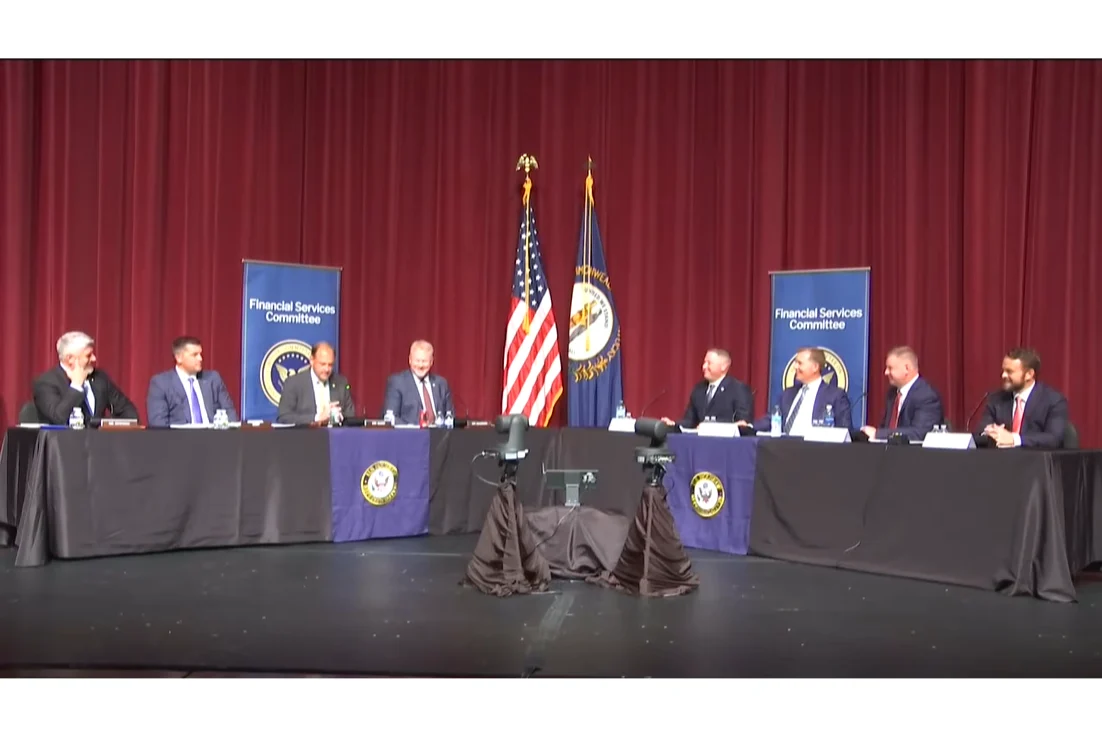
The modern landscape of American finance is undergoing a profound transformation, characterized by rapid consolidation and an increasingly complex regulatory environment that critics argue is stifling the growth of community-based financial institutions. In Richmond, Kentucky, representatives from the House Financial Services Subcommittee on Financial Institutions convened a critical field hearing today to examine the Main Street Capital Access Act (H.R. 6955). The proposed legislation aims to recalibrate the regulatory burden placed on small banks and, perhaps more crucially, to provide a viable pathway for the formation of de novo—or brand new—banks, which have seen a precipitous decline in frequency over the last two decades.
The hearing served as a platform for industry leaders to articulate a central thesis: the "one-size-fits-all" regulatory model, designed primarily for multi-billion-dollar global institutions, is inadvertently crushing the entrepreneurial spirit of local banking. By mandating excessive compliance infrastructure, federal regulators have effectively created a barrier to entry so high that it has fundamentally altered the competitive landscape of the American economy.
The Legislative Framework of H.R. 6955
The Main Street Capital Access Act is designed as a targeted intervention to reverse the stagnation in bank formation. Among its most significant provisions, the bill seeks to codify a permanent two-year phase-in period for newly formed financial institutions to meet federal capital requirements. This would provide nascent banks with the necessary breathing room to build their deposit bases and loan portfolios before being subjected to the full weight of standardized capital mandates.
Furthermore, the legislation addresses the bureaucratic bottlenecks that often delay strategic growth. It establishes a strict 120-day deadline for regulatory agencies to render decisions on bank merger and acquisition (M&A) applications. Proponents argue that in the current climate, these applications often languish in administrative limbo for months or even years, imposing significant legal and operational costs on community banks that lack the vast reserves of their larger counterparts.
Perhaps the most structural change proposed is the requirement that federal agencies explicitly consider an institution’s specific risk profile and business model when crafting new regulations or executing supervisory decisions. By shifting toward a "proportional regulation" model, the bill aims to ensure that a small community bank serving a rural county is not held to the same compliance standards as a global systemically important bank (G-SIB).
A Shrinking Industry: The Data Behind the Decline
The urgency of the hearing is underscored by stark data from the Federal Deposit Insurance Corporation (FDIC). Twenty years ago, the United States boasted thousands more independent financial institutions than it does today. Since the early 2000s, the number of community banks has plummeted by more than 4,500. This trend toward consolidation is often attributed to the high cost of regulatory compliance following the passage of the Dodd-Frank Wall Street Reform and Consumer Protection Act in 2010.
While the post-2008 regulatory environment was intended to enhance systemic stability, it inadvertently created a "compliance tax." For a large bank with billions in assets, the cost of hiring specialized compliance officers and implementing sophisticated cybersecurity and reporting software is a manageable overhead expense. For a community bank with $100 million in assets, those same costs can consume a disproportionate share of annual net income, forcing many to merge with larger entities to achieve economies of scale.
The decline of de novo banks is even more pronounced. In the mid-1990s, the U.S. saw dozens, sometimes hundreds, of new bank charters granted annually. In the years following the 2008 financial crisis, that number hit near-zero. While the market has seen a slight uptick in recent years, the current rate of new bank formation remains insufficient to replace the institutions lost to M&A activity, leading to "banking deserts" in many rural and underserved urban areas.
Perspectives from the Field
The hearing featured testimony from industry veterans who have lived through the evolution of the banking sector. Jason Hawkins, president and CEO of First United Bank and Trust Co., offered a sobering comparison between the industry of the 1990s and the present day. Hawkins, who oversaw the successful launch of his bank in 1996, noted that the barriers to entry today would have been insurmountable for his team back then.
"The regulatory barriers to entry, the capital requirements, and the compliance infrastructure needed just to open the doors would be insurmountable for most entrepreneurial bankers," Hawkins stated. He emphasized that this is not merely a problem for the banking industry, but a systemic issue for local economies that rely on the localized, relationship-based lending that only community banks can provide.
Kyle Aud, president and CEO of Cornerstone Community Bank, provided a firsthand account of the challenges involved in opening a bank in the current era. Cornerstone holds the distinction of being the first bank to launch in its home community of Owensboro, Kentucky, in nearly three decades. Despite their success in raising $27 million—$7 million more than the initial $20 million target—Aud cautioned lawmakers against viewing his bank’s success as the new standard.
"Our ability to clear the hurdle should not be mistaken for evidence that the hurdle is appropriate for every community," Aud testified. He noted that the capital requirements are so stringent that only the largest, most affluent communities in the state could hope to raise the necessary funds to open a new institution. His testimony served as a stark reminder that the current regulatory environment effectively prevents the formation of new banks in rural areas where they are needed most to provide credit to small businesses and agricultural ventures.
The Role of the Kentucky Bankers Association
Timothy Schenk, president and CEO of the Kentucky Bankers Association, framed the legislation as a vital component of a healthy, diverse financial ecosystem. He argued that the current framework fails to account for the fundamental differences between a local bank and a multinational corporation.
"Community banks operate under a regulatory framework that too often fails to account for their size, risk profile, and business model," Schenk said. He expressed strong support for the Main Street Capital Access Act, suggesting that by easing the administrative burden, the industry could shift its focus back toward its core mission: serving customers and fostering local economic development.
The American Bankers Association (ABA) has also signaled its strong support for the bill, emphasizing that the legislative push reflects a broader consensus within the industry that the current regulatory trajectory is unsustainable. With the bill having already cleared the House with broad bipartisan support in July, the shift of the debate to the Senate marks a critical phase in the legislative process.
Analytical Implications: What Happens Next?
The implications of the Main Street Capital Access Act extend far beyond the borders of Kentucky. If enacted, the bill would represent a significant pivot toward "right-sized" regulation. By institutionalizing the requirement to consider an institution’s risk profile, the bill could curb the "regulatory creep" that has defined the last two decades.
Furthermore, the 120-day deadline for M&A decisions could stimulate a more dynamic marketplace, allowing community banks to merge and scale more efficiently, potentially keeping more local banks under local control rather than forcing them into the arms of national conglomerates.
However, critics of the bill—often found within consumer advocacy groups—may argue that easing capital requirements or shortening the review period for mergers could reintroduce systemic risks. These groups often point to the failures of mid-sized banks in early 2023 as evidence that regulatory oversight should be strengthened, not weakened. Proponents of the act argue, however, that these failures were largely due to unique business models and interest-rate risk management failures, not because of a lack of regulation, and that the current bill is specifically targeted at healthy, community-focused institutions.
As the Senate takes up the measure, the debate will likely center on the balance between safety and accessibility. The testimony from the Kentucky field hearing provides a compelling argument that the current status quo is not neutral—it is a choice that favors large, established entities at the expense of local, community-focused competition. The success of the Main Street Capital Access Act will depend on whether lawmakers view the rejuvenation of the community banking sector as a public good that justifies a more flexible approach to federal oversight. The outcome will set the tone for the next generation of American financial entrepreneurship.
