
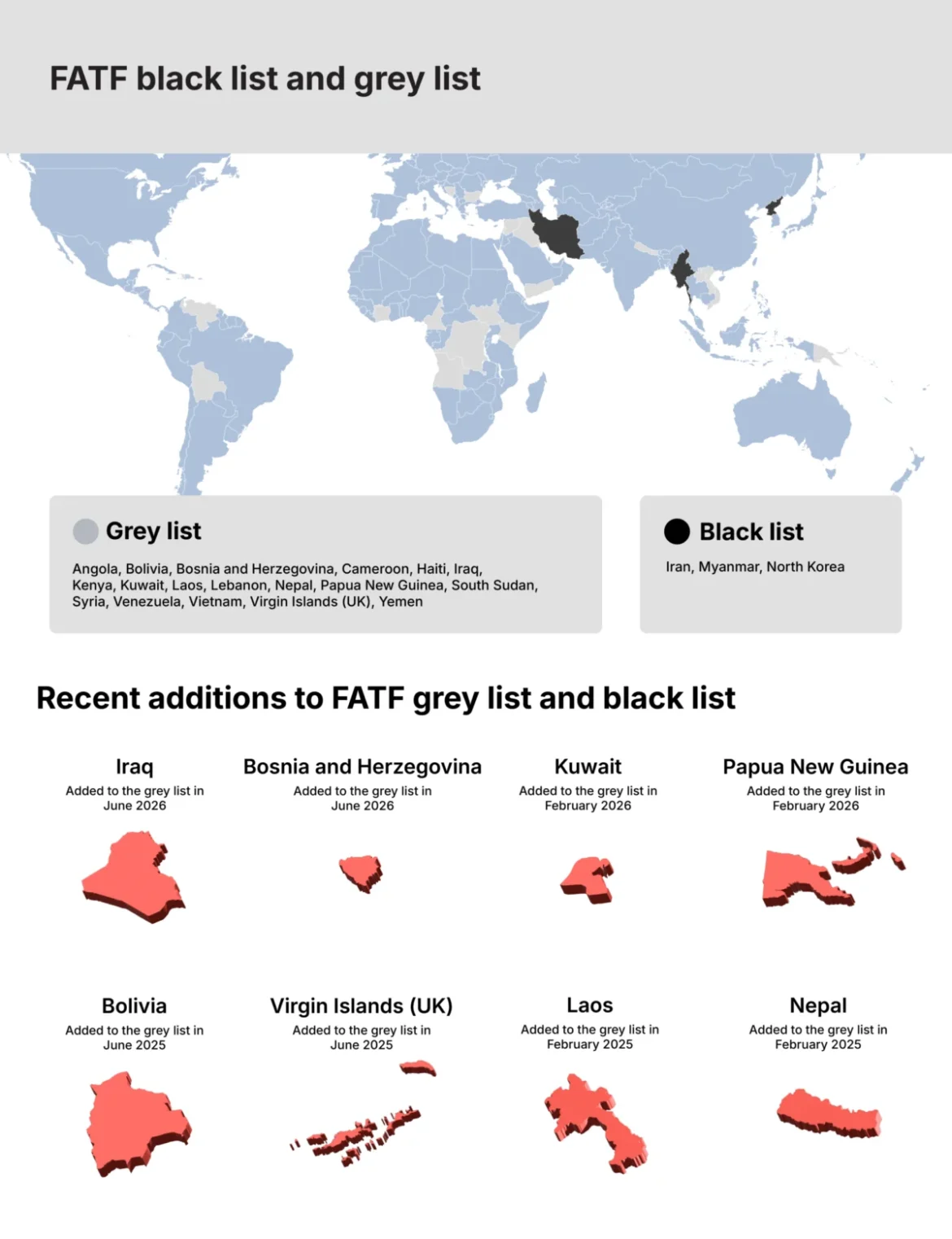
The Financial Action Task Force (FATF) concluded its October 2026 plenary in Paris, held from October 28 to 30, marking the inaugural summit under the leadership of UK President Giles Thomson. Following his transition from the Mexican Presidency in June 2026, Thomson has prioritized the aggressive modernization of global anti-money laundering (AML), countering the financing of terrorism (CFT), and countering proliferation financing (CPF) frameworks. With delegates representing over 200 jurisdictions and various international observer bodies, the event served as a critical checkpoint for the global financial integrity landscape, highlighting a shift toward more targeted, risk-based interventions for developing nations and a heightened focus on the digital asset ecosystem.
The Evolution of the Grey List: Strategic Progress and Stagnation
The "grey list"—formally categorized as jurisdictions under increased monitoring—functions as the primary barometer for country-specific financial risk. For compliance officers and international financial institutions, the removal or addition of a country to this list necessitates immediate updates to internal risk-scoring models and enhanced due diligence (EDD) protocols.
In a move signaling successful remediation efforts, the FATF plenary announced the removal of four jurisdictions: Bulgaria, Côte d’Ivoire, the Democratic Republic of the Congo (DRC), and Monaco. Each removal followed a rigorous on-site evaluation process that verified the completion of mandated action plans.
Bulgaria, which entered the list in October 2023, successfully overhauled its AML/CFT national strategy, specifically addressing deficiencies in the beneficial ownership registry and tightening supervision over high-risk sectors, including virtual asset service providers (VASPs) and currency exchange operators. Similarly, Monaco’s removal, after being listed in June 2024, reflects a significant investment in judicial resources and international legal cooperation, particularly concerning the seizure of criminal assets derived from foreign tax fraud.
Conversely, the plenary served as a stern warning for Vietnam. Having remained on the grey list since June 2023, Vietnam faces mounting pressure as its established deadlines for reform expired in May 2025. The FATF’s public expression of "significant concern" regarding the lack of tangible progress suggests that February 2027 will be a decisive moment. Should Vietnam fail to demonstrate substantial improvement in its VASP regulation and beneficial ownership transparency by that time, it risks facing escalated measures. For global firms, the implication is clear: risk exposure to Vietnam must be closely managed, as the potential for restrictive measures remains high.
The Black List: A Standoff with High-Risk Jurisdictions
The FATF’s "black list," or the list of high-risk jurisdictions subject to a call for action, remains unchanged, featuring the Democratic Republic of Korea (DPRK), Iran, and Myanmar. The retention of these countries reflects their persistent failure to align with international standards, particularly regarding the financing of illicit activities and the proliferation of weapons of mass destruction.
The FATF reiterated its call for countermeasures against the DPRK and Iran. Regarding Iran, the plenary noted that despite limited technical progress, the country’s legal framework remains fundamentally incompatible with FATF standards, particularly in the criminalization of terrorist financing. Myanmar, while currently subject to enhanced due diligence rather than full countermeasures, is under intense scrutiny. The FATF has explicitly linked its concerns to the rapid rise of fraud and cyber-scam operations within the country. The international community is now waiting to see if Myanmar’s proposed "national anti-online scams center" can deliver measurable results before the February 2027 deadline, after which the FATF has signaled it may move to trigger formal countermeasures.
Accelerating the Regulation of Virtual Assets
A central theme of the October 2026 plenary was the urgency of regulating the virtual asset sector. In response to the April 2026 Ministerial Declaration, the FATF has committed to accelerating the implementation of its "Travel Rule" and broader VASP oversight in jurisdictions that serve as hubs for digital asset activity.
The rise of criminal networks utilizing virtual assets for money laundering and sanction evasion has prompted the FATF to launch a new, targeted review process. By moving away from general assessments and toward a system of objective, data-driven criteria, the FATF intends to close regulatory gaps more rapidly. Results from these reviews are scheduled for publication in June and October 2027. This initiative represents a departure from previous, slower-paced evaluations and indicates that the FATF is adopting a more proactive, technological posture to match the speed of modern financial crime.
Combating the Proliferation of Scam Compounds
The plenary also saw the approval of a landmark report on the illicit financial flows linked to "scam compounds." As global financial crime has evolved, these organized, multi-jurisdictional operations have become a top priority for law enforcement. The report, which draws on intelligence from the entire FATF Global Network, serves as a blueprint for dismantling the "crime-as-a-service" business models that support these activities.
This report is the first concrete outcome of the UK Presidency’s roadmap to combat fraud. By identifying the infrastructure of these scams—often involving human trafficking, cyber-fraud, and massive money laundering networks—the FATF aims to provide regulators and financial institutions with a better toolkit to identify and freeze the flow of illicit funds before they reach the international banking system.
Mutual Evaluations and the New Roadmap Approach
The plenary adopted the mutual evaluation reports for Mexico and the United States, providing a comprehensive assessment of each nation’s capacity to detect and disrupt financial crime. A notable shift in the 2026 process is the implementation of a "Roadmap of Key Recommended Actions." Under this new framework, evaluated countries are provided with a three-year timeline to address specific weaknesses. This structure adds a layer of accountability that was historically absent in previous evaluation cycles, ensuring that countries remain focused on actionable improvements rather than merely updating policies on paper.
Supporting Low-Capacity Nations: A Proportionate Approach
Recognizing that the "one-size-fits-all" approach to regulation can disproportionately burden developing economies, the FATF has introduced a new, tailored methodology for low-capacity jurisdictions. By providing more specialized training for assessors and creating a more flexible path toward compliance, the FATF hopes to bridge the gap between global standards and local realities.
To further this goal, the FATF scheduled a "Learning and Development Forum" in Dallas, Texas, for December 2026. This forum is expected to produce a formal policy statement on the practical application of the risk-based approach (RBA). The RBA has long been a source of confusion for smaller financial institutions, and this initiative seeks to standardize how firms and supervisors interpret risk, ensuring that compliance efforts are directed where they are most needed rather than being spread thin across low-risk areas.
Global Network Expansion and Future Outlook
The participation of Barbados, Namibia, and Thailand under the FATF Guest Initiative marks a successful expansion of the organization’s reach. By allowing these nations to participate under their own flags, the FATF is broadening its perspective on regional money laundering risks, particularly in the Caribbean, Africa, and Southeast Asia.
The suspension of the Russian Federation’s membership remains firmly in place, reflecting the geopolitical tensions that continue to influence the global financial landscape. As the organization looks toward the February 2027 plenary, the focus remains clear: the intersection of technology, fraud, and state-sponsored illicit finance will dominate the policy agenda.
For financial institutions and compliance professionals, the takeaway from the October 2026 plenary is that the era of passive compliance is ending. The FATF is moving toward faster review cycles, more granular risk assessments, and a deeper focus on the specific business models of organized criminal groups. Staying ahead of these changes will require not only a robust understanding of the current grey and black lists but also an ability to adapt to the new, accelerated standards regarding virtual assets and fraud prevention that the FATF is now systematically enforcing.
