
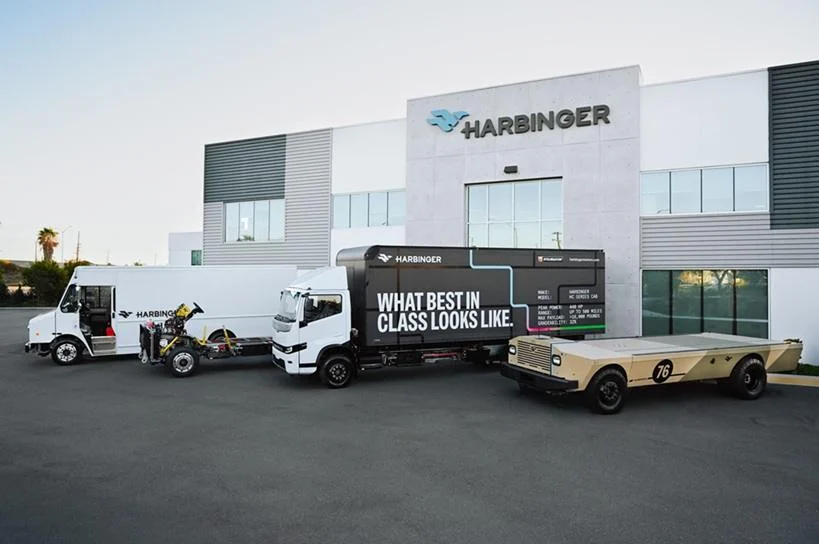
California-based electrification technology developer Harbinger has officially secured a $100 million debt financing package, a move that signals a significant strategic pivot for the startup. By transitioning from a pure-play electric vehicle manufacturer to a multifaceted industrial technology platform, Harbinger is positioning itself to capture a larger share of the burgeoning green infrastructure market. This capital infusion arrives on the heels of a successful $240 million Series D equity round, illustrating a calculated effort by the company to balance its capital structure in a manner consistent with established industrial incumbents.
The financing, which includes a blend of term loans, revolving credit facilities, and convertible notes, was orchestrated through a syndicate of financial institutions. Technology-specialized lender Erebor Bank and Pinegrove Venture Partners spearheaded the deal, with critical support from Brookfield Asset Management and HRTG Partners. This diversification of funding sources marks a departure from the company’s previous reliance on equity-heavy financing, a common trait among nascent technology firms, and reflects a maturation of the business as it moves toward high-volume production.
A Chronology of Growth: From Startup to Industrial Player
Founded in 2021, Harbinger has rapidly traversed the lifecycle from concept to commercialization. In its initial years, the company focused on the foundational engineering of medium-duty vehicle platforms. By prioritizing proprietary drivetrain systems, energy storage solutions, and auxiliary power units, Harbinger successfully differentiated itself in an increasingly crowded EV landscape.
The company’s trajectory can be summarized through its major funding milestones:
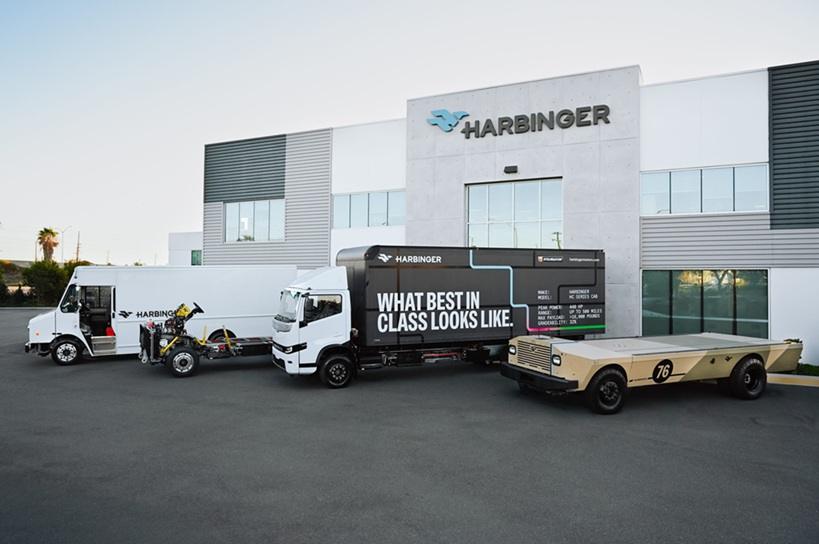
- 2021: Harbinger is established in California, focusing on the research and development of verticalized electrification technologies.
- 2023–2024: The company transitions from prototyping to pilot-scale manufacturing, proving the efficacy of its modular EV architecture.
- Late 2026: Harbinger closes its $240 million Series D round, providing the liquidity necessary to scale assembly operations.
- November 2026: The company announces the $100 million debt package, signaling a transition to a mature, multi-sector industrial technology model.
This timeline reflects a deliberate strategy of vertical integration. Unlike many competitors that rely on third-party suppliers for critical components, Harbinger has consistently sought to own the intellectual property surrounding its battery and drivetrain systems. This approach not only provides greater control over supply chain costs but also allows the company to license its technology to adjacent sectors, including defense, autonomous transport, and grid-scale power management.
Strategic Implications of the Debt Financing
For industrial startups, the transition from equity financing to debt is often a "coming of age" moment. Venture capital is essential for research and initial development, but debt is the fuel of large-scale manufacturing. By utilizing debt, Harbinger avoids the excessive dilution of shareholder equity while simultaneously demonstrating to the market that its underlying assets—such as its vehicle platforms and intellectual property—are bankable.
Harbinger’s CEO, John Harris, has been vocal about the necessity of this shift. In a statement addressing the financing, Harris noted that building an industrial technology company at scale requires a financial framework that mirrors the traditional aerospace and automotive sectors. "The capital needed to ramp production and deliver vehicles to customers shouldn’t have to come entirely from equity," Harris remarked. By adopting a standard industrial capital structure, Harbinger is signaling to its customers and partners that it is prepared for the rigors of long-term, high-volume manufacturing.
The involvement of Brookfield Asset Management—a global leader in alternative asset management with a deep focus on renewable power and transition infrastructure—adds a layer of institutional validation to the deal. Their participation suggests that Harbinger is not merely viewed as an auto company, but as an essential piece of the energy transition puzzle.
Market Context: The Medium-Duty EV Sector
The medium-duty vehicle segment (typically ranging from Class 4 to Class 7 trucks) is currently undergoing a massive transformation. Regulatory pressures to reduce carbon emissions, coupled with the decreasing total cost of ownership for fleet operators, have created a massive tailwind for electrification. However, the sector has also seen high levels of volatility. Several EV manufacturers have struggled with "production hell," failing to scale effectively, while others have been hampered by high interest rates and liquidity constraints.

Harbinger’s pivot toward an "electrification platform" strategy is a defensive maneuver against this market volatility. By offering components and systems to other industries, Harbinger is essentially diversifying its revenue streams. If the adoption rate of electric trucks lags in a specific region or sector, the company still maintains active revenue opportunities in defense contracting or auxiliary power storage.
Supporting data from the broader industry indicates that the demand for electrified commercial fleets is expected to grow at a compound annual growth rate (CAGR) of over 20% through 2030. Harbinger’s ability to provide both the vehicle and the underlying energy storage and drivetrain technology positions it to benefit from this growth regardless of which specific original equipment manufacturers (OEMs) ultimately dominate the vehicle assembly space.
Institutional Perspectives on the Partnership
The financiers involved in this $100 million package have emphasized the quality of Harbinger’s industrial platform over its pure-play EV narrative. Jim Ellison, Head of Credit at Pinegrove, highlighted the company’s trajectory as a primary driver for the partnership. "Harbinger is building an impressive industrial technology platform, and we’re excited to partner with John and the team as they enter their next phase of growth," Ellison stated.
This perspective is shared by other market analysts who note that the "Platform" model is more resilient than the "Vehicle" model. When a company provides the "picks and shovels" of the electrification transition—such as battery systems and power electronics—it becomes an indispensable partner to both legacy automotive manufacturers and new market entrants.
Broader Impact and Future Outlook
The implications of this financing extend beyond Harbinger’s balance sheet. It represents a broader trend in the North American industrial sector: the professionalization of the "Green Tech" startup. As the initial excitement of the EV boom settles, the market is favoring companies that can demonstrate sustainable, long-term operational health.

Looking forward, Harbinger faces the dual challenge of scaling production for its vehicle customers while simultaneously managing the commercialization of its standalone energy and drivetrain products. The $100 million debt facility provides the breathing room to invest in capital expenditures (CapEx) such as specialized manufacturing tooling and supply chain automation, which are vital for maintaining margins as production volume increases.
Furthermore, as the company explores opportunities in the defense and autonomous sectors, the flexibility of its debt capital will prove crucial. Defense contracts, in particular, require long-term financial stability to ensure that a provider can fulfill its obligations over multi-year cycles. With a more stable capital base, Harbinger is now better positioned to bid on government and institutional contracts that were previously out of reach for a purely venture-backed entity.
Conclusion
Harbinger’s recent $100 million debt financing is more than just a cash injection; it is a strategic repositioning that aligns the company with the standards of major industrial manufacturers. By securing debt from reputable institutional players like Brookfield and Pinegrove, Harbinger has successfully bridged the gap between an emerging startup and a foundational technology provider.
As the company continues to execute its plan, its success will likely hinge on its ability to maintain its technological edge while managing the operational complexities of a diverse product portfolio. For the broader electrification industry, Harbinger serves as a case study in how to structure a modern, multi-sector industrial firm that is built not just for rapid growth, but for enduring profitability in a decarbonizing economy. With a clear focus on mobility, power, and defense, the company is well-prepared to navigate the shifting demands of the industrial landscape throughout the remainder of the decade.
