
The modern digital economy has given rise to one of the fastest-growing labor segments in human history: the creator economy. Encompassing millions of independent content creators, influencers, live-streamers, podcasters, and micro-entrepreneurs, this sector represents a seismic shift in how individuals generate income, build brands, and achieve financial independence. Yet, despite its massive economic footprint and rapid expansion, traditional financial institutions (FIs) have largely remained on the sidelines. While select modern fintech companies—such as Current and Chime—have integrated influencer marketing and targeted digital audiences to capture early market share, legacy banks continue to steer clear of creator-focused marketing and specialized banking products.
This systemic reluctance highlights a profound misunderstanding of the creator sector by traditional banking executives. By failing to design financial products tailored to the unique realities of content creation, traditional financial institutions are missing a vital opportunity to engage a rapidly growing, highly financially motivated customer base. According to research published by Mastercard, an overwhelming 78% of individuals report that participating in the creator economy directly helps them establish financial stability. Despite this clear metric, banking solutions that simplify a creator’s day-to-day financial management remain rare. Traditional banks view the sector through an obsolete lens, leaving a lucrative market grossly underserved.
The Structural Barriers: Why Traditional Banks Hesitate
To understand why legacy financial institutions have been slow to adapt, one must examine the fundamental misalignment between traditional banking models and the mechanics of the creator economy. Traditional banking business models were built during the industrial and corporate eras to service predictable, stable customers—primarily salaried W-2 employees or established brick-and-mortar small-to-medium-sized businesses (SMBs) with steady, verifiable cash flows.
Content creators, however, defy these rigid frameworks. Their revenue models are built on volatility, fragmentation, and platform dependency. Tachat Igityan, CFO and founder of destream, a specialized financial platform for content creators, points out the core issue holding legacy banks back.

"Traditional banks are not engaged in building products for creators due to the instability of creators’ income streams," Igityan explains. "Banking business models are generally built around servicing ‘stable’ customers, such as salaried employees or established businesses. They may view creators as higher-risk clients because it is difficult to apply traditional financial models like credit scoring, lending, and financial planning to them."
This risk-averse mindset creates a self-fulfilling prophecy. Because traditional banks rely on uniform credit-scoring algorithms, debt-to-income ratios, and tax documents that reflect traditional employment, creators are frequently misclassified as high-risk or financially unstable, denying them access to mortgages, business loans, lines of credit, and optimized treasury management tools.
The Product Complexity Paradox
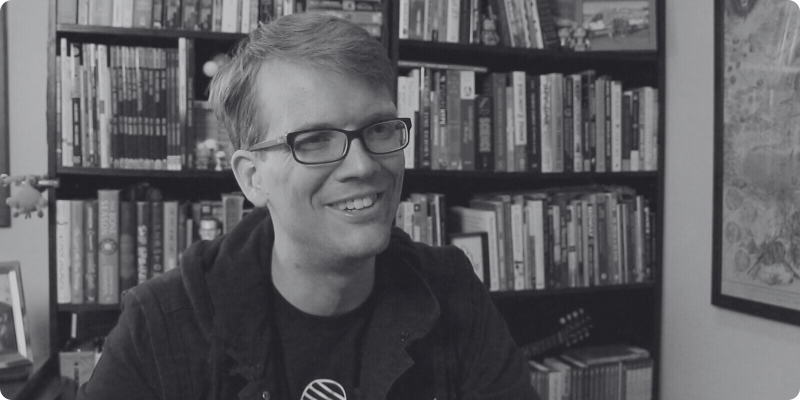
Even for forward-thinking institutions or venture-backed startups that recognize the potential of this market, building scalable financial products for creators is notoriously difficult. Veteran YouTuber, author, and entrepreneur Hank Green—who co-founded Subbable, an early crowdfunding platform later acquired by Patreon—has frequently spoken about the immense operational challenges of servicing this demographic. During the height of venture capital funding booms, Green considered developing creator-centric financial tools himself, only to realize the inherent scaling hurdles.
"Creators are so diverse in their needs that, to create a product that is scalable—and that doesn’t cost a ton of money trying to individualize itself for each individual creator—you end up creating a bad product," Green noted.
Unlike traditional small businesses—such as a local restaurant or a consulting firm that generally relies on standardized invoicing, point-of-sale systems, and local banking services—content creators operate across a dizzying array of monetization channels. A single creator’s revenue stream might simultaneously comprise ad-revenue sharing from video platforms, brand sponsorship deals, affiliate marketing commissions, direct fan contributions via platforms like Patreon or Ko-fi, merchandise sales, and live-stream tipping.

Furthermore, creators are entirely at the mercy of powerful third-party social media platforms that control their distribution, audience data, and revenue payouts. These platforms often lack transparent accounting, timely payment processing, and dependable customer service. Even elite creators with millions of followers face administrative chaos. Green publicly highlighted these structural absurdities earlier this year regarding platform opacity and currency conversion errors:
"It’d be nice if I knew how much money I made. I have no idea, it hasn’t updated since January. It’s broken. It thinks I’m British. It’s paying me in pounds," Green said.
When foundational earnings data is prone to erratic delays, algorithmic shifts, and cross-border currency miscalculations, traditional financial planning becomes nearly impossible. Creators require sophisticated liquidity management tools that can smooth out income volatility, forecast cash flow based on variable platform payouts, and automatically handle complex cross-border tax obligations.
The Evolution of the Creator Economy: A Timeline of Growth
To fully grasp the urgency for financial sector reform, it is necessary to trace the rapid evolution of the creator economy over the past two decades.
- The Genesis Era (2005–2010): The launch of platforms like YouTube, WordPress, and early blogging networks established the concept of user-generated content. During this period, monetization was primitive, relying almost entirely on rudimentary ad-revenue sharing. Content creation was viewed primarily as a hobby rather than a viable career path.
- The Professionalization Era (2011–2016): As audiences migrated en masse to digital video and social media, platforms introduced more sophisticated partner programs. Brands began recognizing the marketing power of digital personalities, giving birth to the modern "influencer." Specialized agencies emerged, but banking services remained entirely traditional, forcing creators to rely on personal checking accounts and basic merchant services.
- The Diversification and Microbusiness Boom (2017–2020): Platforms expanded beyond ad revenue, incorporating native monetization tools such as subscriptions, tipping, digital goods, and direct-to-consumer merchandise. The low barrier to entry attracted millions of participants worldwide, turning the sector into a recognized microbusiness ecosystem.
- The Financial Awakening and Current State (2021–Present): Fueled by pandemic-era shifts toward remote work and digital consumption, the creator economy exploded into a multi-billion-dollar global market. Industry analyses now estimate the global creator economy market size to be well over $250 billion. Despite this staggering economic output, financial infrastructure tailored specifically to creators remains in its infancy, dominated primarily by agile fintech challengers rather than institutional banking giants.
The Unmet Financial Needs of Modern Microbusinesses
While major commercial banks have spent the last decade rolling out robust small-business banking suites—including dedicated business checking accounts, merchant acquiring services, and automated bookkeeping integrations—these products are fundamentally optimized for traditional SMBs. They fail to address the operational nuances of the independent digital workforce.
Creators operate as modern microbusinesses, and like any small business, they require specialized tools to run efficiently and get paid seamlessly. However, their unique operational challenges demand a dedicated strategic approach from financial institutions:
- Unpredictable Cash Flow Management: Unlike a retail shop with daily foot traffic or a B2B company with net-30 invoicing, creators experience severe revenue fluctuations driven by algorithm updates, seasonality, and the variable performance of viral content. Financial products must offer flexible credit options, income-smoothing tools, and automated budgeting based on rolling averages rather than fixed monthly paychecks.
- Diversified and Cross-Border Income Streams: Creators frequently receive micro-payments and lump sums from dozens of different platforms, global brands, and international fans. Traditional wire transfer fees, foreign exchange markups, and delayed clearing times eat heavily into creator profit margins. Modern multi-currency accounts with instant settlement capabilities are essential.
- Tax Compliance and Expense Tracking: Because creators often operate as sole proprietors or single-member LLCs, separating personal and business finances is notoriously difficult. Business expenses can range from high-end camera equipment and software subscriptions to studio rentals and virtual assistant wages. Automated tax-withholding tools integrated directly into their banking accounts would alleviate immense financial anxiety.
- Access to Capital and Credit Building: Because traditional credit-scoring models penalize income volatility, creators struggle to secure personal loans, car financing, or commercial real estate mortgages. Financial institutions that develop alternative underwriting models—evaluating platform analytics, audience engagement metrics, and historical payout consistency—can unlock a massive, highly loyal borrowing segment.
Implications and the Path Forward
The continued apathy of traditional banks toward the creator economy represents a classic case of institutional inertia. As fintech disruptors and neo-banks step in to fill the vacuum, legacy financial institutions risk losing an entire generation of high-value customers to more agile competitors.
For creators, the stakes are equally high. Financial motivations remain the primary catalyst driving individuals into the creator economy, yet the lack of robust financial infrastructure prevents many from fully realizing economic security. When basic financial tasks—such as securing a business loan, predicting monthly cash flow, or reconciling multi-platform payouts—become grueling obstacles, the growth of the entire digital entrepreneurial ecosystem is stifled.
To bridge this widening gap, traditional financial institutions must fundamentally rethink their risk assessment frameworks and product development strategies. Partnering with creator-focused fintech platforms, adopting alternative data-driven underwriting models, and designing modular banking tools that adapt to fluctuating income streams are no longer optional experiments. They are commercial imperatives.
As the digital economy continues to mature, the boundary between traditional employment and independent content creation will only continue to blur. Financial institutions that recognize this paradigm shift and adapt accordingly will capture a vital, fast-growing market. Those that cling to outdated definitions of financial stability risk being left behind in an increasingly decentralized, creator-led world.