
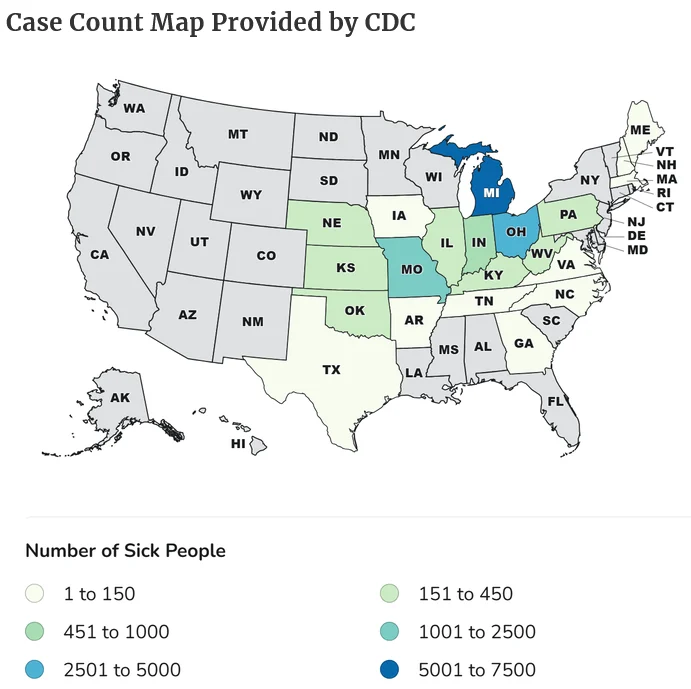
The U.S. Food and Drug Administration (FDA) officially declared the end of a sprawling, multi-state Cyclospora outbreak on September 11, 2026, marking the conclusion of a public health crisis that affected thousands of consumers across 21 states. While the federal agency has formally closed the outbreak investigation, the ripple effects of the event remain significant, as the final tally confirms a staggering 12,883 illnesses, 570 hospitalizations, and two tragic fatalities. The outbreak, which was primarily traced back to processed iceberg lettuce sourced from central Mexico and distributed by Taylor Farms de Mexico, serves as a sobering reminder of the complexities inherent in modern food supply chains and the persistent threat posed by parasitic pathogens.
Chronology of the 2026 Outbreak
The emergence of this Cyclospora outbreak began in the summer of 2026, catching health officials off guard with its rapid expansion. The initial cluster of illnesses was identified in mid-July, prompting a swift, coordinated investigation between the FDA, the Centers for Disease Control and Prevention (CDC), and state-level health departments.
On July 17, 2026, a critical turning point occurred when Taylor Farms de Mexico issued a voluntary recall of its iceberg lettuce products. This action was taken after epidemiological evidence began to point toward a clear correlation between the consumption of processed greens and the onset of Cyclosporiasis. At that time, investigators noted that the majority of the reported illnesses began before the recall date, suggesting that the contaminated product had already been widely distributed and consumed across various retail and restaurant chains, including prominent fast-food outlets like Taco Bell.
Throughout August, as state and local health officials conducted intensive interviews with those affected, the number of confirmed cases continued to climb. By the time of the FDA’s August 27 update, the geographic footprint of the outbreak had already expanded significantly. The investigation continued into early September, ultimately adding Virginia as the 21st state to record cases associated with the outbreak. The final declaration on September 11 brought a sense of closure to the active case-finding phase, though the FDA continues to monitor the situation for any lingering product or secondary transmission risks.
Understanding Cyclosporiasis
Cyclosporiasis is an intestinal illness caused by the microscopic parasite Cyclospora cayetanensis. Unlike bacterial pathogens such as Salmonella or E. coli, which often result in rapid onset of symptoms within hours or days, Cyclospora possesses a longer incubation period. Most individuals experience the onset of symptoms about one week after consuming contaminated food or water.
The primary symptom of the infection is watery, sometimes explosive, diarrhea. Other symptoms often include loss of appetite, substantial weight loss, cramping, bloating, increased gas, nausea, and fatigue. If left untreated, the illness can persist for several weeks or even months, with a tendency to "relapse"—meaning symptoms may seem to improve before suddenly returning.
The 2026 outbreak was particularly notable for its scale. With 570 hospitalizations, the virulence and the volume of the contaminated product created a significant burden on the healthcare systems in the affected regions. The two confirmed deaths underscore the severity of the infection, particularly for vulnerable populations, including the elderly and those with compromised immune systems.
Geographic Impact and Distribution
The 21 states impacted by this outbreak represent a vast swathe of the United States, illustrating the national reach of the central Mexican supply chain. The affected states include Arkansas, Georgia, Iowa, Illinois, Indiana, Kansas, Kentucky, Massachusetts, Maine, Michigan, Missouri, Nebraska, New Hampshire, North Carolina, Ohio, Oklahoma, Pennsylvania, Tennessee, Texas, Virginia, and West Virginia.
Public health experts emphasize that the wide geographic dispersion of cases is typical of outbreaks involving produce that is centrally processed and then shipped across state lines. When a facility in a single region—in this case, central Mexico—serves as the origin point for a large percentage of a grocery chain’s or a restaurant franchise’s supply, a single point of contamination can trigger a massive, multi-state emergency.

The Role of Regulatory Oversight
Following the conclusion of the outbreak, the FDA has maintained a rigorous stance regarding the source of the contamination. While the outbreak is declared over, the agency’s investigation into the specific conditions at the Taylor Farms de Mexico facility remains an active area of interest. Regulatory agencies generally look for "root cause" analyses to determine how the parasite, which is typically transmitted through human feces contaminating water or food, entered the production chain.
In recent years, the FDA has increased its focus on the Produce Safety Rule, a component of the Food Safety Modernization Act (FSMA). This regulation establishes science-based minimum standards for the safe growing, harvesting, packing, and holding of fruits and vegetables. The 2026 event will likely prompt a re-evaluation of current standards for imported produce, specifically regarding the water quality and sanitation practices used in central Mexico.
Industry Response and Economic Implications
The involvement of a major player like Taylor Farms de Mexico has significant economic and operational implications for the food industry. When a large-scale recall occurs, the immediate costs involve the logistics of removing contaminated products from retail shelves and restaurant supply lines. However, the secondary costs—including legal fees, potential liability settlements, and the long-term impact on brand reputation—are often far higher.
Fast-food chains and major grocery retailers that utilized the affected iceberg lettuce were forced to pivot rapidly, shifting to alternative suppliers and navigating the public relations fallout of serving contaminated food. This creates a ripple effect throughout the agricultural sector, as buyers may become more cautious, demanding higher levels of traceability and third-party auditing for international suppliers.
Public Health Lessons and Future Prevention
The primary takeaway from the 2026 Cyclospora outbreak is the necessity of enhanced traceability. As the global food system grows more integrated, the ability to trace a head of lettuce back to the specific farm or packing house in a matter of hours—rather than weeks—is essential to containing the spread of foodborne pathogens.
Health organizations, including the CDC and the FDA, continue to emphasize standard hygiene protocols for consumers. While washing produce is a recommended practice, it is not a fail-safe against Cyclospora, as the parasite can be difficult to remove from the crevices of leafy greens. The most effective defense remains rigorous on-farm safety, including the management of agricultural water, worker hygiene, and effective sanitation of processing equipment.
The Road Ahead
As the nation moves past the acute phase of this outbreak, the focus for the FDA and the agricultural industry will be on "preventative culture." This involves implementing smarter technology, such as blockchain-based tracking systems, to provide real-time visibility into the movement of produce from field to fork.
Furthermore, the scale of this outbreak—12,883 individuals affected—highlights a potential need for better public notification systems. As the case count grew, the coordination between state health departments and the federal government became a vital component of the response. Moving forward, health experts suggest that the integration of digital health records and faster genomic sequencing of pathogens will allow for quicker detection of future outbreaks.
While the formal investigation into this specific event is entering its final stages, the data gathered will serve as a vital case study for future food safety initiatives. For the families of those who suffered, the conclusion of the outbreak provides little immediate comfort, but for the public at large, it signifies a return to a more stable food supply chain. The FDA’s commitment to ongoing monitoring serves as the final safeguard, ensuring that the lessons learned from the 2026 iceberg lettuce crisis are translated into actionable, long-term improvements in food safety protocols. The health of the nation’s food supply, and the confidence of the consumer, will depend on the industry’s ability to adapt to these heightened standards in the years to come.
