
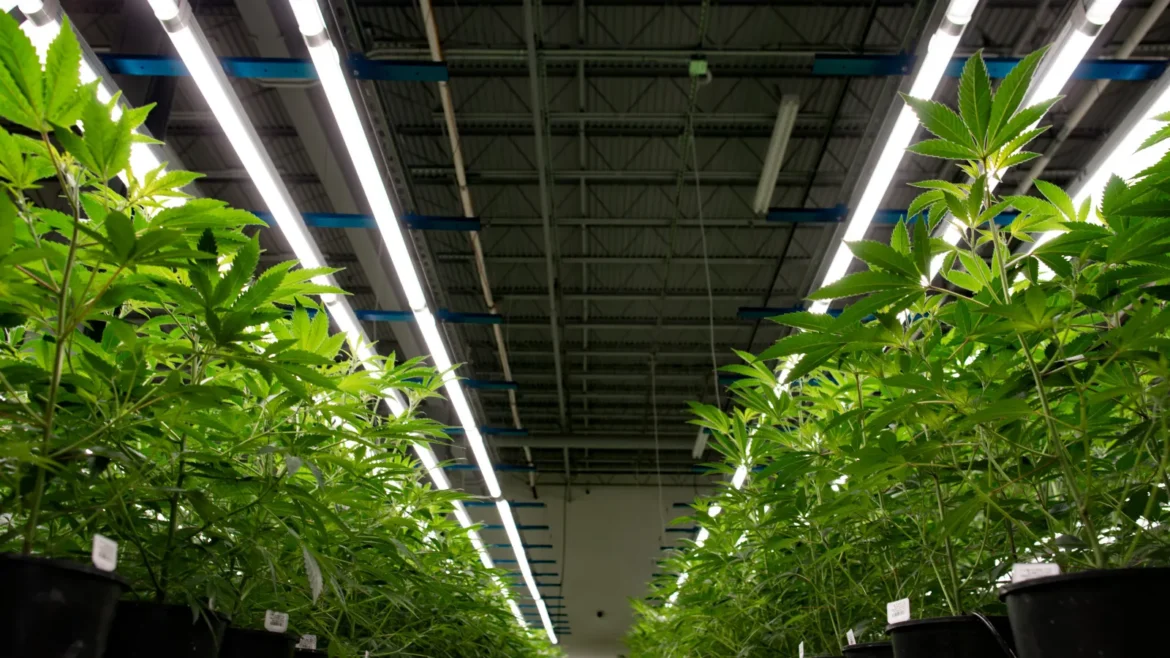
The complex intersection of state-legalized cannabis and federal prohibition continues to create a labyrinthine challenge for financial institutions across the United States. According to a comprehensive report published this week by the Government Accountability Office (GAO), no financial institution has ever been punished or subjected to civil or criminal penalties by federal regulators simply for providing banking services to cannabis-related businesses (CRBs). Despite this regulatory reality, the vast majority of traditional banks and credit unions continue to maintain a strict policy of avoiding the sector entirely.
The findings are expected to reignite intense debate on Capitol Hill regarding the necessity of banking reform for an industry that generates billions of dollars annually. While 41 states and the District of Columbia have legalized cannabis for medical use, and 24 states permit adult recreational use, the substance remains strictly controlled at the federal level under the Controlled Substances Act. This persistent dichotomy has left financial intermediaries navigating a deeply uncertain legal landscape, balancing community economic needs against the looming shadow of federal enforcement.
Background and Congressional Inquiries
The GAO report was commissioned following formal requests from a coalition of influential Democratic senators, including Raphael Warnock of Georgia, Elizabeth Warren of Massachusetts, Tina Smith of Minnesota, and John Fetterman of Pennsylvania. These lawmakers sought an objective, data-driven assessment of the current state of cannabis banking, focusing on how federal regulatory friction impacts legitimate businesses, financial institutions, and local economies.
For over a decade, the legal cannabis industry has struggled to integrate into the formal banking system. Because cannabis remains classified as a Schedule I drug by the Drug Enforcement Agency (DEA)—the same category as heroin and LSD—federally insured banks and credit unions face potential liabilities under federal money laundering laws, including the Bank Secrecy Act (BSA). Even as the Department of Health and Human Services (HHS) recommended moving cannabis to Schedule III, the regulatory ambiguities have persisted, leaving institutions hesitant to dive into what they perceive as high-risk waters.
To compile the report, GAO investigators conducted extensive interviews and focus groups involving 74 financial institutions and 51 cannabis-related businesses. Additionally, the agency analyzed internal agency interviews and transactional data from the Financial Crimes Enforcement Network (FinCEN).
The Perceived Regulatory Risk Versus Reality
One of the most striking revelations of the GAO report is the stark disconnect between actual regulatory enforcement and the perceived risk held by commercial lenders. According to Courtney LaFountain, the GAO director who led the investigation, researchers found "no indication" that federal regulators—such as the Office of the Comptroller of the Currency (OCC), the Federal Deposit Insurance Corporation (FDIC), or the Federal Reserve—had ever penalized a bank or credit union for banking CRBs.
Yet, despite this pristine enforcement record regarding penalties, perceived regulatory risk remains the primary deterrent for mainstream banks. LaFountain described the banking sector’s hesitation not as a reaction to concrete federal penalties, but rather as an "uncertainty around an amorphous situation."
"Maybe they wanted to see other banks’ experience, to make sure that the banking regulators really were going to behave the way they said," LaFountain explained in an interview. "It’s a reasonable perspective to have on an uncertain landscape and a new potential business line."
Banks are acutely aware that regulatory guidance can shift with changes in presidential administrations and shifting priorities at the Department of Justice. Without explicit, statutory safe harbor protections passed by Congress, many risk-averse compliance departments prefer to forgo the potential revenue entirely rather than risk a misstep that could jeopardize their federal charters.
Current Landscape of Cannabis Banking
Data from FinCEN illustrates the ongoing participation of financial institutions in the cannabis sector, even amid these widespread hesitations. In 2024, approximately 1,000 banks and credit unions filed cannabis-related Suspicious Activity Reports (SARs), accounting for roughly 11% of all insured depository institutions nationwide.
However, industry experts caution that filing SARs does not mean these 1,000 institutions maintain ongoing, active relationships with plant-touching cannabis companies. Many of these filings stem from ancillary businesses—such as landlords renting space to dispensaries, security firms, or packaging suppliers—rather than cultivators, processors, or retailers. Furthermore, some institutions only occasionally process transactions for clients who may have indirect ties to the industry.
For the cannabis businesses that do manage to secure banking relationships, the operational hurdles are formidable. Compliance burdens and high operational costs are frequently cited by banks as reasons for either refusing service or imposing exorbitant fees.
According to the GAO report, participants in all focus groups representing financial institutions that serve CRBs confirmed that they charge these clients substantially higher fees than standard commercial customers. Representatives from cannabis businesses reported facing steep monthly and annual account maintenance fees, with participants in two separate focus groups revealing that they pay upward of $100,000 per year just to maintain basic banking access.
While the GAO did not independently audit the mechanics behind the $100,000 figure, LaFountain noted that banks consistently reported significantly higher overhead expenses associated with cannabis clients. These costs are driven by the rigorous, continuous due diligence, enhanced monitoring, and frequent reporting mandates required to satisfy FinCEN guidelines.
Why Some Financial Institutions Say Yes
Despite the friction, a subset of banks and credit unions actively chooses to serve the cannabis industry. According to the GAO, these decisions are typically motivated by a combination of community development goals, public safety considerations, and commercial opportunities.
Several financial institutions told investigators that reducing the reliance on cash within their local economies was a paramount public safety objective. Because traditional banking access is restricted, many dispensaries operate on a cash-only basis, making them prime targets for violent crime, burglaries, and internal theft. By providing accounts to these businesses, banks help bring vast sums of cash out of the shadows and into the secure, trackable financial grid.
Other institutions reported stepping in because state regulators explicitly encouraged them to do so, noting that local CRBs were suffering from a severe lack of financial infrastructure. In other cases, banks chose to maintain relationships with existing commercial customers who subsequently transitioned into the legal cannabis market, preferring continuity over forcing account closures. For these lenders, serving the sector was viewed as an inevitable economic reality in communities where cannabis commerce has become a dominant local industry.
The Broader Economic Impact and Ripple Effects
The widespread reluctance of traditional lenders to engage with the cannabis industry creates severe operational bottlenecks that ripple throughout the broader economy. According to the GAO, CRBs consistently face formidable barriers, including delayed account opening times, sudden and unexpected account closures, and prohibitive cost structures.
These systemic roadblocks extend heavily into commercial lending and capital acquisition. Because federally backed banks cannot safely issue loans to plant-touching cannabis companies, businesses are forced to seek alternative financing through nontraditional lenders, venture capital firms, and high-interest private investors.
The GAO report highlighted alarming feedback from focus group participants, who revealed that private investors frequently structured contracts with predatory terms. In some instances, these financing agreements included clauses that could allow private lenders to seize operational control of the cannabis business if specific financial metrics or loan covenants were unmet, leaving business owners vulnerable to hostile takeovers.
Moreover, the financial exclusion extends past corporate entities down to the individual level. Employees working within the legal cannabis industry frequently encounter systemic discrimination when attempting to secure personal bank accounts, mortgages, or standard consumer loans, simply because their documented source of income originates from a state-legal cannabis enterprise. While the GAO’s primary focus was institutional banking, investigators emphasized that the personal financial disenfranchisement of cannabis workers is an unintended human cost of the federal-state conflict.
Pathways Forward and Legislative Solutions
When asked what changes would successfully entice more mainstream financial institutions into the market, industry stakeholders pointed to several potential legislative and regulatory remedies. However, experts emphasize that there is no single "silver bullet" capable of instantly resolving the structural tension.
Some risk-averse institutions stated unequivocally that they will not touch the cannabis sector until the federal government completely deschedules the plant, removing it entirely from the Controlled Substances Act. Others suggested that formally rescheduling cannabis from Schedule I to Schedule III would provide sufficient regulatory comfort to alter their compliance risk calculus.
A third major camp of financial executives argued that the enactment of dedicated safe harbor legislation—such as the long-stalled SAFER Banking Act—is the single most effective step Congress could take. Such a law would explicitly prohibit federal regulators from penalizing or terminating the deposit insurance of any institution that provides financial services to legitimate, state-legal cannabis businesses.
Until federal lawmakers enact definitive statutory changes, cannabis businesses, their employees, and the financial institutions willing to serve them will continue to navigate an unpredictable economic environment. As state-level legalization continues to expand nationwide, the pressure on federal policymakers to reconcile federal statute with modern commercial realities grows increasingly urgent.
