
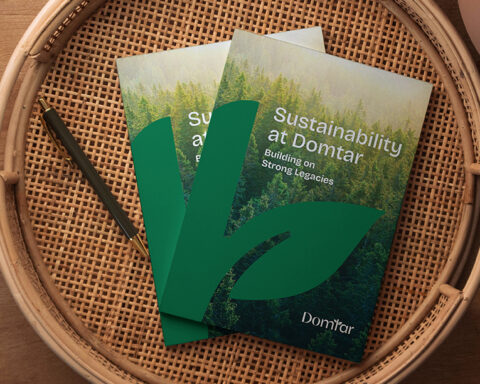
The Canadian forestry landscape is undergoing a fundamental transformation, driven by a convergence of post-merger corporate restructuring, intensified climate mandates, and a paradigm shift toward Indigenous economic reconciliation. At the center of this evolution is Domtar, a long-standing titan in the pulp and paper industry, which has recently released its first post-integration sustainability report. This document, titled "Building on Strong Legacies," serves as a definitive roadmap for the company’s transition toward its 2030 environmental and social governance (ESG) targets. The report arrives at a critical juncture for the industry, as forestry companies move beyond simple compliance toward integrated partnership models with Indigenous communities and the implementation of sophisticated stewardship strategies that prioritize biodiversity alongside commercial yield.
The Post-Integration Milestone and the 2030 Roadmap
Following its integration into the broader Paper Excellence Group, Domtar has focused on harmonizing its sustainability metrics across a sprawling network of mills and forest management areas. The "Building on Strong Legacies" report marks the first comprehensive accounting of the company’s performance since this structural shift, providing stakeholders with a transparent view of how the organization intends to reconcile industrial production with global decarbonization goals.
The 2030 roadmap is anchored by a commitment to significant reductions in greenhouse gas emissions, specifically targeting Scope 1 and Scope 2 emissions through increased energy efficiency and the transition to carbon-neutral biomass fuels. In the Canadian context, where the forestry sector contributes approximately $25 billion to the national GDP, the pressure to maintain international competitiveness while adhering to the Paris Agreement has never been higher. Domtar’s strategy emphasizes a "post-integration" transparency, acknowledging that the path to 2030 requires a standardized approach to data collection and reporting that can withstand the scrutiny of global investors and environmental regulators.
Redefining Indigenous Partnerships: The JP Gladu Perspective
A pivotal element of this industry-wide shift is the changing nature of Indigenous engagement. For decades, the relationship between forestry giants and First Nations was characterized by a "consultation" model that often felt performative to Indigenous leadership. Today, as highlighted by industry expert JP Gladu, the sector is moving toward a "partnership and equity" model. Gladu, a prominent voice in Indigenous business and former CEO of the Canadian Council for Aboriginal Business (CCAB), emphasizes that the future of Canadian forestry is inextricably linked to Indigenous sovereignty and economic participation.
In recent Q&A sessions regarding the sector’s trajectory, Gladu has pointed out that Indigenous communities are no longer just stakeholders; they are increasingly becoming owners and co-managers of the resources. This shift is supported by the federal government’s commitment to the United Nations Declaration on the Rights of Indigenous Peoples (UNDRIP), which necessitates "free, prior, and informed consent" (FPIC). For companies like Domtar, this means moving beyond simple employment quotas to creating joint ventures in harvesting, silviculture, and value-added manufacturing.
The data supports this transition: Indigenous people are employed in the forestry sector at a rate nine times higher than the Canadian average, and there are currently over 1,400 Indigenous-owned businesses in the sector. The integration of traditional ecological knowledge (TEK) with modern western silviculture is proving to be a competitive advantage, particularly in managing forest fire risks and preserving old-growth biodiversity.
The Three Pillars of Sustainability Strategy
Domtar’s overarching "PlaNET" sustainability strategy is built upon three foundational pillars: Environmental Stewardship, Our People and Communities, and Responsible Business. Each pillar represents a specific area of operational focus designed to mitigate risk and enhance long-term value.
Environmental Stewardship
This pillar focuses on the "circularity" of the forestry business. It involves the responsible sourcing of fiber through third-party certifications such as the Forest Stewardship Council (FSC) and the Sustainable Forestry Initiative (SFI). Beyond sourcing, this pillar addresses water stewardship and waste reduction. Modern pulp mills are significant consumers of water; however, Domtar’s strategy involves implementing closed-loop systems that return up to 90% of the water used back to the watershed after rigorous treatment. The goal for 2030 includes a measurable reduction in freshwater withdrawal intensity, ensuring that mills do not compete with local communities for vital water resources.
Our People and Communities
The second pillar shifts the focus to human capital and social license. In the wake of the global pandemic and subsequent labor shortages, the forestry sector has had to reinvent its value proposition for workers. This involves not only competitive wages but also a commitment to diversity, equity, and inclusion (DEI). Domtar’s strategy emphasizes safety as a non-negotiable core value, aiming for a "Zero Injury" culture. Furthermore, the company’s community investment programs are being tailored to the specific needs of the rural areas where they operate, focusing on education, health, and local infrastructure.
Responsible Business
The final pillar addresses the governance and ethics of the supply chain. In an era of "greenwashing" skepticism, Domtar is doubling down on traceability. This involves ensuring that every ton of pulp can be traced back to a sustainably managed forest and that all suppliers adhere to a strict code of conduct. This pillar also encompasses the company’s commitment to transparency in reporting, ensuring that ESG data is verified by third-party auditors to provide a clear, factual account of progress toward 2030 goals.
The Role of Education and Leadership in the Green Economy
The transition to a sustainable forestry model requires a new generation of leaders who are equipped with a "sustainability mindset." This need is being addressed by academic institutions such as Griffith University, whose MBA program has become a benchmark for integrating ESG principles into core business curricula. The program emphasizes that sustainability is not a "side project" but a fundamental driver of profitability and risk management.
Graduates entering the resource sector today are expected to navigate complex regulatory environments, manage diverse stakeholder expectations, and oversee the implementation of green technologies. The emergence of these "sustainability leaders" is crucial for companies like Domtar as they move into the "implementation phase" of their 2030 goals. The shift from theoretical sustainability to operational reality requires managers who understand both the balance sheet and the carbon footprint.
Data and Industry Context: The Economic Reality
The urgency of these sustainability initiatives is underscored by the economic realities of the global market. European and North American consumers are increasingly demanding "deforestation-free" products. The European Union’s Deforestation Regulation (EUDR), for instance, has set a high bar for any company wishing to export wood-based products into the EU market.
In Canada, the forestry industry accounts for approximately 7% of total exports. To maintain this market share, the industry must prove its sustainability credentials. Currently, Canada has more third-party certified forests than any other country in the world, representing 36% of the global total. Domtar’s focus on certification and transparent reporting is a direct response to these global market pressures.
Furthermore, the role of forests as carbon sinks is a critical component of Canada’s climate strategy. While the sector is an emitter through mill operations, it also manages vast tracts of land that sequester carbon. The strategic management of these forests—ensuring they remain healthy, resilient to pests like the mountain pine beetle, and protected from catastrophic wildfires—is a national priority.
Broader Implications and the Path Forward
The convergence of Domtar’s post-integration strategy and the broader industry trend toward Indigenous partnership signals a new era for Canadian resource management. The implications of this shift are manifold. Economically, it suggests a more stable and inclusive sector where Indigenous communities share in the prosperity of the land. Environmentally, it promises a more sophisticated approach to land management that balances industrial needs with the imperative of biodiversity.
However, challenges remain. The integration of two large corporate entities (Paper Excellence and Domtar) is a complex task that requires cultural alignment as much as operational synergy. The 2030 goals are ambitious, and achieving them will require significant capital investment in new technologies, such as carbon capture and storage (CCS) and advanced bio-refining.
As the industry moves toward the end of the decade, the success of these initiatives will be measured not just in tons of pulp produced, but in the health of the forests, the strength of Indigenous partnerships, and the reduction of the corporate carbon footprint. The "Building on Strong Legacies" report is a starting point, but the true test will be the sustained execution of these pillars in an increasingly volatile global economy. The evolution of the Canadian forestry sector from a traditional extractive industry to a modern, partnership-based bio-economy is well underway, with sustainability now firmly established as the primary metric of success.
