

San Francisco-based financial technology firm Feathery has officially unveiled Robin, a sophisticated artificial intelligence operations assistant designed to fundamentally alter how financial institutions build, manage, and iterate upon their operational workflows. By leveraging natural-language processing, Robin enables non-technical business teams within insurance companies, wealth management firms, and banks to translate complex business requirements into functional, structured workflows without the need for traditional software development cycles. This launch represents a significant pivot in the financial services sector, where the historic reliance on rigid vendor platforms and bottlenecked IT departments has often stifled operational agility.
The Evolution of Operational Workflow Automation
The introduction of Robin arrives at a time when the financial services industry is under immense pressure to modernize legacy infrastructure. For decades, the development of operational workflows—ranging from policy renewals in insurance to complex account onboarding in wealth management—has been a labor-intensive process. Historically, these tasks required extensive collaboration between business units and IT departments, often resulting in development timelines spanning several months.
Feathery’s platform, which already provides a suite of tools for document intelligence, UI design, and workflow logic, serves as the foundation for this new AI assistant. Robin does not exist as a separate, detached chatbot; rather, it is deeply embedded within the Feathery infrastructure. When a user describes a process in plain English, Robin translates these instructions into specific workflows utilizing the platform’s pre-tested, modular building blocks. This methodology allows for a hybrid approach: users gain the speed of generative AI while retaining the institutional guardrails and structural integrity required for highly regulated environments.
Chronology and Development Path
The release of Robin follows a deliberate product roadmap focused on reducing the technical debt inherent in financial institutions. Over the past two years, Feathery has concentrated on building an integrated ecosystem that handles the "four pillars" of financial operations: data ingestion, document processing, automated decision-making, and execution.
In early 2024, Feathery began beta-testing the AI-assisted building features with a select group of Registered Investment Advisors (RIAs) and insurance carriers. These early trials were focused on identifying the most friction-heavy points in the customer lifecycle. By mid-2024, the platform saw an increase in demand for automated document intelligence, which laid the technical groundwork for the conversational interface that would eventually become Robin. Following successful pilot programs that reportedly reduced development cycles by over 80%, the company finalized the integration of Robin into its core enterprise-grade stack, leading to the public announcement in mid-2026.
Strategic Applications in Financial Services
The utility of Robin spans several high-stakes domains within the financial sector. In the insurance industry, the platform is specifically engineered to handle complex submission intake, automated proposal generation, multi-carrier policy comparisons, and the renewal process—a cycle notoriously prone to manual errors and delays.
In the wealth management sector, the applications are similarly transformative. Client onboarding, which often involves fragmented systems and manual data entry, can now be streamlined into a cohesive, conversationally defined workflow. Advisor transitions, another area traditionally plagued by data silos and legacy system incompatibilities, are also targeted by Feathery as key areas where Robin can provide immediate value.
By drawing on data, documents, and contextual information across a firm’s existing tech stack, Robin acts as an intelligent layer that can answer queries, flag anomalies, and suggest "next-best actions" for human operators. This functionality shifts the human role from manual data entry to exception management, significantly increasing the throughput of operational teams.
Addressing the IT-Business Divide
A central theme in the launch of Robin is the shift in power dynamics within financial institutions. Peter Dun, CEO of Feathery, has been vocal about the "paradigm shift" this technology represents. According to Dun, the reliance on external vendors or internal IT teams to make minor changes to operational workflows has historically created a "stagnation trap," where firms are forced to adapt their business processes to the limitations of their software, rather than the other way around.
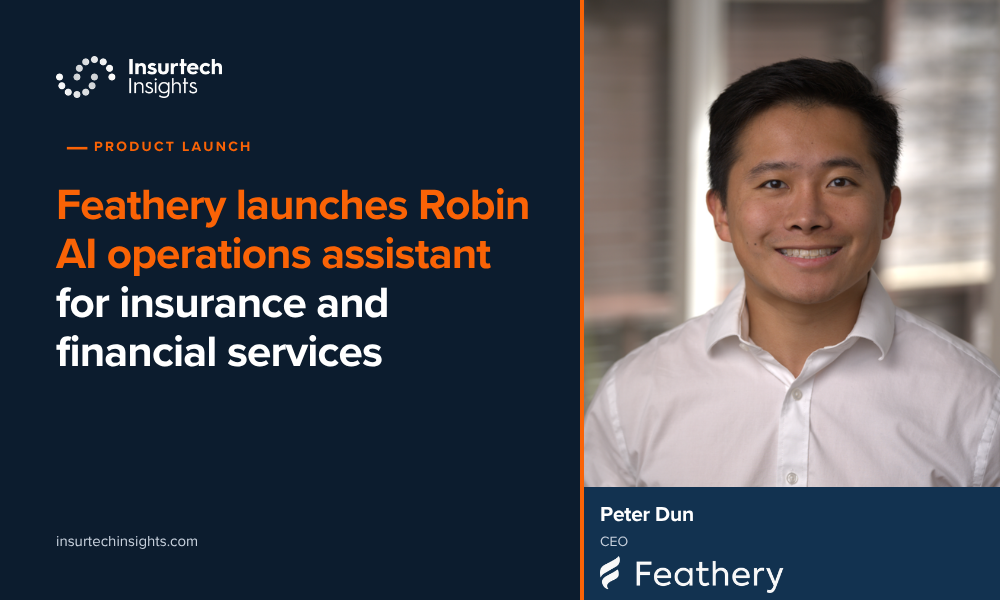
"Robin changes that relationship by giving the people closest to the business more direct control over how their technology works," Dun stated during the launch. By empowering product managers, operations leads, and business analysts to modify workflows in real-time using natural language, Feathery aims to eliminate the feedback loop latency that typically plagues large-scale enterprise software deployments.
Quantitative Impact and Performance Metrics
The economic implications of such a tool are substantial. In an industry where operational efficiency is directly correlated with competitive advantage, the ability to launch a new process in a matter of days rather than months offers a clear return on investment.
Zack Khan, co-founder of Feathery, highlighted a specific case study involving an RIA firm that utilized Robin to deploy an entire client onboarding experience in just one week. Under traditional circumstances, such a project would have required significant vendor engagement, custom coding, and months of integration testing. When scaled across thousands of transactions, this reduction in "time-to-market" for internal processes can lead to millions of dollars in operational savings and improved client retention rates.
Broader Industry Implications and Analysis
The deployment of AI agents like Robin signals a broader trend toward "composable operations" in finance. As banks and insurers grapple with the influx of unstructured data—from emails and PDFs to complex regulatory filings—the ability to automate the transformation of that data into actionable workflows is no longer a luxury but a necessity.
However, the adoption of such tools is not without challenges. Regulators have consistently emphasized the need for transparency and explainability in AI-driven decisions within financial services. Feathery’s approach—retaining the structure and control of its established platform while layering on AI—appears to be a strategic effort to address these regulatory concerns. By ensuring that Robin operates within defined, auditable, and modular boundaries, the company is positioning itself as a "safe" AI partner for institutions that cannot afford the risks associated with "black box" automation.
Furthermore, the integration of Robin suggests that the future of financial software will be increasingly agnostic to the underlying complexity of the code. As natural language becomes the primary interface for system configuration, the barrier to entry for building sophisticated, enterprise-grade tools will drop significantly. This could lead to a surge in internal innovation, as firms that previously lacked the budget for custom development can now leverage AI to build bespoke solutions tailored to their unique operational needs.
Future Outlook: The Autonomous Office
Looking forward, Feathery intends to expand the scope of Robin to incorporate more advanced predictive analytics and cross-departmental automation. As the platform matures, it is expected to handle increasingly complex decision-making tasks, potentially moving from a supportive "assistant" role to a more autonomous operator within the defined parameters set by business users.
The success of this initiative will likely depend on the platform’s ability to maintain high levels of accuracy and security. As financial institutions integrate Robin more deeply into their core operations, the expectation for reliability will be absolute. For Feathery, the challenge will be to maintain its rapid development pace while ensuring that the "conversational" nature of the tool does not compromise the rigorous compliance standards required by the banking and insurance sectors.
In conclusion, the launch of Robin marks a notable milestone in the ongoing digitization of the financial services industry. By bridging the gap between natural language and operational logic, Feathery is attempting to solve one of the most persistent issues in modern business: the friction between organizational strategy and execution. Whether this leads to a permanent reduction in the reliance on legacy IT structures remains to be seen, but the early metrics suggest a compelling case for the adoption of AI-driven workflow design. As firms continue to face mounting competitive pressures and increasing regulatory requirements, the ability to build and modify processes with the speed and agility of a startup may well become the defining characteristic of the successful financial institution of the future.
